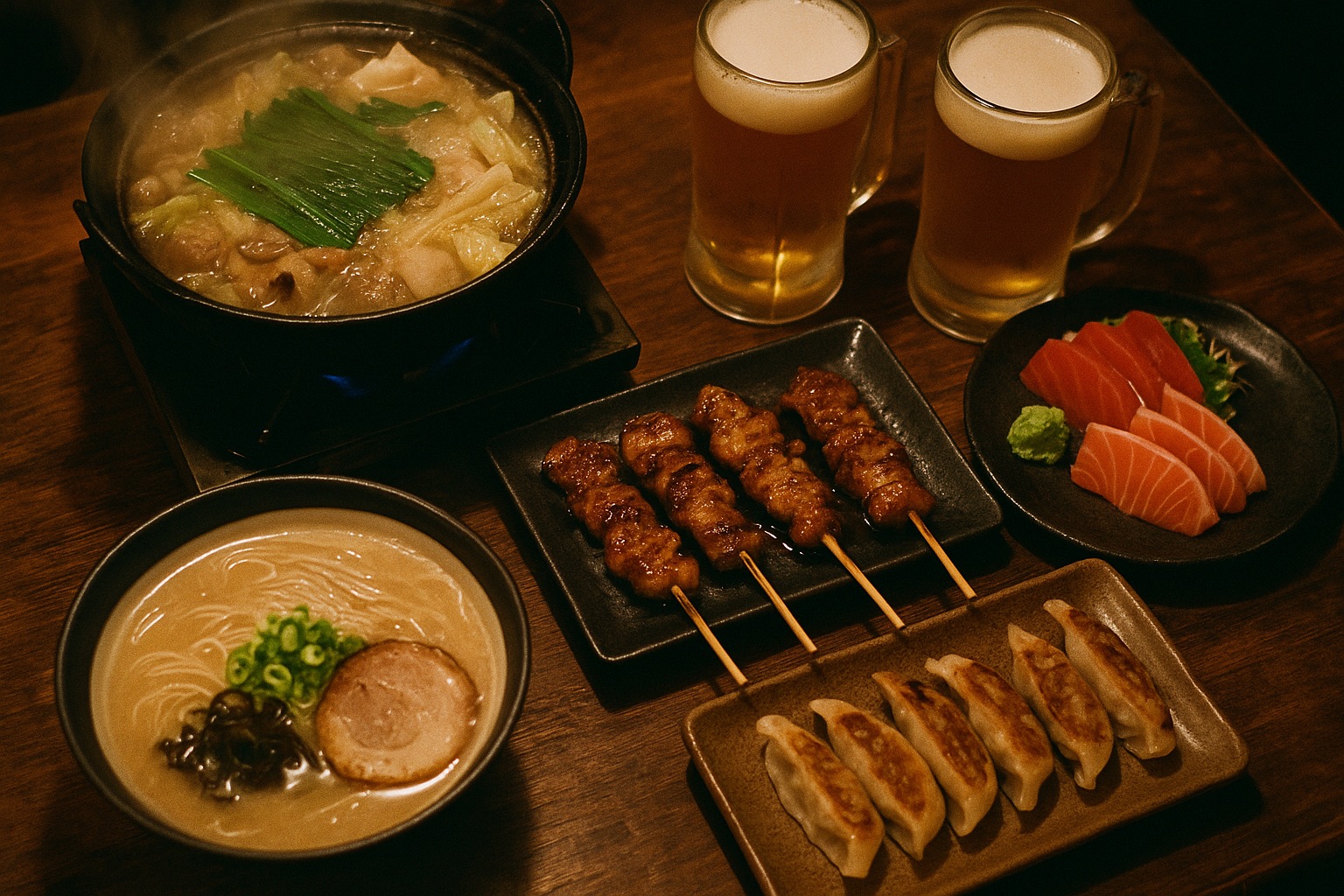
Fukuoka is the best food city in Japan. Not the most famous — Tokyo and Osaka take that. But ask Japanese people where they'd go purely to eat, and Fukuoka comes up again and again.
The problem for visitors is density: tonkotsu ramen, motsunabe, yatai stalls, Kyushu-mae sushi, udon (yes, Fukuoka invented it), mentaiko, goma saba, world-class yakiniku and tempura — all in one compact city. Three days is enough to taste all of it, if you sequence the meals correctly.
This is that sequence. Meal by meal, with timing, budgets, and links to our deep-dive guides for each dish.
How This Itinerary Works
Three principles shape the plan:
- 1.Heavy and light meals alternate. Tonkotsu ramen and motsunabe in the same day is a rookie mistake. Your stomach is the limiting resource — spend it wisely.
- 2.Some dishes have a correct time of day. Udon is a morning food. Yatai stalls only open at night. Sushi counters are best at lunch, when omakase costs half the dinner price.
- 3.Everything is walkable or one subway stop. Fukuoka's food zones — Hakata, Tenjin, Nakasu — sit within a 2km triangle. No day trips needed.
Day 1 — Arrival, Ramen & Your First Yatai Night
✦ AI-generated illustration — not a photograph of the actual site
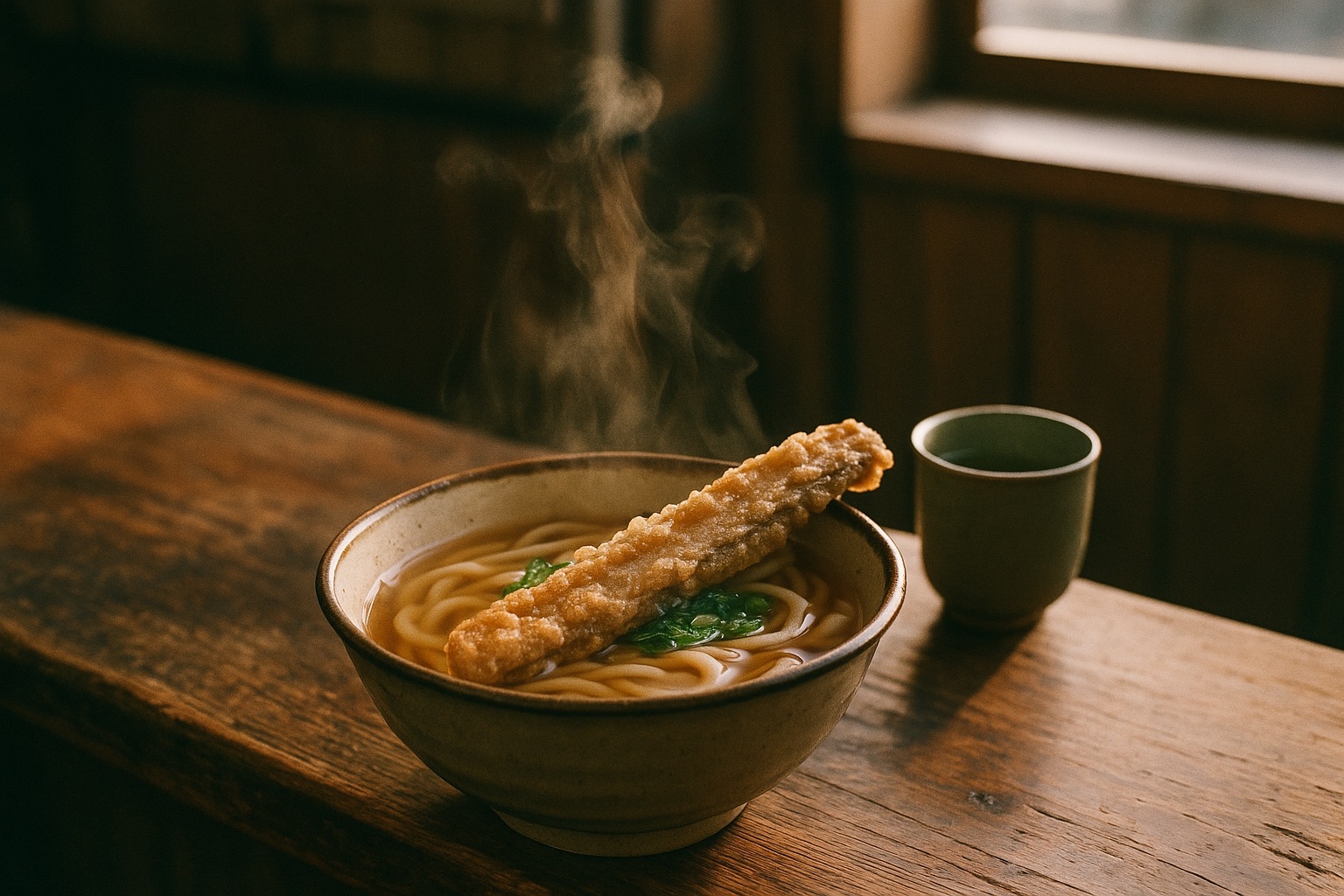
Hakata udon with gobou-ten — soft noodles, golden dashi, and 800 years of history
Lunch — Hakata udon ¥500–800
Most people don't know Fukuoka claims to be the birthplace of udon in Japan — a monk brought the technique from China to Hakata in 1241. Unlike chewy Sanuki udon, Hakata udon is soft— and the correct topping is gobou-ten, burdock root tempura that soaks up the golden dashi. It's the gentlest possible start before the richness ahead.
Afternoon — Mentaiko snack & coffee ¥500–1,000
Mentaiko (spicy cod roe) is Fukuoka's signature product. Find mentaiko onigiri or a mentaiko baguette in the Hakata station food halls — the perfect walking snack while you orient yourself.
Dinner — Tonkotsu ramen, the real thing ¥600–1,200
Your first night deserves the dish Fukuoka gave the world. Skip the chains you already know and go to one of the city's great specialist shops — our top 10 ramen ranking covers exactly where and what to order, including the ¥500 original at Nagahamaya. Order kaedama (a second serving of noodles) like a local — never a second bowl.
Night — First yatai experience ¥2,000–3,000
Walk to the Nakasu riverside after 7pm and join a yatai stall — not for a full meal (you just had ramen), but for a drink, yakitori, and the conversation. The yatai is Fukuoka's living room. Etiquette, budgets, and which stalls to choose are all in our complete yatai guide.
Day 2 — Markets, Motsunabe & Wagyu
Morning — Yanagibashi Market ¥1,000–1,500
"Hakata's kitchen" — a covered market where the city's chefs buy fish. Small, real, and unpolished (the good sign). Have a kaisen-don (seafood rice bowl) breakfast and look at what the Genkai Sea produces — you'll be eating it raw tomorrow.
Lunch — Goma saba & light izakaya lunch ¥1,000–1,500
Goma saba — raw mackerel in sesame-soy sauce — is the dish locals miss most when they leave Fukuoka. Most visitors never order it. Many izakaya serve it as a lunch set. This is your light meal; dinner is heavy.
Dinner — Motsunabe or yakiniku (choose your heavyweight) ¥3,000–6,000
Two of Fukuoka's biggest dinner experiences compete for this slot:
- • Motsunabe — the coal miner's offal hot pot that conquered Japan. Rich, garlicky, and finished with champon noodles in the leftover broth. History and restaurant picks in our motsunabe guide.
- • Yakiniku — Fukuoka sits surrounded by Japan's best wagyu country (Saga, Miyazaki, Kagoshima). Rankings from ¥2,400 neighborhood grills to butcher-owned counters in our yakiniku guide.
Staying a fourth day? Do both. Otherwise: motsunabe in cold months, yakiniku in warm ones.
Day 3 — Sushi at Lunch, Tempura, and the Farewell Yatai
Lunch — Kyushu-mae sushi omakase ¥5,000–18,000
The smartest luxury move in Fukuoka: top sushi counters serve lunch omakase at roughly half the dinner price. Kyushu-mae style means freshness over aging, kabosu citrus over heavy soy — squid so fresh it's transparent. Which counters, how to reserve, and why Fukuoka beats Tokyo for sushi value: our complete sushi guide.
Afternoon — Tempura, the ¥770 miracle ¥770–1,500
Fukuoka treats tempura as soul food, not luxury — counters where each piece arrives straight from the fryer for under ¥1,000, with free spicy shiokara on the table. If lunch was big, make this an early-evening light dinner instead. The full story from ¥770 counters to Michelin level: our tempura guide.
Final night — Return to the yatai ¥2,000–4,000
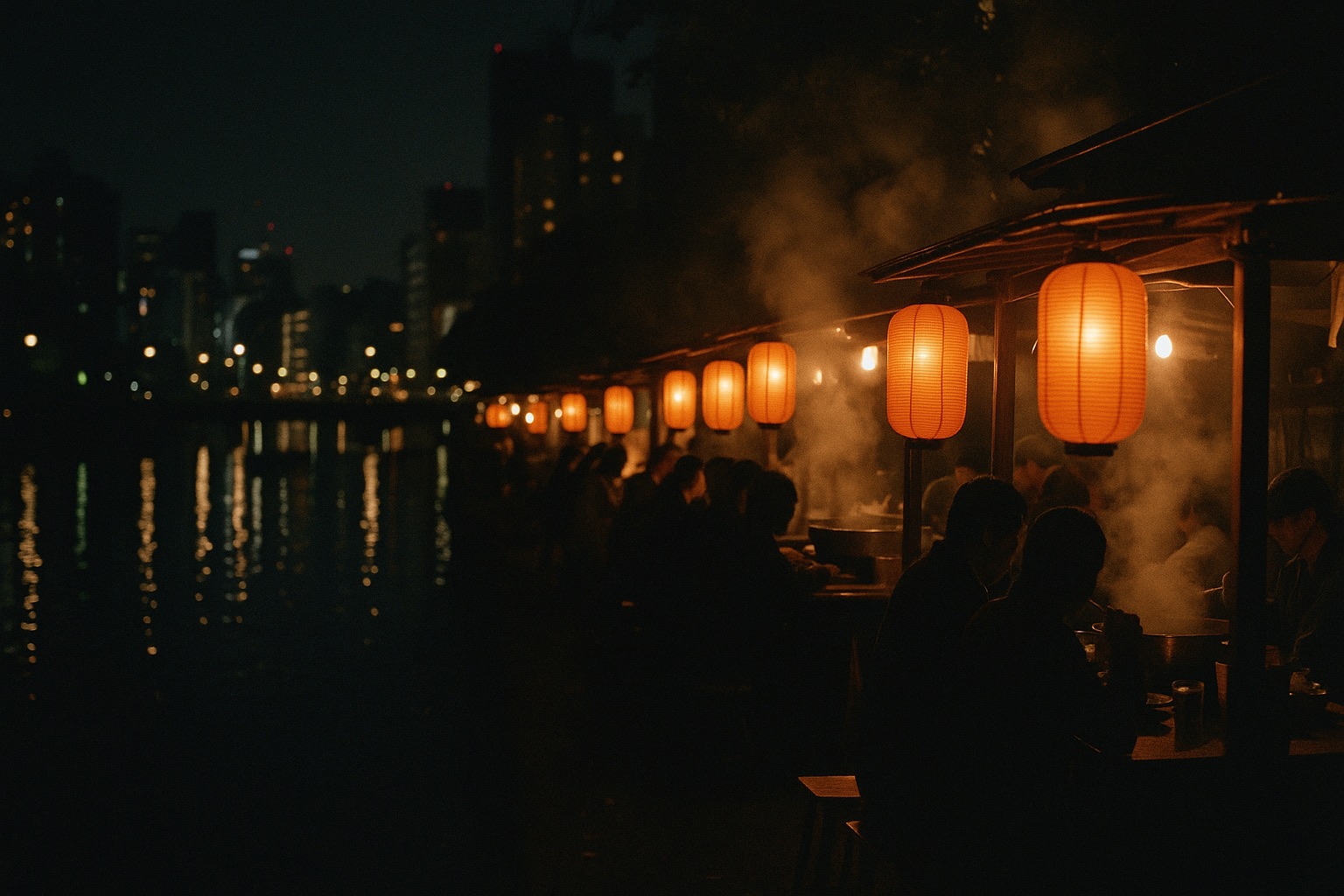
End where Fukuoka's food culture lives. A different stall this time — yaki-ramen perhaps, the yatai-born dish that exists almost nowhere else. One last drink by the river. This is the meal you'll remember.
✦ AI-generated illustration — not a photograph of the actual site
The farewell view — yatai lights on the Naka River
Full Budget Breakdown
| Day | Budget Mode | Full Experience |
|---|---|---|
| Day 1 — udon, ramen, yatai | ¥3,600 | ¥6,000 |
| Day 2 — market, goma saba, motsunabe/yakiniku | ¥5,000 | ¥9,000 |
| Day 3 — sushi, tempura, yatai | ¥7,800 | ¥23,000 |
| 3-day food total | ¥16,400 | ¥38,000 |
Even "Full Experience" — including a serious omakase — costs less than a single high-end dinner in Tokyo. That value gap is the quiet argument for Fukuoka as Japan's best food destination. (For the full city-vs-city case, see Fukuoka vs Osaka.)
The 5 Rules of Eating in Fukuoka
Order kaedama, never a second bowl
Tonkotsu broth is the point. Extra noodles (kaedama, ~¥150) into your remaining soup is the local way.
Udon in the morning, ramen at night
Each dish has its hour. Yatai only exist after dark. Sushi omakase is a lunch bargain.
If there's a line of locals, join it
Fukuoka people queue for food they love and nothing else. A line of office workers is worth more than any review site.
Don't fill up on any single meal
The density of great food is the city's gift. Eat at 70% capacity, always.
Talk to the counter
Fukuoka is the friendliest big city in Japan. Yatai masters, sushi chefs, izakaya owners — a few words of bad Japanese and a smile unlock recommendations no guide can give you.
🍜
Three days. Around ¥20,000. Every essential dish of Japan's best food city.
Fukuoka doesn't need your whole vacation — it needs your appetite. Come hungry, follow the sequence, and talk to the people behind the counters. That's the real itinerary.
The Deep-Dive Guides
🍜 Fukuoka Food Guide
The full story of the city's food culture
🍜 Top 10 Ramen Shops
Ranked honestly by a local
🏮 Yatai Guide
Japan's last street food stalls
🍣 Sushi Guide
Kyushu-mae, omakase & the best counters
🍲 Motsunabe Guide
The coal miner's hot pot
🥩 Yakiniku Guide
Kyushu wagyu & honest rankings
🍤 Tempura Guide
From ¥770 soul food to Michelin
🆚 Fukuoka vs Osaka
Which food city should you choose?