A Quick Guide to Hakata Ramen Before You Order
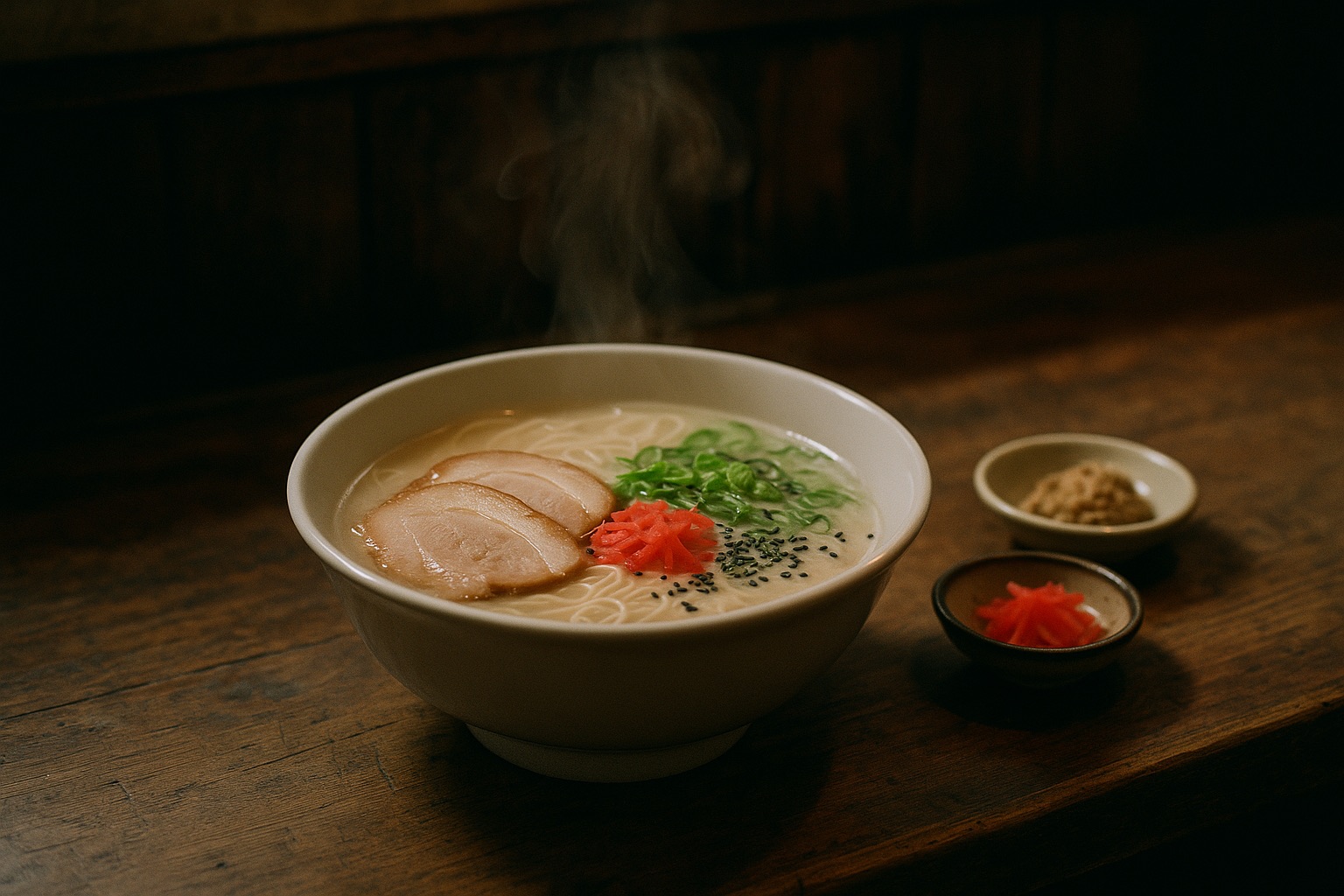
Hakata ramen has three features that separate it from every other ramen style in Japan. If you understand these before you walk in, you will eat better.
1. Ultra-thin, straight noodles
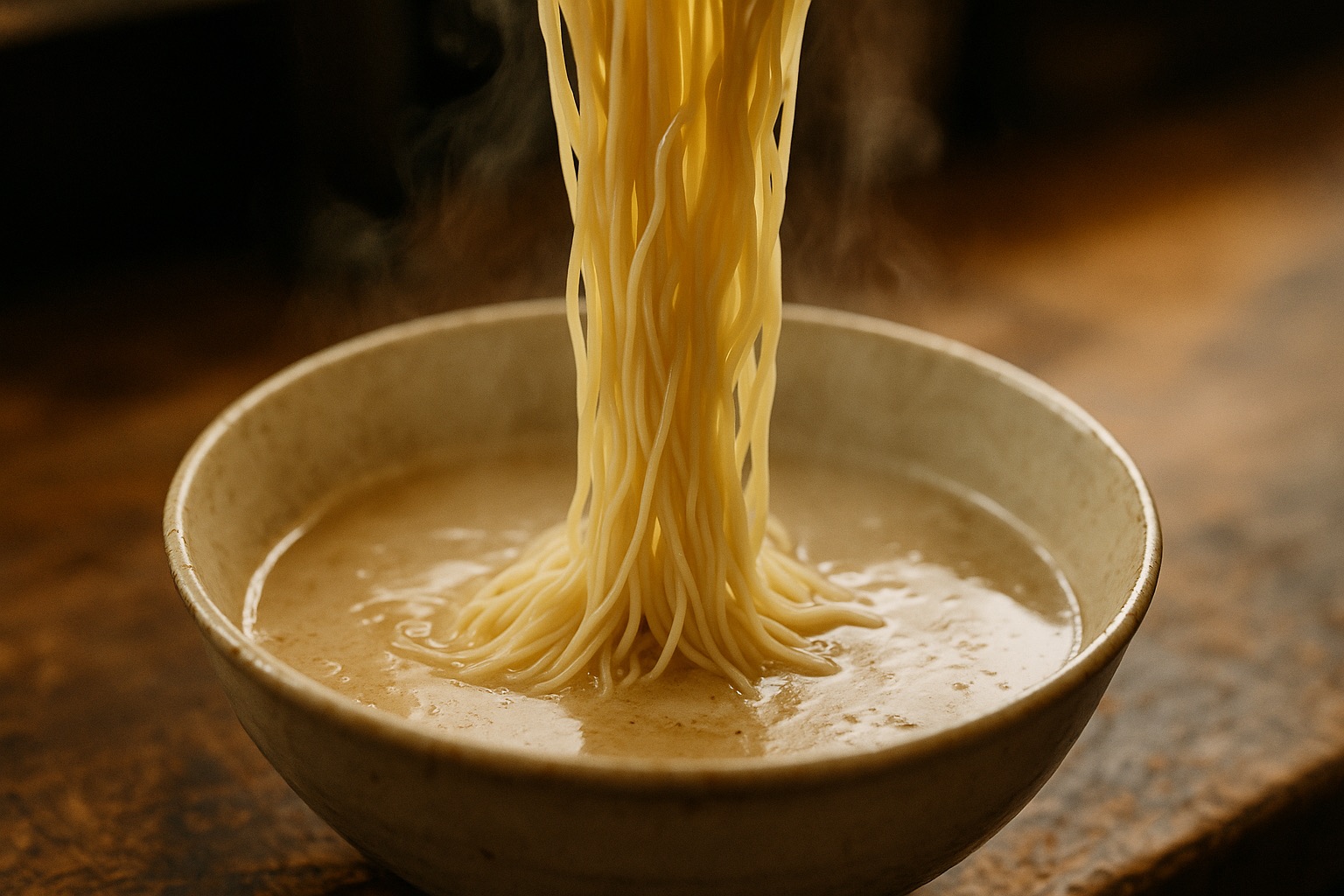
Hakata ramen noodles are among the thinnest in Japan — thin enough that they cook in seconds, which is why the broth does not have time to soak in. The noodles and broth remain distinct. This is why firmness matters: soft noodles in tonkotsu broth become mushy almost immediately.
2. Tonkotsu broth
Pork bones simmered for hours until the collagen dissolves and the broth turns milky white. Fukuoka tonkotsu is lighter than the Kumamoto style (which adds garlic oil) and heavier than the Nagahama style. The intensity varies enormously by shop — from the approachable Shin Shin to the full-power Issou.
3. Kaedama (替え玉) — the refill system
When your noodles are finished but broth remains, you order kaedama: a second serving of noodles dropped directly into your bowl. It costs ¥100–200. Say kaedama hitotsu (替え玉一つ). Specify your firmness again. Not ordering kaedama when you have remaining broth is, in Fukuoka, considered a minor waste.
Noodle firmness — what to say
Most locals order barikata. Start with kata if it's your first bowl.
Free condiments on every table
Nagahama style vs Hakata style
Nagahama ramen (the style at Ganso Nagahamaya) is thinner and slightly lighter — it was designed for fish market workers who needed to eat fast. Hakata-style tonkotsu, as served at most specialist shops, is richer and more concentrated. Both use the same ultra-thin noodles. Think of Nagahama as the working-lunch version and Hakata-style as the evening bowl.
The Rankings: 7 Best Specialist Shops
Yatai stalls are ranked separately — see below.
Hakata Ramen Shin Shin
博多らーめん ShinShin
Shin Shin uses a blend of pork bone and chicken broth, which makes it lighter and more approachable than pure tonkotsu. This is not a compromise — it is a deliberate choice that produces a bowl that is deeply satisfying without being overwhelming. Tenjin locals eat here regularly. The walls are covered with signed photos from Japanese celebrities, which tells you something about how this place is regarded locally.
One of the most recommended Fukuoka shops in international food rankings, including coverage connected to Asia's 50 Best. It is not a tourist trap — it is the shop that tourists happen to discover.
What to order
Hakata ramen (¥850) + kaedama (¥150). Order barikata (very firm noodles). Add karashi takana (spicy pickled mustard greens) from the counter.
“The best ramen for your first bowl in Fukuoka. Not the most intense, but the most perfectly balanced.”
Hakata Issou
博多 一双
Issou serves one thing and one thing only — tonkotsu ramen — and they have been perfecting it for years. The broth is 1.5 to 2 times more concentrated than Shin Shin's, with a deep, rich pork flavour that hits you as soon as the bowl arrives. If Shin Shin is the introduction, Issou is the full lesson. On Reddit's Fukuoka ramen threads, this shop consistently receives the most recommendations from people who have eaten broadly across the city.
What to order
Ramen (¥890), firm noodles (katame). Add sesame and karashi takana from the table yourself. Order kaedama firm or very firm.
“If you want to know what Hakata ramen actually tastes like at full intensity, this is the answer.”
Ganso Nagahamaya
元祖長浜屋
Founded in 1952, Ganso Nagahamaya is the origin point of Nagahama-style ramen — a slightly thinner, faster-eating version of tonkotsu developed specifically for workers at the nearby fish market who needed a hot meal in under five minutes. The shop is credited (among several claimants) with inventing the kaedama system: the practice of ordering extra noodles to finish your remaining broth, rather than wasting it or buying a second full bowl. A bowl here costs ¥500. That price has barely moved in decades.
What to order
Ramen (¥500) + kaedama (¥100). Say "ramen, kata" (firm) when you order. No English menu — but "ramen" is the only word you need. You can also say "koi" (rich broth), "usui" (light), or "ooi" (more noodles).
“The original. At ¥500, it's the cheapest and most historically significant ramen in Fukuoka. No English, no frills, pure experience.”
Hakata Daruma
博多だるま
Founded in 1963, Hakata Daruma is one of the oldest surviving ramen shops in central Fukuoka. Counter seats only, which makes it ideal for solo diners. The broth is medium concentration — somewhere between Shin Shin's lightness and Issou's intensity — with a consistency that has not changed in decades. It appears in Asia's 50 Best-adjacent rankings as a Fukuoka institution. Come for the old-school atmosphere as much as the ramen.
What to order
Ramen (¥900). Add extra chashu for good value. Karashi takana on the table is free.
“The most old-school counter-seat experience in central Fukuoka.”
Fukuchan
ふくちゃんラーメン
Fukuchan simmers pork heads for two full days to produce a broth with extraordinary collagen content — thick, rich, and intensely savoury in a way that separates it from every other shop in this list. The shop is in the suburbs, which means essentially zero tourists and a clientele of local regulars who come specifically for this bowl. Reviews consistently describe the flavour as "funky" in the best sense — deeply porky, complex, not for everyone, but unforgettable for those who want it.
What to order
Chashu ramen (¥1,160). Order barikata (very firm noodles). Note: requires train and bus, or a car.
“The most intense bowl in Fukuoka, in a suburb no tourist visits. Worth the journey if you take ramen seriously.”
Hakata Ikkousha
博多一幸舎
Ikkousha is well known internationally and uses a distinctive foam-topped broth — a creamy white layer that forms when the soup is aerated during preparation. The result is richer on contact than a flat-surface broth. English menus are available, some staff speak basic English, and the shop is accustomed to foreign visitors. It sits in the middle ground between tourist-facing and genuinely local: not the most authentic Fukuoka experience, but reliably excellent and welcoming.
What to order
Ramen (¥980). The foam topping is the signature — try it as-is before stirring.
“The most foreigner-friendly specialist shop without sacrificing quality.”
Ichiran (Main Branch, Nakasu)
一蘭 中洲本店
Ichiran was founded in 1960 in Nakasu and invented the individual dining booth — a partitioned counter where you eat facing a curtain, with no interaction required beyond filling out an 18-point customisation sheet. It is the most foreigner-friendly ramen experience in Japan, with multilingual ordering and zero awkwardness. The ramen itself is good — Ichiran's secret red sauce is a legitimate signature — but it is calibrated for a mass audience across dozens of countries.
What to order
Tonkotsu ramen (¥980). The customisation sheet lets you specify broth richness, noodle firmness, spice level, and more. Start with the defaults on your first visit.
“Not what locals eat when they want ramen. But if you're anxious about navigating a Japanese-only counter, Ichiran removes all friction. The main branch in Nakasu is worth visiting once for the experience.”
The Yatai Experience — A Separate Category
✦ AI-generated illustration
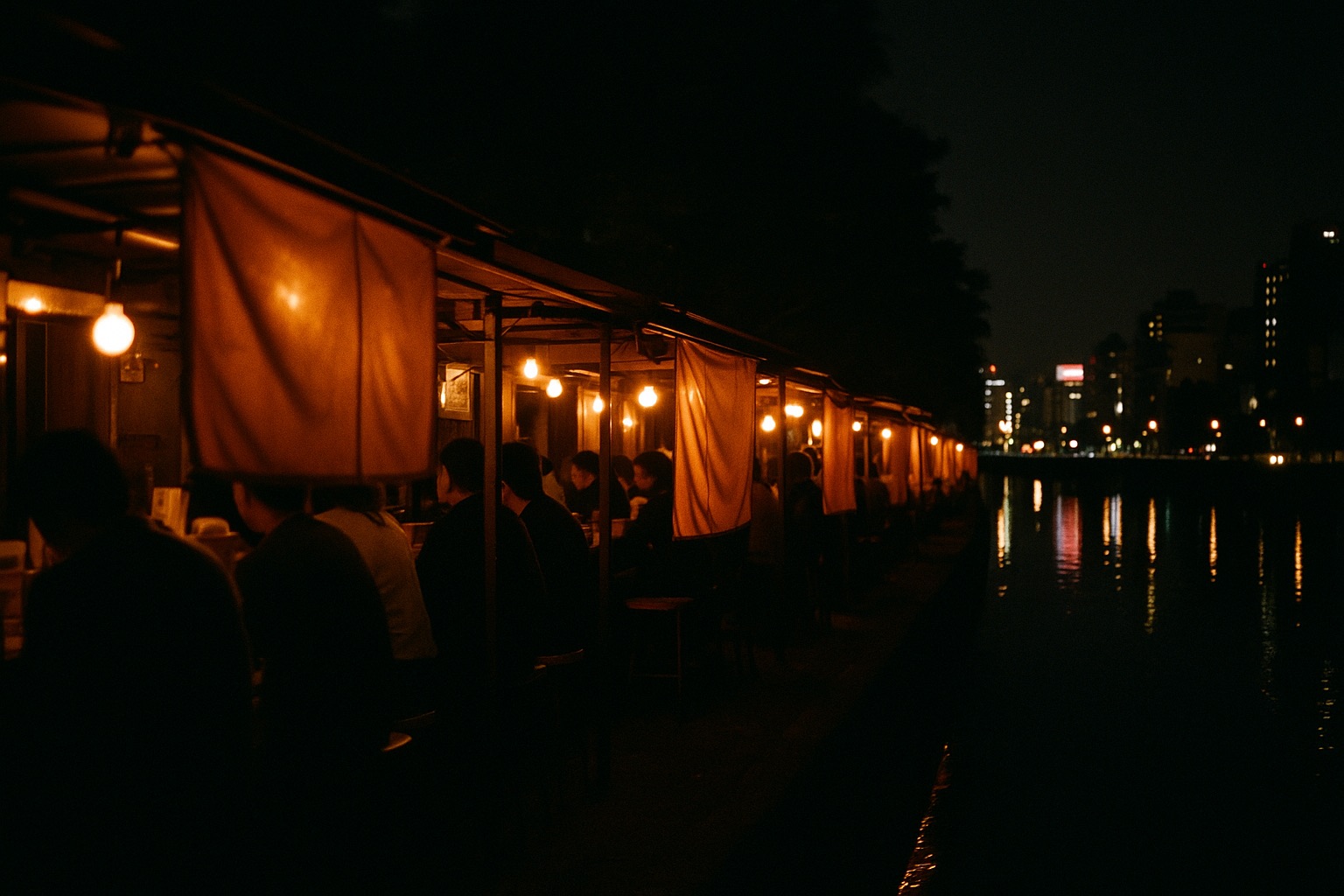
Yatai ramen and specialist shop ramen are not the same thing, and comparing them on the same scale misses the point. The ramen at a yatai is good — sometimes very good — but that is not why you go. You go for the experience of sitting under orange canvas on the bank of a river at midnight, sharing a counter with strangers, ordering beer and yakitori and whatever looks interesting. The ramen is part of it. The atmosphere is the point.
The yatai permit system is closed — no new stalls can be licensed — which means every one of the ~100 surviving stalls is a piece of a shrinking, protected food culture. That context makes the experience worth having even if the ramen is not the best bowl you eat in Fukuoka.
Nakasu River Yatai Row
中洲川端エリア · Best atmosphere · Most tourist-friendly
Ten to fifteen stalls line the Naka River bank near Nakasu, their orange canvas roofs glowing against the dark water. This is the most photographed scene in Fukuoka's food culture, and deservedly so. English menus have become more common here than anywhere else in the yatai system. It is also the most tourist-facing and slightly pricier than the Tenjin zone.
What to order
Ramen plus yakitori and oden — the point of yatai is the variety, not just noodles. Budget ¥2,500–4,000 for drinks and a few dishes.
Tenjin Area Yatai
天神エリア · Most local · Best for crawling
The Tenjin yatai zone is where office workers stop after work, which means the clientele is more local and the atmosphere less self-consciously touristy. The stall Mamichan (ままちゃん) is known among foreign visitors as being particularly welcoming and English-friendly. This is also where you find yaki ramen — stir-fried ramen noodles with tonkotsu-based sauce, a Fukuoka dish that doesn't exist anywhere else.
What to order
Try one bowl of ramen at the first stall, then move to a second for yakitori or yaki ramen. The yatai crawl (hashigo) is standard practice — don't eat everything in one place.
Kokinchan
小金ちゃん · Best yaki ramen · Most unique
Kokinchan is the most famous yatai for yaki ramen (焼きラーメン) — ramen noodles stir-fried in a tonkotsu-derived sauce instead of served in broth. The result is denser, slightly caramelised at the edges, and completely different from a bowl of soup ramen. It is regularly cited on Reddit and international food forums as one of the things in Fukuoka you genuinely cannot eat anywhere else.
What to order
Yaki ramen (¥950). This is why you're here — order it first.
The yatai crawl (ハシゴ)
The standard approach: visit 3–4 stalls in one evening, having one drink and one or two dishes at each. Total budget: ¥3,000–5,000 per person. Don't order everything at the first stall — leave room for the next one.
Timing: stalls start setting up around 18:00 but the atmosphere peaks after 21:00. Most stalls close between 1:00–3:00am.
Honest Takes — What the Tourist Guides Won't Tell You
✦ AI-generated illustration
On Ichiran and Ippudo
Ichiran is not bad ramen. The individual booth concept is genuinely clever for solo dining. Ippudo is genuinely good ramen with a consistent product across every country. But neither represents what Fukuoka locals actually eat. Ichiran's booths are designed around an international audience. Ippudo is a global brand. If you eat only at these two, you have eaten Fukuoka-adjacent ramen — not Fukuoka ramen. Go to Shin Shin or Issou first. Then go to Ichiran if you want the booth experience.
Night is better than lunch
Tonkotsu broth improves through the day as it continues to simmer. The bowl you eat at 23:00 is richer and more developed than the one served at 11:00 opening time. This is not universal — some shops maintain consistent broth temperature throughout — but as a rule, evening Hakata ramen is better than lunch Hakata ramen. The exception is Ganso Nagahamaya, which runs 24 hours and maintains consistent quality across all hours.
Not ordering kaedama is a mistake
Every bowl of Hakata ramen is designed with kaedama in mind. The broth quantity, the noodle serving size, the balance of saltiness — all calibrated for at least one refill. If you leave broth in your bowl without ordering kaedama, you have left behind the best part of the meal. Say kaedama hitotsu. It costs ¥100–200. Do it.
Which queues are worth it
Hakata Issou sometimes has a short queue at peak times — worth waiting 15 minutes. Ichiran at the Nakasu main branch can have long queues on weekends — the ramen is not worth a 45-minute wait when Shin Shin or Daruma are nearby with no queue. Ganso Nagahamaya is 24 hours and almost never has a queue. Prioritise accordingly.
Practical Info
| Budget | Best option |
|---|---|
| ¥500 | Ganso Nagahamaya — one bowl, one kaedama, total ¥600. Cheapest and most historical. |
| ¥1,000 | Shin Shin or Issou — ramen + kaedama + drink. The standard local experience. |
| ¥1,500+ | Hakata Daruma or Ikkousha with extra toppings. Or a yatai crawl with drinks and multiple dishes. |
Good for solo diners
- ✓ Ichiran (booths designed for solo)
- ✓ Hakata Daruma (counter only)
- ✓ Ganso Nagahamaya (fast, no fuss)
- ✓ Any yatai (shared counter, easy to start conversation)
Zero Japanese required
- ✓ Ichiran (multilingual forms)
- ✓ Shin Shin (staff used to foreign customers)
- ✓ Ikkousha (English menu)
- △ Yatai Mamichan in Tenjin (English-friendly)
Coming from Beppu or Oita? Fukuoka is about 2 hours by Limited Express Sonic. See our full guide on getting between Fukuoka and Beppu for all transport options. And for the full history of why Fukuoka's food culture is different from anywhere else in Japan, read our Fukuoka Food Guide.
Ramen in Fukuoka is the best in the world. Not because the noodles are magical or the pork is special — but because an entire city has been optimising this one dish for 70 years, and the infrastructure around eating it (the kaedama system, the condiment ritual, the late-night yatai, the counter culture) is unlike anything else in Japan.
Order barikata. Add a little karashi takana. Get the kaedama. Eat at 23:00. Then go to a yatai and do it again.
For the full story of Fukuoka's food culture — from the gold seal of 57 CE to Michelin three-star sushi — read the Fukuoka Food Guide. For Fukuoka's warlords and samurai history, see the Fukuoka Castles guide.