Fukuoka vs OsakaAn Honest Comparison from Someone Who Lives in Kyushu
June 2026 · 18 min read
✦ AI-generated illustration — not a photograph of the actual site
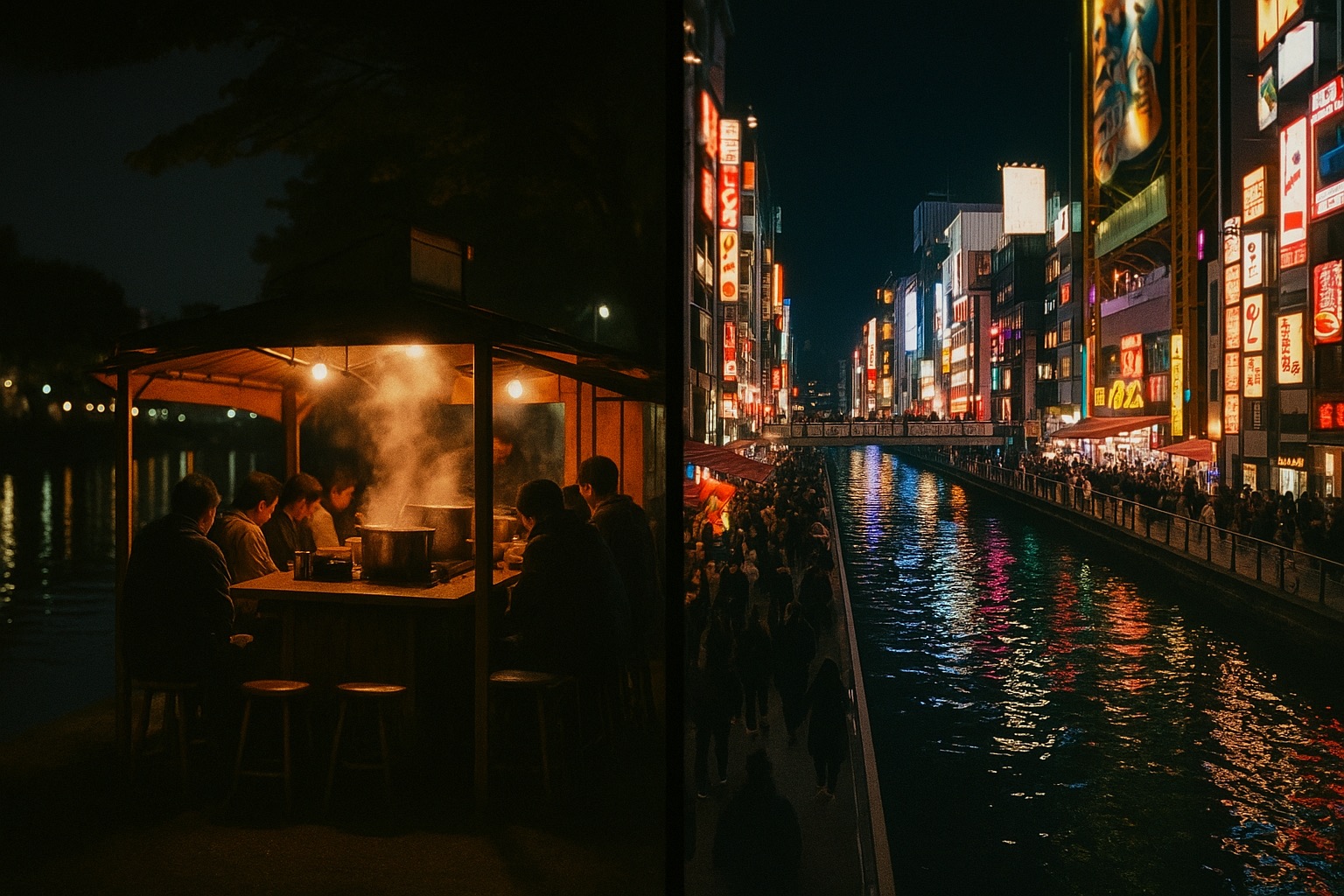
Everyone who visits Japan eventually asks this question. Osaka has been Japan's "kitchen" for 400 years. Fukuoka has the freshest fish in the country, the best ramen, and a street food culture that exists nowhere else in Japan.
I live 15 minutes from Beppu and have visited Osaka enough times to have a genuine opinion about both. This is not a travel blog comparison written from a hotel room. This is what I actually think — based on living in Kyushu, cooking the food, and watching how tourists experience both cities.
Spoiler: the answer is not "it depends."
In This Article
The Quick Answer — Who Should Go Where
Before the deep dive, here's the honest summary. If you're short on time, this table is the article.
| What you're looking for | Recommendation |
|---|---|
| World-class food diversity | Osaka |
| Fresh seafood & local food culture | Fukuoka ✦ |
| Avoiding the crowds | Fukuoka ✦ |
| Combining with Kyoto & Nara | Osaka |
| Base for exploring all of Kyushu | Fukuoka ✦ |
| Budget travel | Fukuoka (6% cheaper) ✦ |
| First-time Japan trip | Osaka (stronger tourist infrastructure) |
| Second or third Japan trip | Fukuoka ✦ (discover the real Japan) |
✦ = Fukuoka advantage. Five out of eight categories go to Fukuoka — but read on for the nuance.
The Food Comparison — Where It Really Matters
This is the question everyone is really asking. Both cities are famous for food. But they're famous for completely different reasons — and understanding the difference is the key to choosing.
Osaka: The Philosophy of Kuidaore
Kuidaore(食い倒れ) — "eat until you collapse" — is not just a saying. It's 400 years of merchant culture condensed into a food philosophy. Osaka's merchants needed to eat quickly, cheaply, and extremely well because food was fuel for commerce. The result is a city where food is everywhere, at every price point, at every hour.
What Osaka does best with food
- → Diversity: Every cuisine, every style, every price point — all within walking distance of Dotonbori
- → Volume: Takoyaki, okonomiyaki, kushikatsu — Osaka invented the concept of affordable street food theatre
- → Michelin density: Japan's second-highest Michelin restaurant count after Tokyo
- → 24-hour access: Ramen at 3am, breakfast markets opening at 5am — the food infrastructure never sleeps
- → Kuromon Market: The best place in western Japan to eat everything in one place
Fukuoka: The Philosophy of Proximity
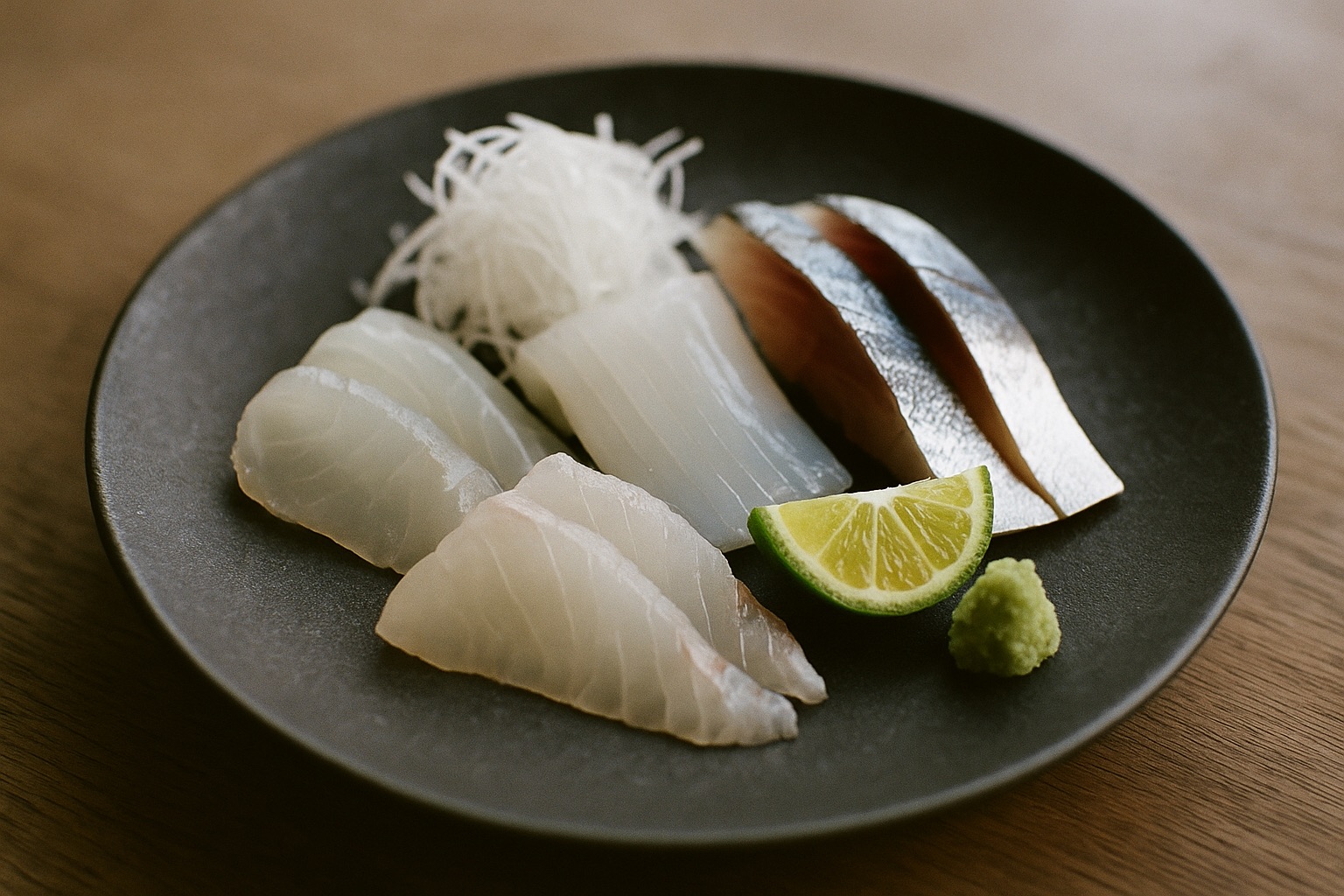
Fukuoka's food culture is built on a simple, devastating advantage: three of Japan's most productive fishing grounds — the Genkai Sea, the Ariake Sea, and the Suo Sea — are within a few hours of the city's kitchens. The fish you eat at dinner was swimming this morning. This is not marketing. This is geography.
✦ AI-generated illustration — not a photograph of the actual site
What Fukuoka does best with food
- → Freshness: Three fishing grounds within hours of the city — the fish is genuinely different
- → Ramen: Hakata tonkotsu is the original — eating it anywhere else is a compromise
- → Yatai: 100 licensed street stalls, a food culture that exists nowhere else in Japan
- → Fine dining value: GOH ranked No.36 in Asia's 50 Best Restaurants 2025 — at prices far below Tokyo or Osaka equivalents
- → Unique dishes: Motsunabe, hakata mizutaki, mentaiko — things you cannot properly eat anywhere else
The Honest Verdict on Food
Osaka wins on:
- ✓ Diversity and volume
- ✓ Iconic street food theatre (takoyaki, kushikatsu)
- ✓ Sheer number of Michelin-starred restaurants
- ✓ 24-hour food access
Fukuoka wins on:
- ✓ Freshness and provenance
- ✓ Unique cultural experiences (yatai)
- ✓ Value at every price point
- ✓ Dishes with no substitute elsewhere
If you want to eat 12 different things from 12 different culinary traditions in one afternoon, go to Osaka. If you want to eat the best version of fish you've ever had in your life — cooked simply, by someone who grew up eating it — go to Fukuoka. These are genuinely different experiences. Neither is wrong.
→ Read our full Fukuoka food guide for the complete breakdown of every dish worth knowing.
The Crowd Problem — 2026 Reality Check
This is the section most comparison articles skip. They shouldn't. In 2026, where you go in Japan determines not just what you see, but how you feel while you're seeing it.
Osaka in 2026: The Crowd Reality
- →Dotonbori on weekends: The bridge is so crowded that moving at normal walking pace is impossible. This is not an exaggeration.
- →Popular restaurants: Queue times of 2–3 hours are normal for well-reviewed places without reservations. Many have stopped taking walk-ins.
- →The Osaka–Kyoto corridor: The most-visited 2-hour stretch in Japan has reached saturation. Tourist numbers in 2025–2026 have exceeded pre-pandemic peaks.
- →Overtourism restrictions: Several districts in both cities have implemented or are planning visitor caps and fee systems.
- →Hotel pricing: Osaka hotels now run significantly higher than Fukuoka equivalents for the same star rating, with smaller rooms.
Fukuoka in 2026: A Different Experience
- → International visitors are growing — but not at Tokyo/Osaka/Kyoto levels
- → Popular restaurants are bookable, often same-week or even same-day
- → Yatai stalls: you can walk up and find a seat within 20 minutes even on busy nights
- → The city functions at a human scale — you travel at your own pace
- → "Next breakout destination" status is rising in international travel media — but hasn't arrived yet
The honest reality is this: in 2026, Osaka delivers an extraordinary food and culture experience surrounded by very large numbers of other people doing exactly the same thing. Fukuoka delivers a comparable experience — sometimes better — with a fraction of the crowd. For many travellers, that difference alone justifies the choice.
Cost Comparison — The Numbers
Osaka is 6% more expensive than Fukuoka as a city (cost of living index, March 2026). In practice, that gap is larger for travellers because tourist-facing prices in Osaka have risen faster than the general index.
The Airport Access Factor
- → Train to city centre: ~50–60 minutes
- → Cost: ¥1,200–2,000 depending on train type
- → Located on an artificial island — typhoon delays occur
- → Subway to city centre: 5 minutes
- → Cost: ¥260
- → One of the best airport-to-city access rates in the world
The Yatai Budget Hack
In Fukuoka, a complete evening meal at a yatai — yakitori, gyoza, ramen, a beer — costs ¥1,500–2,000. This kind of satisfying, authentic, convivial dinner does not exist at this price in Osaka. It doesn't exist anywhere else in Japan. It is exclusive to Fukuoka.
What Each City Does Best — The Honest List
OSAKAWhere it wins decisively
- 1Day trips to Kyoto (15 min by Shinkansen), Nara (45 min), Kobe (20 min) — world-class destinations within striking distance
- 2Universal Studios Japan — the best USJ in the world by many accounts
- 3The Dotonbori food chaos experience — overwhelming, loud, and genuinely thrilling if that's what you want
- 4Absolute number of Michelin-starred restaurants
- 5International flight connections — more routes, more airlines, more options
- 6400 years of merchant history — Osaka Castle, Shinsekai, the trading culture that shaped Japan
FUKUOKAWhere it wins decisively
- 1Seafood freshness — three fishing grounds within hours, genuinely unmatched
- 2Yatai culture — 100 licensed street stalls, a food culture that exists nowhere else in Japan
- 3Crowd levels — in 2026, this factor alone changes the travel experience
- 4Base for Kyushu — Beppu (2h), Nagasaki (2h), Kumamoto (30min by Shinkansen) all within easy reach
- 5Accommodation value — same budget, better room, better location
- 6The sense of real Japanese daily life — not performed for tourists, just lived
The Food Deep Dive — Specific Dishes Compared
Osaka's Signature Dishes
✦ AI-generated illustration — not a photograph of the actual site
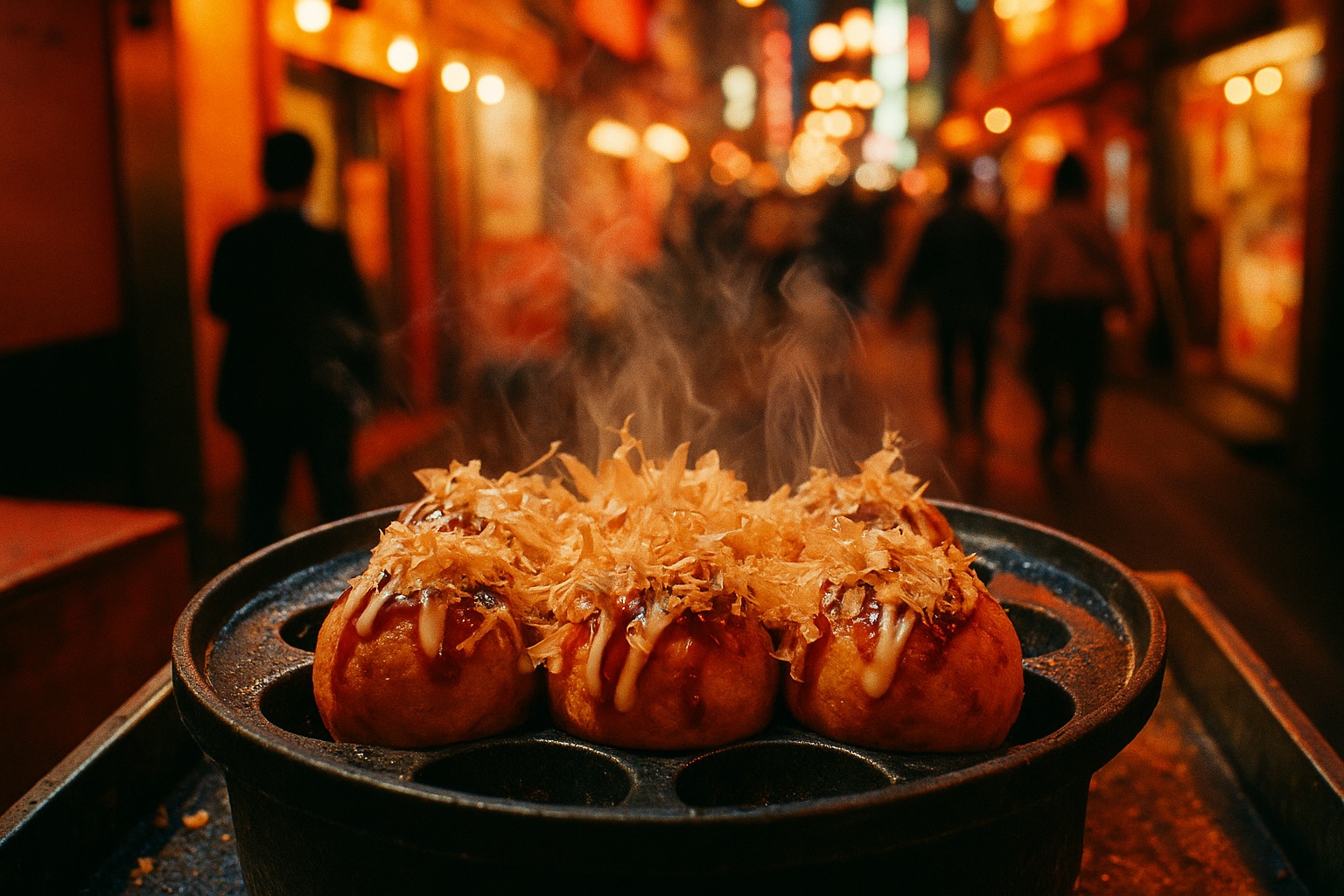
- Takoyaki (¥500–800 / 8 pieces)
The genuine original — golf ball-sized batter rounds with octopus inside, eaten scalding hot. Osaka street stalls cook them in front of you in cast-iron moulds. The technique matters. Do not eat takoyaki outside Osaka and expect the same thing. - Okonomiyaki (¥1,000–2,000)
The centre of Japan's great culinary debate: Osaka-style (mixed ingredients, cooked together) vs Hiroshima-style (layered). Osaka wins on history and density of good restaurants. - Kushikatsu (¥100–200 per skewer)
Breaded, deep-fried skewers of meat and vegetables — with the absolute rule that you never double-dip the shared communal sauce. The rule is enforced, and breaking it is a social catastrophe. - Hako-zushi (pressed box sushi)
Osaka's own sushi style — ingredients pressed into a wooden mould and cut into blocks. Completely different from nigiri. Rarely found outside Osaka at this quality.
Fukuoka's Signature Dishes
- Hakata Ramen (¥700–1,000)
Ultra-thin noodles in milky-white pork bone broth, eaten at a counter with pickled ginger and sesame seeds. The kaedama system (adding extra noodles to your remaining broth) was invented here. Eating it at a Fukuoka yatai at midnight is a different experience than eating it at a chain restaurant in Tokyo. Read our best ramen in Fukuoka guide for specifics. - Motsunabe (¥1,500–3,000 / person)
Offal hot pot born in postwar Fukuoka coal mines — beef or pork intestines with cabbage, garlic chives, and tofu in a rich miso or soy broth. The dish that Fukuoka locals eat when they want comfort. Nothing else in Japan is quite like it. See our motsunabe guide. - Mentaiko (spicy cod roe)
A Korean immigrant ingredient adopted into Fukuoka's culinary identity — salty, spicy, intensely flavoured fish roe that appears on rice, in pasta, and inside onigiri. Fukuoka sells the best version in Japan. - Kyushu-mae Sushi
Served with kabosu citrus instead of soy sauce. Fish from the Genkai Sea, cut thicker because freshness allows it. The sushi philosophy here is opposite to Tokyo's aged, marinated approach. See our Fukuoka sushi guide. - Yatai dinner (¥1,500–2,500 total)
A complete evening at a street stall — yakitori, gyoza, a bowl of ramen, a cold Sapporo. The bill will genuinely surprise you. More in our complete yatai guide.
Access & Logistics
Osaka Advantages
- Kansai International Airport
More international routes, more LCC options from Southeast Asia and beyond - Tokaido Shinkansen hub
Tokyo 2h15min, Nagoya 50min — if your trip includes eastern Japan, Osaka is the logical base - The Kansai Loop
Kyoto (15min), Nara (45min), Kobe (20min) — three world-class destinations, one base
Fukuoka Advantages
- Fukuoka Airport: 5 minutes to city
Subway to Hakata Station costs ¥260. This is genuinely one of the best airport access situations in the world — better than almost any major Asian city - Kyushu hub position
Beppu 2h by limited express · Nagasaki 2h by limited express · Kumamoto 30min by Shinkansen - Asia connections
Direct flights to Seoul, Shanghai, Hong Kong, Taipei, Singapore — Fukuoka is well-connected for travellers coming from or continuing to Asia
→ If you want to explore all of Kyushu, see our 7-day Kyushu itinerary. The island is bigger and more varied than most visitors realise.
The Verdict — Which One Should You Choose?
First-time Japan trip (one visit only)
→ Osaka + Kyoto routeThe tourist infrastructure is better, the world-heritage sites are extraordinary, and the Osaka–Kyoto corridor gives you Japan's most famous experiences in one efficient sweep. Just go in knowing the crowds are real and plan accordingly.
Second or third Japan trip
→ Fukuoka (Kyushu)If you've done Tokyo, Kyoto, and Osaka, you've seen the greatest hits. Fukuoka is where you discover a different Japan — less curated, more daily, more surprising. It's the trip that changes how you think about the country.
Food-focused trip
→ FukuokaOn freshness, local identity, value, and unique cultural experiences (yatai), Fukuoka is ahead. If the purpose of your trip is to eat Japan's best food rather than Japan's most famous food, the answer is Fukuoka.
Family trip with children
→ Osaka (with a case for Fukuoka)USJ, the aquarium, and Osaka Castle make the city a strong family choice. But Fukuoka has beaches, Beppu's sand onsen (kids can be buried in warm volcanic sand), and Aso's active volcano — a different kind of unforgettable.
Budget priority
→ Fukuoka6% lower living costs + cheaper hotels + yatai meals under ¥2,000 = the same quality of experience for meaningfully less money. The savings compound over a week-long trip.
Solo travel
→ FukuokaCounter culture and yatai culture were made for solo travellers. There is no more natural environment for eating alone in Japan than a Fukuoka yatai counter at 9pm. Read our solo travel in Kyushu guide for everything else.
"Comparing Osaka and Fukuoka is, in a small way, the wrong question. Osaka is a food city built by 400 years of merchant culture. Fukuoka is a food city built by the sea, the volcanoes, and a different kind of history. Both are real. Both are worth your time."
But if you want to experience something extraordinary without standing in a 2-hour queue to get there — if you want the food to be the point, not the destination brand — then 2026 is Fukuoka's year. It's mine, and I live here.