Motsunabe: Fukuoka's Coal Miner's Hot Pot(And Why It's One of the Greatest Dishes in Japan)
Written by a local in Oita · June 2026 · 15 min read
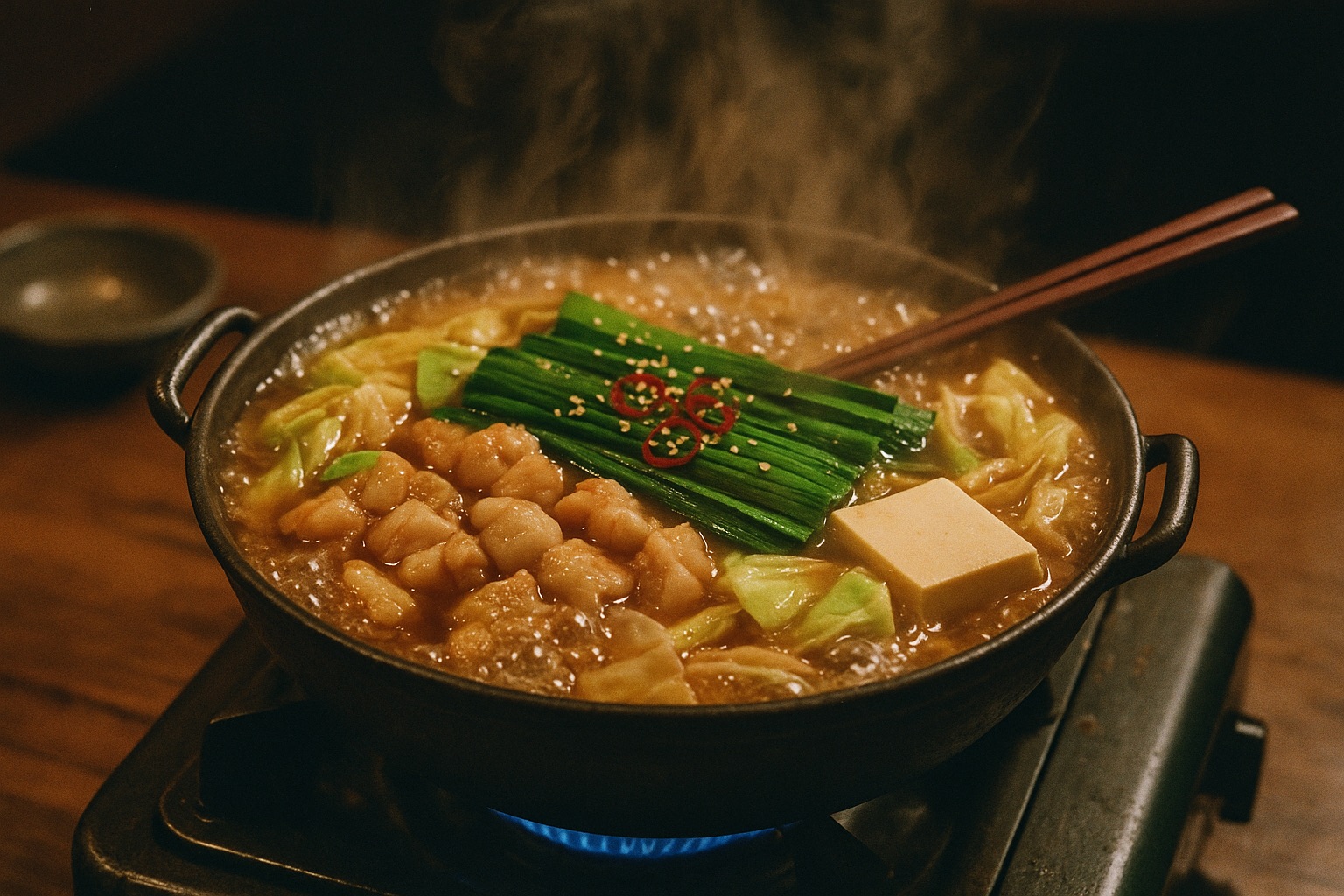
There's a category of food that exists in every culture: the dish that began as poverty food and became a national treasure. France has cassoulet. Italy has cacio e pepe. Korea has kimchi jjigae. Fukuoka has motsunabe.
✦ AI-generated illustration — not a photograph of the actual site
The story of how beef offal — the parts that were thrown away — became the signature dish of one of Japan's greatest food cities is, in miniature, the story of postwar Japan itself: scarcity turning into abundance, the discarded becoming celebrated, a regional necessity becoming a national craving. This is a guide to what motsunabe is, where it came from, how to eat it correctly, and where to find the best of it in Fukuoka.
What Motsunabe Actually Is (Before We Go Any Further)
The name breaks down simply. Motsu (もつ) means offal — specifically the intestines (small and large) of beef or pork. Nabe(鍋) means hot pot, a dish cooked communally in a single pot at the table. So motsunabe is, literally, “offal hot pot.”
You'll also hear offal called horumon (ホルモン) in Japan, and the etymology tells you everything about its origins. Most people assume it comes from the English word “hormone” — and there is a folk theory along those lines about stamina food. But the more widely accepted origin is Kansai dialect: hōru mon(放るもん), meaning “the things you throw away.” Offal was butcher's waste. The name is a memorial to its own humble beginning: this is the food made from the parts nobody wanted.
The Standard Ingredients
Beef or pork offal (motsu) · mountains of cabbage · bright green garlic chives (nira) · whole sliced garlic · tofu · red chili. That's the core. The broth comes in three styles — soy sauce, miso, or salt — which vary by restaurant.
The Most Important Distinction: Raw vs Boiled Motsu
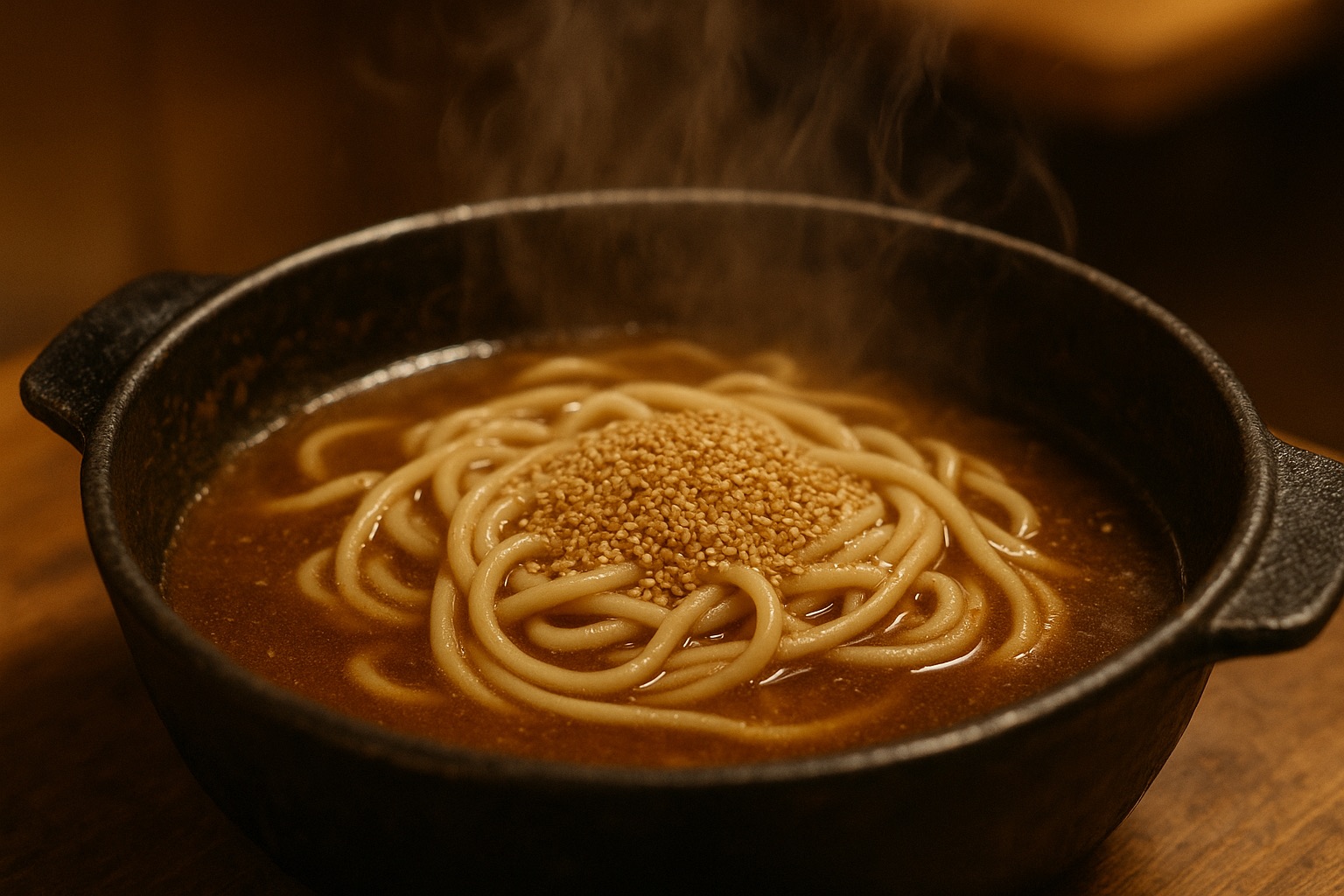
Here is the single thing that separates a great motsunabe shop from a mediocre one: fresh raw offal (nama-motsu) versus pre-boiled offal. The boiled offal you find in a supermarket is a completely different ingredient from the fresh raw motsu a specialist shop prepares each morning. Fresh raw motsu has a plump, springy texture and a clean sweetness in the fat. Pre-boiled motsu is chewy and flat by comparison. This is why locals insist on specialist shops — without fresh raw motsu, you simply haven't tasted what motsunabe is supposed to be.
The Real History — Coal Miners, Postwar Hunger, and a Dish Nobody Wanted
To understand motsunabe, you have to understand the Chikuho coalfield. Northern Kyushu — Fukuoka Prefecture and the northern edge of Kumamoto — was the center of the Japanese coal industry that powered the country's industrialization and, later, its postwar recovery. At the industry's peak, hundreds of thousands of miners worked these fields. It was brutal, dangerous, exhausting labor, and the people who did it needed cheap, fortifying, calorie-dense food.
The origin stories of motsunabe vary, and I think it's more honest to present several than to pretend there's one clean answer:
- •One account credits Korean coal-mine laborers, who simmered offal and garlic chives in soy sauce in an aluminum pot — a dish drawing on Korean traditions of using every part of the animal.
- •Another points to the general postwar food shortage, when nothing edible could be wasted and the discarded organ meats became a necessary protein source.
- •A third credits butcher-shop owners who cooked the leftover cuts they couldn't sell.
What every version shares is the essential point: motsunabe began with the parts nobody else wanted. It was the food of hard physical labor and scarcity, eaten because it was cheap and filling, not because it was prized. By the 1950s it had developed into a stamina dish for the miners — protein, fat, garlic, and vegetables in one pot.
The transformation came in the 1990s. In 1992, a Hakata-style motsunabe restaurant opened in Tokyo and triggered a nationwide craze. Chains spread across Japan almost overnight, and motsunabe became a national dish — to the point where, today, many people across Japan know it without realizing it was, until quite recently, a relatively obscure regional specialty. There's a detail locals enjoy: before the boom, plenty of Fukuoka residents themselves rarely ate it. The fame came from outside.
The arc completed in 2019, when the Michelin Guide's special Fukuoka–Saga–Nagasaki edition included an offal-cuisine category. The food of the coal mines now sits in the world's most famous restaurant guide. That is the full reversal — from butcher's waste to Michelin recognition in roughly two generations.
The Philosophy of Motsunabe — Three Styles, Three Worldviews
🟤 Soy Sauce (Shōyu) — The Original
The oldest and most standard style. The soy-based broth lets the dashi umami come forward with a clean, sharp finish. This is the style for someone who wants to taste the offal itself, unmasked. The broth is lighter and more transparent than miso, and it rewards good-quality motsu.
Representative shops: Rakutenchi, Oishi
🟠 Miso — The Crowd-Pleaser
The style that Yamanaka is known for establishing as the de-facto “Hakata-style” motsunabe. A blend of several misos gives the broth depth and richness, and it pairs beautifully with the garlic. This is the best starting point for first-timers and anyone prioritizing approachability — the miso rounds out any strong offal flavor and makes the whole pot comforting and full.
Representative shops: Yamanaka, Ikkei
⚪ Salt (Shio) — The Connoisseur's Choice
The most delicate style, and the one where the natural sweetness of the motsu is most evident. Light and clean — often available without garlic — it's popular with diners who want a lighter pot, and it's frequently the choice of motsunabe veterans who want nothing between them and the quality of the offal.
Representative shops: select specialist restaurants
“Which one is correct?” is the wrong question. Each broth expresses the shop's philosophy. The classic progression for a visitor: miso on your first visit (most approachable), soy sauce on your second(to taste the tradition), and salt once you know what you're looking for.
How to Eat Motsunabe — The Right Way
The part most visitors get wrong — and the part that matters most
Ordering
Order one portion (¥1,500–2,500) per person. Critically — decide your shime (the finishing course) when you order, because popular options like champon noodles can sell out. Locking it in early is the move.
From Heat to First Bite
The motsu goes in first, at the bottom, to simmer in the broth. The cabbage and nira go in later — overcook them and they dissolve. The rule: as soon as it's bubbling vigorously, start eating. Don't let it sit.
The Eating Order
- Sip the broth alone first — register the base flavor
- Eat the motsu first, while it's at its freshest and springiest
- Cabbage and nira together with the motsu
- Tofu after it has absorbed the broth
- Crush the garlic and dissolve it into the soup as you go
Condiments
Ichimi togarashi (chili powder) for heat, ground sesame for richness, and yuzu kosho — the Kyushu staple of fermented yuzu peel and chili — for a bright, citrusy lift. Yuzu kosho on motsunabe is a regional signature; try it.
Shime — The Most Important Part
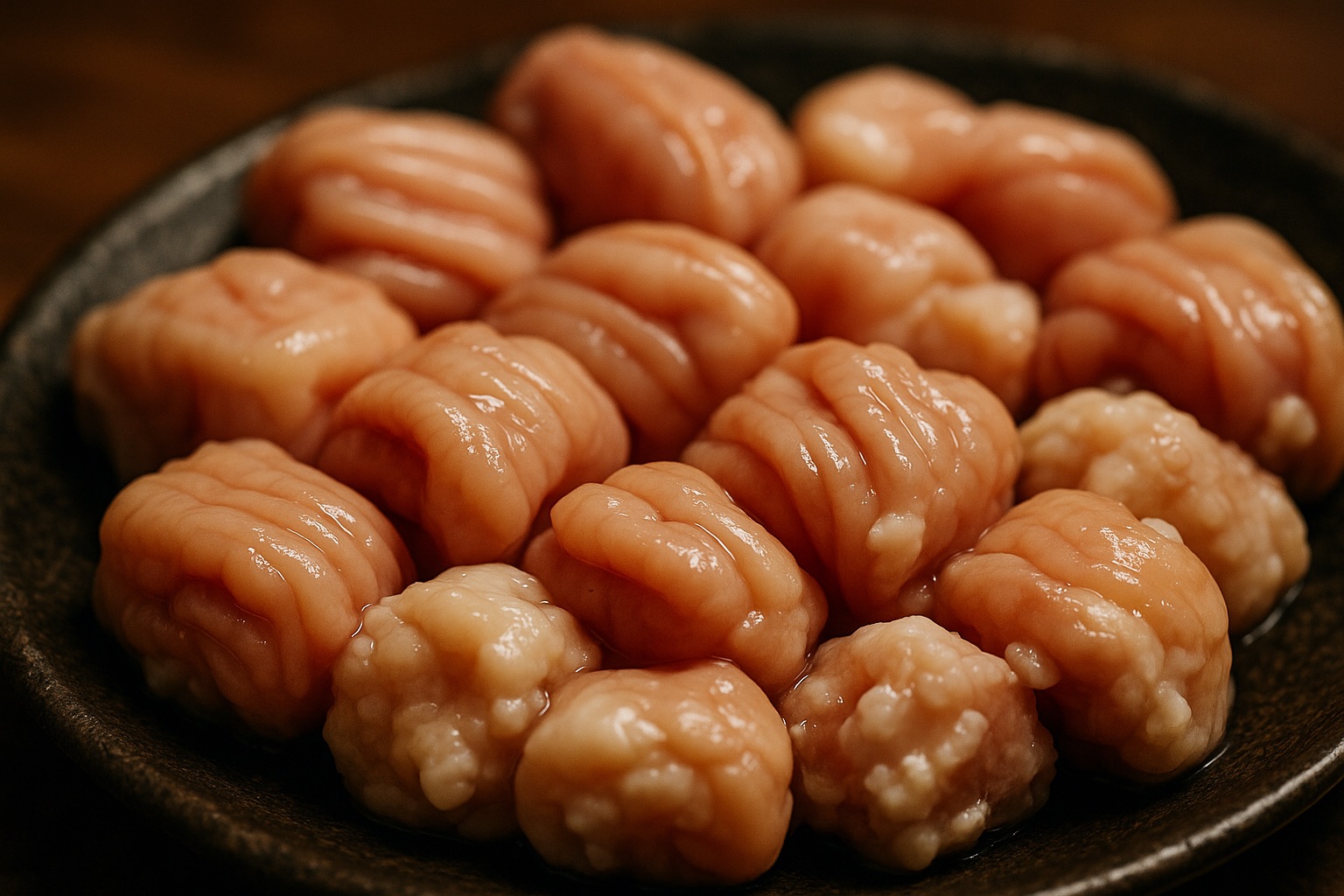
Here is the rule no guidebook tells you: if you don't do the shime, you've only eaten half the meal. By the end of the pot, the broth has absorbed everything — the fat from the motsu, the sweetness of the cabbage, the garlic, the dashi. The shime is where you reclaim all of it. There are three options:
- 🍜 Champon noodles: The most popular. Thick, chewy noodles that soak up the entire concentrated broth.
- 🍚 Zōsui (rice porridge): Rice and egg dropped into the broth — gentle, comforting, the soft way to finish.
- 🥚 Egg-bound udon: Udon finished with beaten egg — mellow and warming.
The unwritten local law: don't leave the shime broth behind. Finishing it is the whole point.
✦ AI-generated illustration — not a photograph of the actual site
The Best Motsunabe Restaurants in Fukuoka
Hakata Motsunabe Yamanaka (博多もつ鍋 やまなか)
The most famous motsunabe restaurant, and the one I recommend most to visitors. Yamanaka is known for establishing the miso-style motsunabe — their original broth blends several misos for a balance of depth and the natural sweetness of the motsu, working beautifully with the garlic. The interior is unusual: a colonial design merging European and Asian elements. Their special course adds vinegared motsu and mentaiko alongside the pot.
Motsunabe Rakutenchi (もつ鍋 楽天地)
One of the original motsunabe shops, going strong for over 30 years. Their signature is small-cut motsu — easy to keep eating right to the end without getting heavy. It's a genuine izakaya atmosphere with counter seating, which makes it one of the few places comfortable to visit solo. Their champon shime is famously buried under a mountain of ground sesame.
Gyu-motsu Oishi (牛もつ鍋 おおいし)
Founded in 1991, Oishi uses only domestic Japanese beef and is obsessive about sourcing. You can choose among three styles — miso, soy sauce, or a mizutaki-style broth. The miso blends four different misos; the soy sauce uses soy from a local brewery. The space is a converted warehouse with a calm interior, private rooms, and sunken kotatsu seating — good for groups.
Hakata Motsunabe Ikkei (博多もつ鍋 いっけい)
Ikkei is known as the originator of aburi motsunabe(炙りもつ鍋) — a style where the motsu is seared once before going into the pot, adding a smoky depth you won't find elsewhere. Choose from soy sauce, miso, or their “golden ratio” broth. With four branches including one in the Hakata Station building, this is also the easiest option for English support.
Motsuko (もつ幸)
The outlier: a mizutaki-style motsunabe simmered in chicken-bone broth and eaten with ponzu. It's completely different from every other shop on this list — lighter, more delicate, dipped rather than seasoned in the pot. If you've already had standard motsunabe and want to see how far the dish can stretch, this is the one.
| Shop | Style | Price | Best for |
|---|---|---|---|
| Yamanaka | Miso pioneer | ¥1,650+ | First-timers, visitors |
| Rakutenchi | Old-school izakaya | ¥1,500+ | Local feel, solo dining |
| Oishi | Warehouse, est. 1991 | ¥1,760+ | Groups, private rooms |
| Ikkei | Aburi (seared) style | ¥1,870+ | Unique style, English |
| Motsuko | Mizutaki style | ¥2,000+ | Trying something different |
✦ AI-generated illustration — not a photograph of the actual site
Motsunabe vs Mizutaki — Fukuoka's Two Great Hot Pots
Fukuoka has two signature hot pots, and visitors often wonder which to choose. They come from completely different worlds — motsunabe from the postwar coal mines, mizutaki from an early-20th-century fusion of Western consommé technique and Chinese cooking, first served around 1905. Here's how they compare:
| Aspect | Motsunabe | Mizutaki |
|---|---|---|
| Star ingredient | Beef/pork offal | Chicken (on the bone) |
| Broth | Soy sauce or miso | Chicken paitan (light) |
| How you eat it | Seasoned in the pot | Dipped in ponzu |
| Price range | ¥1,500–2,500/person | ¥3,000–5,000/person |
| Origin | Postwar coal miners | 1905 · Western + Chinese fusion |
| Atmosphere | Casual izakaya | More refined washoku |
| First visit? | Yes — start here | Better for a second visit |
The Honest Advice
- • Budget under ¥2,500: motsunabe
- • Want to understand Fukuoka's food culture deeply: mizutaki
- • Staying two or more nights: have both
Practical Guide
💴 Budget
¥2,000–4,000 per person including drinks
🕕 Best time
Dinner, 18:00–21:00 — gets busier later
🧍 Solo-friendly
Rakutenchi has counter seating
🗣️ English support
Ikkei (Hakata Station branch), Yamanaka
📅 Reservations
Essential on weekends; recommended weekdays at popular shops
🍜 The perfect night
Motsunabe at 18:00, then a yatai ramen finish after 21:00
🌙 The Best Fukuoka Night, Planned
6pm: motsunabe dinner (¥2,000–3,000). After 9pm: head to a yatai stall for a ramen finish (¥800–1,000). That progression — rich hot pot followed by a late-night tonkotsu bowl at an open-air stall — is, in my honest opinion, the single best way to spend an evening in Fukuoka.
“Motsunabe is the story of poverty food that became one of the best dishes in Japan. The people who worked the coal mines ate the parts that were going to be thrown away. Today that same dish appears in the Michelin Guide. When you eat motsunabe in Fukuoka, all of that history is in the pot — the scarcity, the resourcefulness, and the strange, complete reversal of fortune that turned the discarded into the celebrated.”
More Fukuoka Food Guides
Written by
A Local in Oita, Japan
A Japanese local born and raised in Oita, Kyushu. Sharing the Japan that guidebooks miss — from someone who actually lives here.
About this site →Related Articles
JR Kyushu Rail Pass: Is It Worth It? A Local's Honest Guide
A local breaks down the JR Kyushu Rail Pass — the 3, 5, and 7-day options, what's covered, real price math for popular routes, how to buy and use it, and the honest answer to whether it's worth it for your trip.
Best Time to Visit Kyushu: A Month-by-Month Season Guide
When should you visit Kyushu? A local walks you through the seasons month by month — cherry blossoms, the rainy season, summer heat, golden autumn, and mild onsen winters — so you pick the right time for your trip.

Driving in Kyushu: Renting a Car & the Best Road Trips
Should you rent a car in Kyushu? A local explains the license you need, what driving here is really like, costs and tolls, where a car beats the train — and the island's most beautiful road trips.