Fukuoka Tempura Guide: From ¥770 Soul Food to Michelin Counters
Most visitors to Fukuoka come for the ramen. Some come for the sushi. Almost nobody comes specifically for the tempura — which is a mistake. Fukuoka has a tempura scene that runs from one of the cheapest and most beloved casual restaurants in Japan to Michelin-starred counters serving ¥36,000 omakase courses. And unlike Tokyo, this city has a historical claim to tempura that most people don't know about.
Written by a local in Oita · May 2026 · 13 min read
✦ AI-generated illustration — not a photograph of the actual site
Quick Facts: Fukuoka Tempura
- Historical origin
- Kyushu (Nagasaki) — not Tokyo
- Price range
- ¥770 (Hirao) to ¥36,000 (Tenko)
- Must-try item
- Shiokara (free refills) at Hirao
- Michelin stars
- Tenko (1 star since 2019)
- Easiest for tourists
- Ginza Tenichi — Hakata Station
- Best local experience
- Hirao (queue expected)
A Brief History — Tempura Was Born in Kyushu, Not Tokyo
Most food histories place tempura's origins in Tokyo, where it became a street food staple in the Edo period. That's partly true — Edo did perfect and popularise tempura. But tempura didn't start in Tokyo. It started in Nagasaki. In Kyushu.
In the 16th century, Portuguese Jesuit missionaries arrived in Nagasaki through the Nanban trade routes — the same southern barbarian trading networks that brought Catholicism, firearms, and new crops to Japan. They also brought a technique: frying food in batter. The Portuguese had a tradition of frying vegetables in seasoned batter during the Quatuor Anni Tempora — the four times of the year (Lent, Advent, Whitsun, and the feast of the Holy Cross) when Catholics abstained from meat. The Japanese word tempura most likely derives directly from this Latin term.
Japanese cooks in Nagasaki and the Kyushu region adapted the technique — refining the batter, discovering that light cold-water batter produced crispier results, and applying the method to the extraordinary seafood of the Genkai Sea. By the time the technique reached Edo, it had already been developed and refined in Kyushu for generations.
This history matters if you're eating tempura in Fukuoka. You are eating a dish that originated near here, developed with local ingredients, and was exported to the rest of Japan. When someone in Fukuoka says their tempura is the real thing, they have a historical case that Tokyo does not.
How Fukuoka Tempura Works — Two Completely Different Worlds
Fukuoka's tempura scene has a structure unlike almost any other city in Japan. Two completely different traditions coexist, serving completely different purposes, at price points separated by a factor of 50.
World 1: Soul Food (¥700–1,500)
- • Ticket machine ordering at the door
- • Counter-only seating, fast turnover
- • Pieces fried and served one at a time
- • No reservations, often a queue
- • The daily lunch of Fukuoka office workers
- • Completely absent from Tokyo's food scene
World 2: Fine Dining (¥20,000–36,000)
- • 8-seat counter, reservation only
- • Omakase course, 2+ hours
- • Pieces fried individually to order
- • Tokyo-trained chefs with Kyushu ingredients
- • Michelin-starred establishments
- • Comparable to (but cheaper than) Tokyo equivalents
Why does Fukuoka have both? The casual end exists because tempura here never fully became a luxury item the way it did in Tokyo. In Kyushu, the dish kept its roots as everyday food — something you eat quickly at lunch because the fish came in that morning and it tastes extraordinary at ¥770. The fine dining end exists because Fukuoka has grown into a serious food city that attracts chefs who want to work with the Genkai Sea's extraordinary ingredients without the Tokyo cost structure.
Both worlds are worth experiencing. They are not competing with each other. They are answering different questions about what food is for.
Tempura Hirao — The Soul Food That Defines Fukuoka Tempura
天ぷらひらお · 6 locations · from ¥770
If you ask a Fukuoka local where to eat tempura, the answer is almost always Hirao. Not because it's the most refined. Not because it's the most prestigious. Because it is the most Fukuoka. Hirao is the city's tempura — the place that people go twice a week, that office workers pack into at noon, that mothers bring their children on weekend lunches. It is as much a part of Fukuoka's food identity as the yatai stalls or Hakata ramen.
Hirao was founded in Fukuoka and has stayed here. No national expansion, no franchise dilution. Six locations across the city, all run with the same standard: no preservatives, no additives, fresh oil changed regularly, fish sourced from the Genkai Sea. The batter is lighter than most Tokyo-style tempura — thinner, crisper, less eggy — designed for fast frying and immediate consumption.
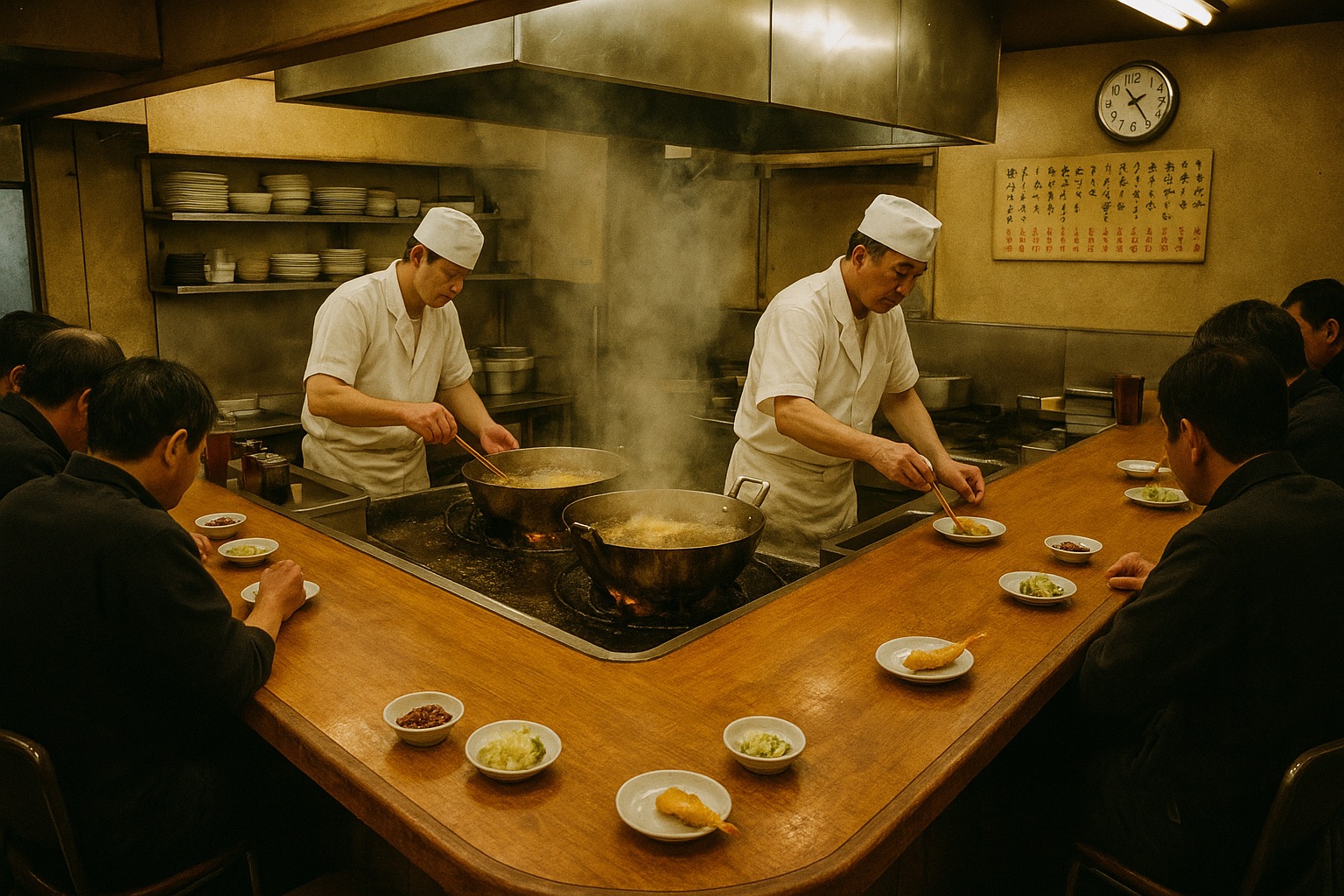
The format is unlike any restaurant in Tokyo. You walk in, buy a ticket from the vending machine at the door (there are English labels), sit at the U-shaped counter that wraps around an open kitchen, and watch the chefs fry each piece individually as you order. Each piece arrives as it's ready — one shrimp, then a piece of white fish, then squid — plated on a small dish and placed in front of you while it's still crackling. This is the correct way to eat tempura, and it's what the ¥36,000 counters also do. Hirao does it for ¥770.
The Shiokara — Why Locals Actually Come Here
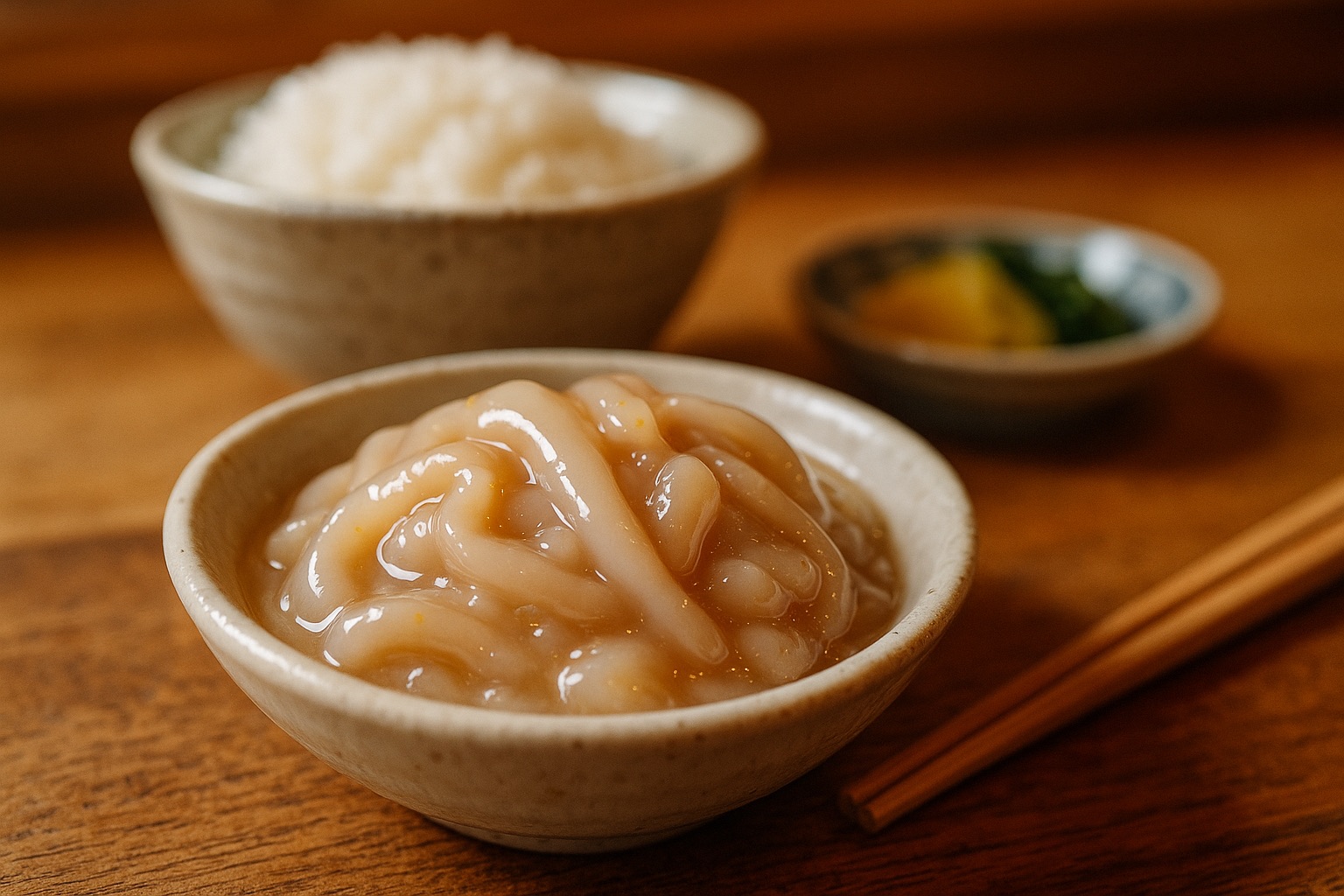
Ask a Fukuoka local about Hirao and they will mention the shiokara before they mention the tempura. The local shorthand for planning a Hirao lunch is literally: "Let's go eat shiokara."
Shiokara(塩辛) is fermented squid — salted, left to cure with its own enzymes, then seasoned with yuzu citrus. It is an acquired taste: intensely saline, slightly funky, deeply umami, and cut through with the bright acidity of yuzu. It is one of Japan's three great delicacies (chinmi), ranked alongside sea urchin and kazunoko (herring roe).
At Hirao, the shiokara is served in a small bowl at your counter seat — free, unlimited, refillable throughout your meal. The squid comes from the Genkai Sea, which produces exceptionally sweet and clean-tasting ika. The yuzu flavouring is distinctive to Hirao's recipe. The combination of hot, crispy tempura with cold, intensely flavoured shiokara and white rice is one of the defining flavour combinations of Fukuoka. (Note: during periods of poor squid fishing, free refills may be limited.)
The Hirao shiokara also comes with pickled vegetables — tsukemono — which function as palate cleansers between pieces. This is not an afterthought. It is part of the designed meal.
What to Order
The Ajiwai Teishoku (味わい定食, ¥770) is the standard set: shrimp, chicken, white fish, squid, and three vegetable pieces, plus rice, miso soup, and unlimited shiokara and pickles. This is what most people order on their first visit. It covers all the main categories and lets you try each condiment.
Four Condiments — Use Them in Order
Tentsuyu (天つゆ)
The classic dashi-based dipping sauce. Use for the heavier pieces.
Curry salt (カレー塩)
Unexpected and excellent. Especially good with shrimp and chicken.
Matcha salt (抹茶塩)
Delicate and slightly bitter. Best with white fish and lighter vegetables.
Sesame salt (ごま塩)
Nutty and versatile. Works with almost everything, especially pumpkin.
Tip: Start with salt on the first few pieces to taste the ingredient itself. Move to tentsuyu later in the meal.
Using the Ticket Machine (券売機)
The machines have English labels. Insert cash (coins or notes), select your set, and take the ticket to the counter. The staff will seat you. Hirao accepts cash only — there are no card readers or IC card payment options. Bring ¥1,000–2,000 in cash. Change is dispensed by the machine.
Access & Hours
Main branch (Higashihie): 2-4-1 Higashihie, Hakata Ward · 20 min walk from Fukuoka Airport · 10:30–20:00
Daimyo branch: 2-6-20 Daimyo, Chuo Ward · 5 min walk from Subway Akasaka Station · 10:30–20:00
Wait times: Weekdays: 20–40 min. Weekends: 60+ min at popular branches. Arrive before 11:00 or after 14:00 to avoid the worst queues.
Payment: Cash only
✦ AI-generated illustration — not a photograph of the actual site
Tempura Tenko — The Michelin Counter
天ぷら天光 · Higashihie, Hakata Ward · ¥36,000 · ⭐ Michelin 1 star (2019–present)
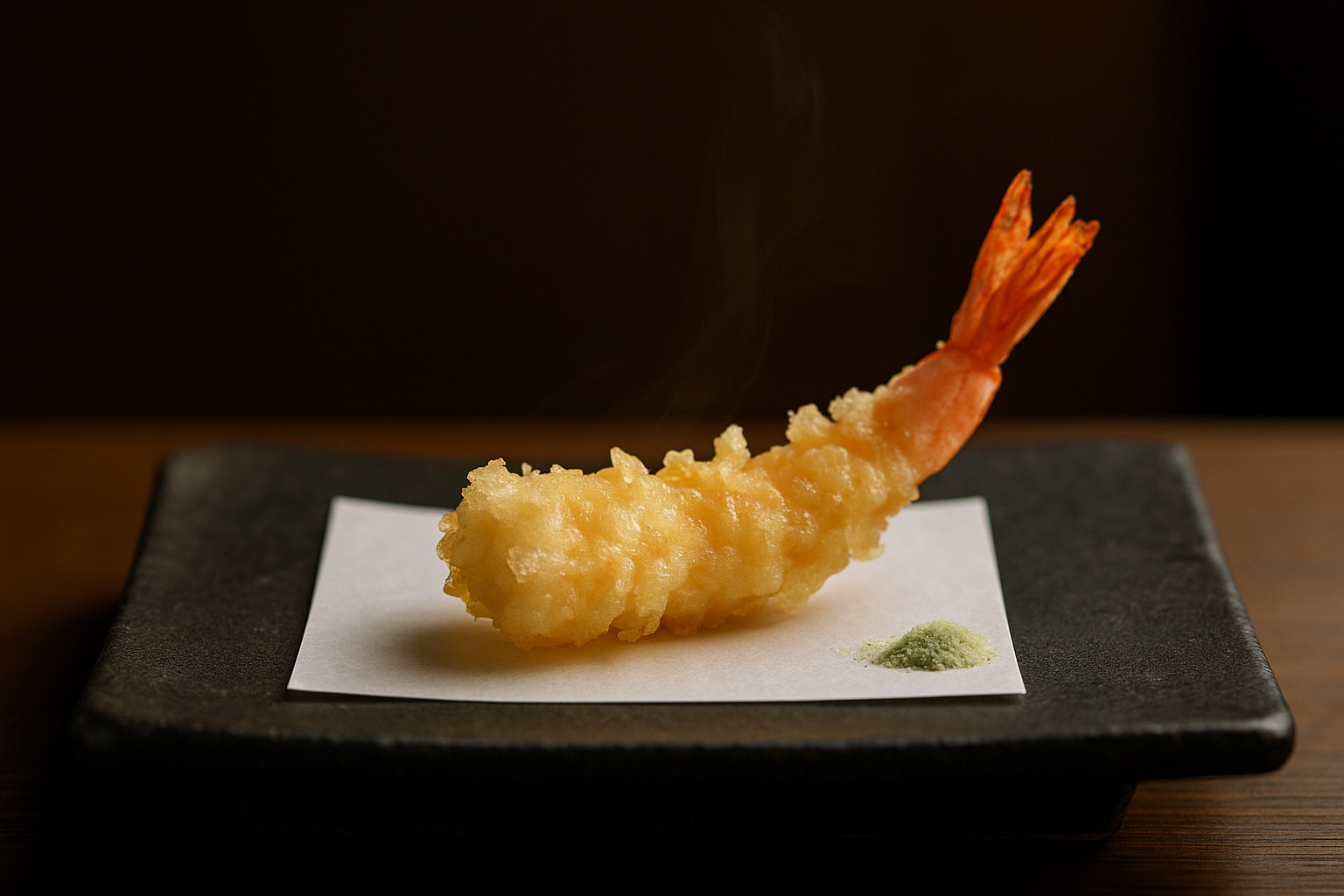
Tenko has held a Michelin star since the 2019 Fukuoka guide and has not lost it since. The format is classic high-end tempura: eight seats at a counter, fully reserved, omakase only. You sit, you watch, and the chef fries each piece directly in front of you, placing it on the counter as it comes out of the oil.
The technical approach is precise: a proprietary blend of white sesame oil and salad oil, maintained at exact temperatures for different ingredients, with batter mixed fresh and kept cold throughout service. The philosophy is what separates Tenko from a comparable Tokyo counter: the chef speaks about using Kyushu seafood at sashimi-quality freshness. The fish being fried is the same fish that, at a lesser restaurant, would go directly onto a plate as raw sashimi. The act of frying it is not a method of preservation or transformation — it is one way of presenting an ingredient that needs no help.
The omakase course at ¥36,000 includes a sequence of roughly 10–14 pieces plus appetisers and rice. The progression moves from lighter, more delicate ingredients (white fish, thin vegetable slices) through richer ones (shrimp, squid, larger vegetables) and ends with a signature kakiage (mixed fritter) of seasonal ingredients.
Booking & Access
Location: Higashihie, Hakata Ward, Fukuoka City
Seats: 8 counter seats · reservation only · no walk-ins
Booking: Tablecheck.com recommended · book 4–8 weeks ahead
Price: ¥36,000 omakase
English: △ — limited; the booking platform is manageable in English
Tempura Tanaka — The Ginza Tenichi Graduate
天ぷら たなか · Kego / Yakuindori area · ¥15,000–25,000
Chef Hideki Tanaka spent 21 years at Ginza Tenichi in Tokyo — one of the most prestigious tempura restaurants in Japan, established in 1930, which trained some of the country's most respected tempura chefs. He rose to head chef (ryoritsugu) before leaving to open his own counter in Fukuoka. That is not a small credential. It means his technique was formed at one of the institutions that defined what Japanese tempura looks like at the highest level.
At his own restaurant, that Tokyo-standard technique is applied to Kyushu ingredients. The result sits between Tenko and Ginza Tenichi in the market: more personal than a chain, more approachable than a Michelin counter, and featuring the specific flavours of Genkai Sea fish prepared with the precision of someone who spent two decades in the most competitive food city in the world.
The meal structure is a full course: appetisers (often including sashimi and a small salad), followed by a sequence of tempura pieces, ending with rice. This more relaxed pacing gives the meal a different feel from the focused intensity of a pure tempura counter like Tenko. It is an excellent choice for someone who wants a serious but not austere dinner.
Booking & Access
Location: Kego / Yakuindori area · near Subway Yakuindori Station
Price: ¥15,000–25,000 depending on course
Booking: Reservation required · phone or contact form
English: △ — international guests have visited; some English manageable
✦ AI-generated illustration — not a photograph of the actual site
Ginza Tenichi — For First-Timers Who Want No Surprises
銀座天一 · Hakata Station (Amu Plaza) · ¥3,000+ · ○ English friendly
Ginza Tenichi was established in Tokyo's Ginza in 1930 and became one of the foundational restaurants of the high-end tempura tradition — the place that trained the generation of chefs (including Tanaka-san above) who went on to open their own counters across Japan. Today it operates as a nationwide chain, which is not the same thing as a cheap chain: the standards are maintained, the fish is good, and the experience is consistent in a way that an independent counter cannot guarantee to a first-time visitor.
The Fukuoka branch is inside Amu Plaza Hakata, the commercial complex directly connected to Hakata Station. This is the most convenient tempura restaurant in the city — you can walk off the shinkansen and be sitting at a counter within fifteen minutes. The English menus, the staff experience with tourists, and the set lunch options (from around ¥3,000) make this the right choice for a visitor who wants good tempura without the complexity of a reservation system or a language barrier.
Ginza Tenichi is not the most interesting tempura in Fukuoka. It is the most accessible. Those are different virtues and both have value.
Access
Location: Amu Plaza Hakata · Hakata Station direct connection
Price: Sets ¥3,000+ · Courses ¥8,000+
Booking: Walk-in (may wait at peak times)
English: ○ — English menus available
Other Counters Worth Knowing
Tempura Tenju 天冨良 天寿
Michelin Bib Gourmand (2019 Fukuoka guide). Located near Hakata Riverain in central Fukuoka. The lunch course at around ¥5,000 is one of the best-value formal tempura experiences in the city — the quality is significantly above the price point. Reservation recommended for dinner; lunch is more accessible on shorter notice.
¥5,000+ · Near Hakata Riverain · Reservation recommended
Takeuchi 旬菜天ぷら たけうち
Michelin Bib Gourmand (2019). Located in Nakagawa City, south of Fukuoka — about 30 minutes by car. The speciality is vegetable tempura sourced from local Fukuoka farms: burdock root, lotus, sweet potato, and seasonal leaves prepared with the same rigour usually reserved for seafood. Worth a trip for anyone who thinks vegetable tempura is the boring part of the menu. It is not, here.
¥8,000+ · Nakagawa City · Reservation required
Practical Guide — What to Order, How to Order, What to Spend
Budget Guide
| Budget | Restaurant | What you get |
|---|---|---|
| ¥770–1,500 | Tempura Hirao | Soul food set · shiokara · local experience |
| ¥3,000–8,000 | Ginza Tenichi | Set or course · English menu · Hakata Station |
| ¥5,000+ | Tempura Tenju | Michelin Bib Gourmand lunch · best value formal |
| ¥15,000–25,000 | Tempura Tanaka | Full course · Ginza Tenichi-trained · Kyushu fish |
| ¥36,000 | Tempura Tenko | Michelin 1 star omakase · peak experience |
What to Order
At any counter in Fukuoka, the following ingredients are worth prioritising:
- 海老 (shrimp)Mandatory at every counter. The sweetness of Genkai Sea shrimp battered thin and fried at the right temperature is the benchmark piece.
- 鱚 (kisu)Japanese whiting — a delicate white fish that showcases light batter technique. Often overlooked by tourists; always ordered by regulars.
- 烏賊 (ika)Squid from the Genkai Sea. At Hirao the squid is the same source as the shiokara — sweet and clean. Especially good in summer.
- 野菜 (vegetables)Pumpkin and lotus root are the standards. Don't skip them — good vegetable tempura demonstrates batter quality more clearly than fish.
How to Eat It
Three rules that apply at every level of the market:
- Eat immediately. Tempura degrades the moment it stops being eaten. The chef timed the oil temperature for the piece to be perfect when it lands in front of you. Letting it sit loses the texture entirely.
- Start with salt. Try the first piece with matcha or sesame salt before reaching for the dipping sauce. Salt shows you the ingredient; sauce shows you the broth.
- Don't press down. Pressing tempura squeezes oil out and collapses the batter. Pick it up gently or cut it cleanly.
Local Tip — Where to Go Based on Your Trip
Short on time, staying near Hakata
Ginza Tenichi — walk off the shinkansen, no reservation, English menus.
Want the real local experience
Tempura Hirao — expect a queue, bring cash, eat the shiokara.
Want a formal dinner without Michelin prices
Tempura Tanaka — book ahead, full course, Tokyo technique with Kyushu fish.
Want the best in the city
Tempura Tenko — book 4–8 weeks ahead on Tablecheck, ¥36,000 omakase.
Specifically interested in vegetable tempura
Takeuchi in Nakagawa — worth the 30-minute trip if you have half a day.
Tempura Is Not Just Tokyo's Food
The ¥770 set at Hirao and the ¥36,000 course at Tenko are not the same experience, and neither is better. They are two different answers to the question of what food is for: one is daily sustenance made extraordinary by fresh fish and free shiokara, the other is a concentrated study of a single technique applied to the best ingredients available. Both are only possible in Fukuoka.
And both have their roots in a Portuguese missionary standing on a dock in Nagasaki in the 16th century, frying vegetables in batter during Lent. History has a longer reach than most restaurant guides admit.
All Counters at a Glance
| Counter | Type | Price | English | Booking | Best for |
|---|---|---|---|---|---|
| Tempura Hirao | Soul food chain | ¥770+ | △ | No reservation (expect queues) | Local experience · shiokara lovers |
| Ginza Tenichi | Historic chain (est. 1930) | ¥3,000+ | ○ | Walk-in | First-timers · easy access |
| Tempura Tanaka | Formal counter | ¥15,000+ | △ | Reservation required | Tokyo-style precision · serious diners |
| Tempura Tenko | Michelin 1 star | ¥36,000 | △ | Tablecheck recommended | Top-tier omakase experience |
| Tempura Tenju | Michelin Bib Gourmand | ¥5,000+ | △ | Recommended | Lunch · mid-range formal |
| Takeuchi | Michelin Bib Gourmand | ¥8,000+ | △ | Required | Vegetable tempura specialists |
Written by
A Local in Oita, Japan
A Japanese local born and raised in Oita, Kyushu. Sharing the Japan that guidebooks miss — from someone who actually lives here.
About this site →More from Japan Local Travel
JR Kyushu Rail Pass: Is It Worth It? A Local's Honest Guide
A local breaks down the JR Kyushu Rail Pass — the 3, 5, and 7-day options, what's covered, real price math for popular routes, how to buy and use it, and the honest answer to whether it's worth it for your trip.
Best Time to Visit Kyushu: A Month-by-Month Season Guide
When should you visit Kyushu? A local walks you through the seasons month by month — cherry blossoms, the rainy season, summer heat, golden autumn, and mild onsen winters — so you pick the right time for your trip.
Driving in Kyushu: Renting a Car & the Best Road Trips
Should you rent a car in Kyushu? A local explains the license you need, what driving here is really like, costs and tolls, where a car beats the train — and the island's most beautiful road trips.