Fukuoka Yakiniku Guide: Why This City Has Japan's Best Wagyu(And Where to Actually Eat It)
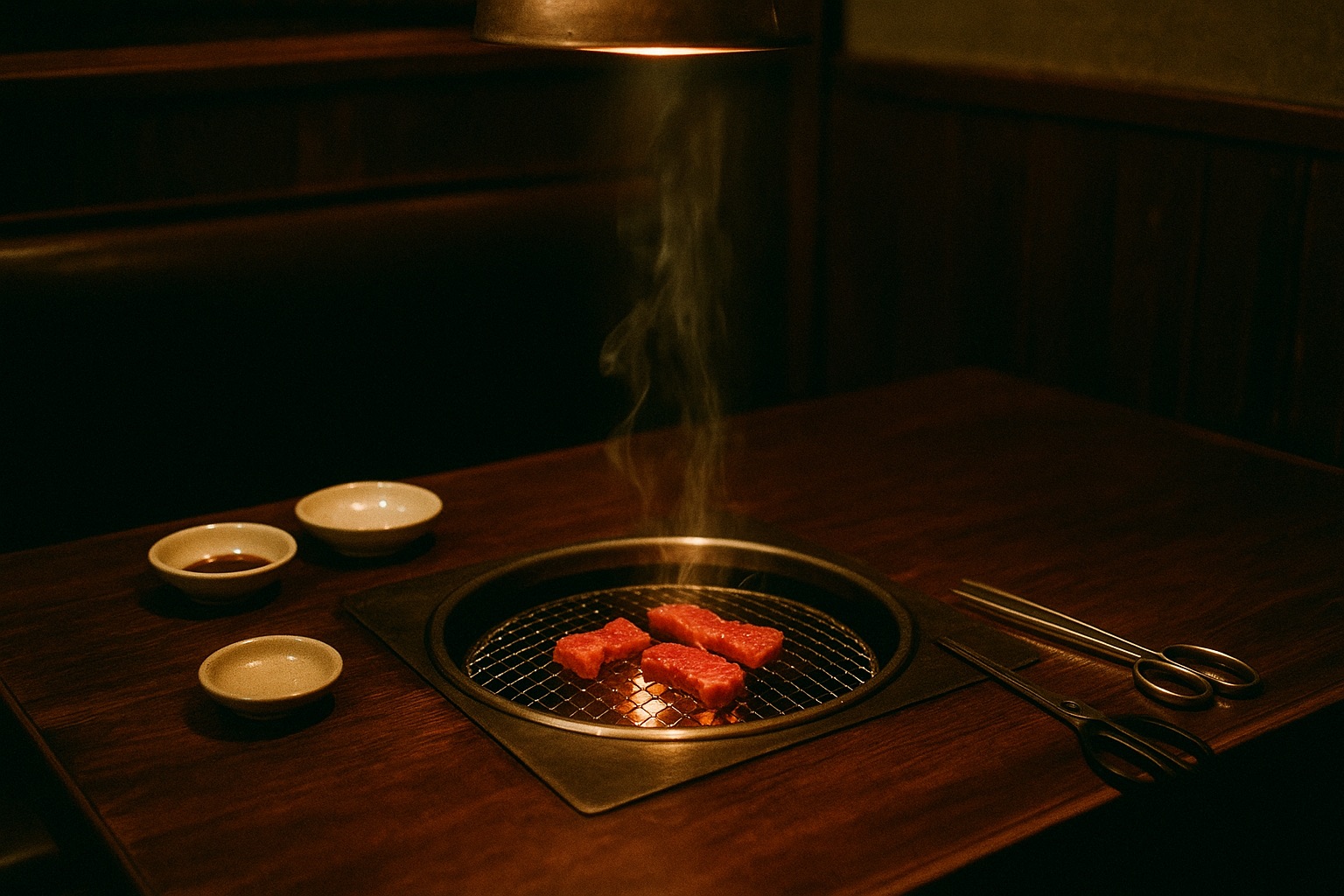
Yakiniku in Japan is not like Korean BBQ, and it's not like American BBQ. It's a different art form. In the best restaurants, a professional called a yakishigrills every piece of meat for you to the exact temperature it should be — you don't lift a pair of tongs. You just eat. Fukuoka is probably the best city in Japan to experience this. The reason is geography.
Written by a local in Oita · May 2026 · 14 min read
✦ AI-generated illustration — not a photograph of the actual site
Quick Facts: Fukuoka Yakiniku
- Kyushu wagyu share
- ~40% of Japan's total production
- Price vs Tokyo
- Same quality 40–50% cheaper
- Best English-friendly
- Nikuya Nikuichi (multilingual tablet)
- Best full experience
- Yakiniku Sudo (yakishi omakase)
- Entry budget
- From ¥2,000 (Champion lunch)
- Peak experience
- COWSI or Sudo · from ¥7,000
Why Fukuoka Is the Best City in Japan for Yakiniku
Kyushu produces approximately 40% of Japan's total wagyu output. Saga Prefecture raises Saga Beef — one of the three most awarded wagyu brands in the country. Miyazaki produces Miyazaki Beef, which took the top prize at Japan's national wagyu championship in 2017. Kagoshima is Japan's second-largest wagyu producer. Kumamoto raises Aso-branded cattle on volcanic highland pastures. Nagasaki's Iki island produces rare, clean-flavoured Iki Beef.
All of these regions are within one to three hours of Fukuoka. The city is not just near wagyu country — it is the commercial and logistical centre of Japan's most productive beef-raising region. The meat that arrives at a Fukuoka restaurant has travelled a fraction of the distance it would need to cover to reach Tokyo, handled by fewer intermediaries, at lower transport cost.
The Price Difference Is Real
A course meal at a top-tier yakiniku counter in Tokyo — the kind with a yakishi, premium cuts, and a private counter — typically costs ¥25,000–35,000 per person. The equivalent experience in Fukuoka costs ¥15,000–20,000. The meat quality is not lower. It is often better, because it's sourced more directly. The price difference is entirely a function of logistics, rent, and Tokyo's premium on prestige.
There is a distinction worth understanding between branded wagyu and direct-farm sourcing. “Saga Beef” or “Miyazaki Beef” are registered brands with certification criteria. “Kyushu Kuroge Wagyu” (九州産黒毛和牛) refers to Kuroge Wagyu cattle raised anywhere in Kyushu — not a specific brand, but a strong general indicator of quality. The best Fukuoka yakiniku restaurants buy directly from farms rather than paying brand premiums, which gives them more flexibility on cuts and sometimes better value at equivalent quality.
A Brief Guide to Yakiniku Culture Before You Order
The Two Styles
Yakishi Style (焼師)
A dedicated grill master handles every piece of meat for every customer. You never touch the tongs. The yakishi knows the optimal temperature for each cut, the correct timing for each thickness, and when to rest the meat before handing it to you. This is the peak yakiniku experience — found at top-tier counters like Sudo and COWSI.
Self-Grill Style (セルフ)
You manage your own grill — common at mid-range and casual restaurants. This is the more familiar format if you've eaten Korean BBQ. It's enjoyable and social. The risk: most people overcook expensive wagyu. At a casual place like Nikuichi or Benjamin, this is the format.
What to Order — The Essential Cuts
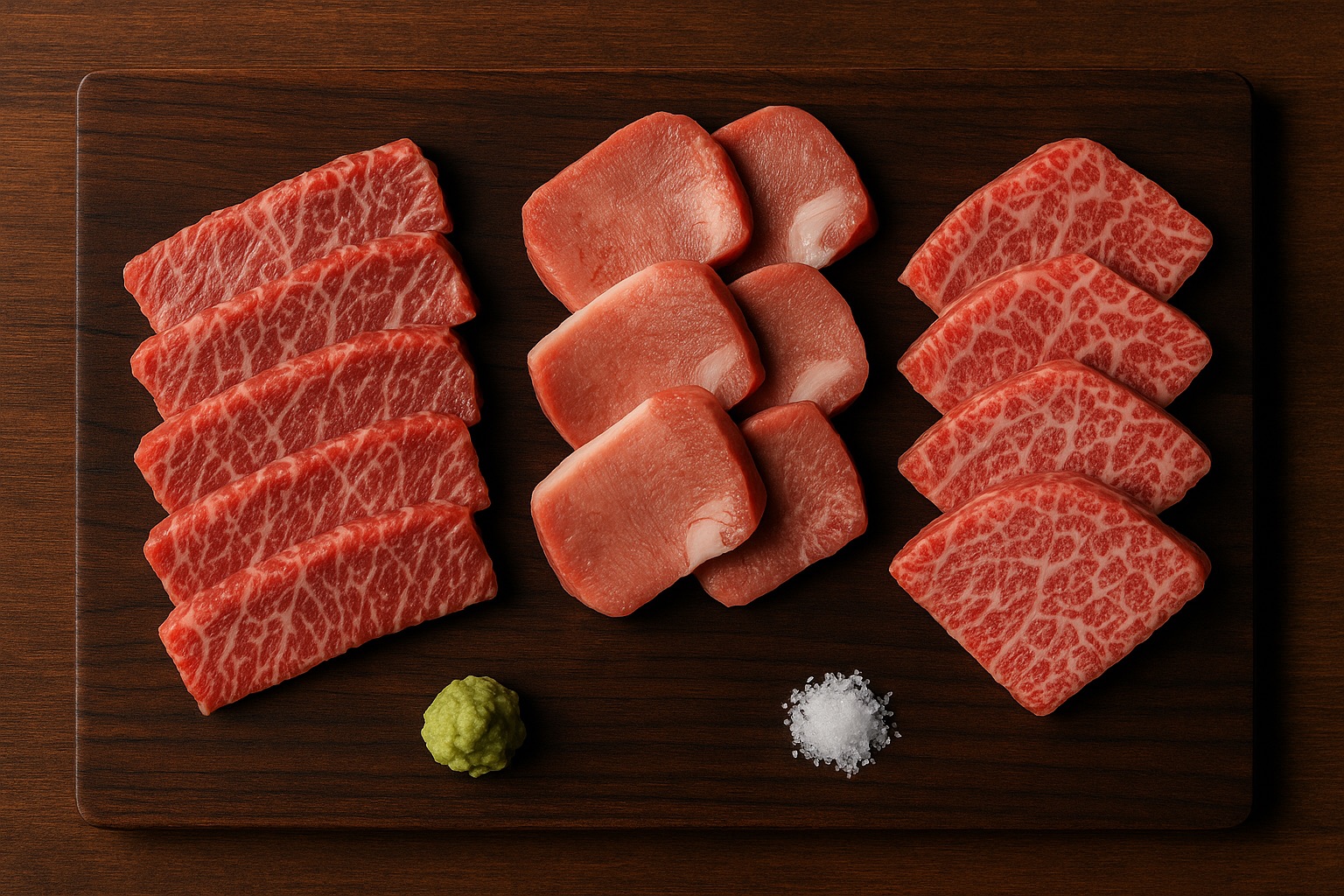
Tan (タン)
Tongue
Always start here. Salt only — never tare. Begin with the thinner, leaner slices near the tip; the richer, fattier sections come last. The texture should be slightly firm, never rubbery.
Karubi (カルビ)
Short rib
The classic yakiniku cut. High fat content, deep flavour. Best with tare (the sweet-savoury sauce). Don't overcook — the fat should melt, not burn.
Rosu (ロース)
Sirloin / loin
The most balanced cut — enough marbling for flavour, enough lean for texture. Works with either salt or tare. Good for first-timers who want a reliable reference point.
Harami (ハラミ)
Skirt steak (diaphragm)
Technically an organ cut but has no offal taste — it's a muscle that gets plenty of exercise, giving it deep, minerally beef flavour with low fat. A favourite of people who prefer red meat over marbled.
Hire / Château (ヒレ)
Tenderloin / filet
The softest, most delicate cut. Minimal fat. Always salt. Do not overcook — medium-rare at most, ideally rare. One bite, immediately. If COWSI's aged fillet is available, order it.
The Order Rule
Tongue first, marbled cuts last. Your palate can detect delicate flavours early in the meal but tires quickly as fat coats it. Start with lean, salt-based cuts (tan, harami) to calibrate. Move to balanced cuts (rosu) in the middle. Finish with the richest, most marbled pieces (karubi, high-grade wagyu). The order matters more than most people realise.
Salt vs Tare — The Rule
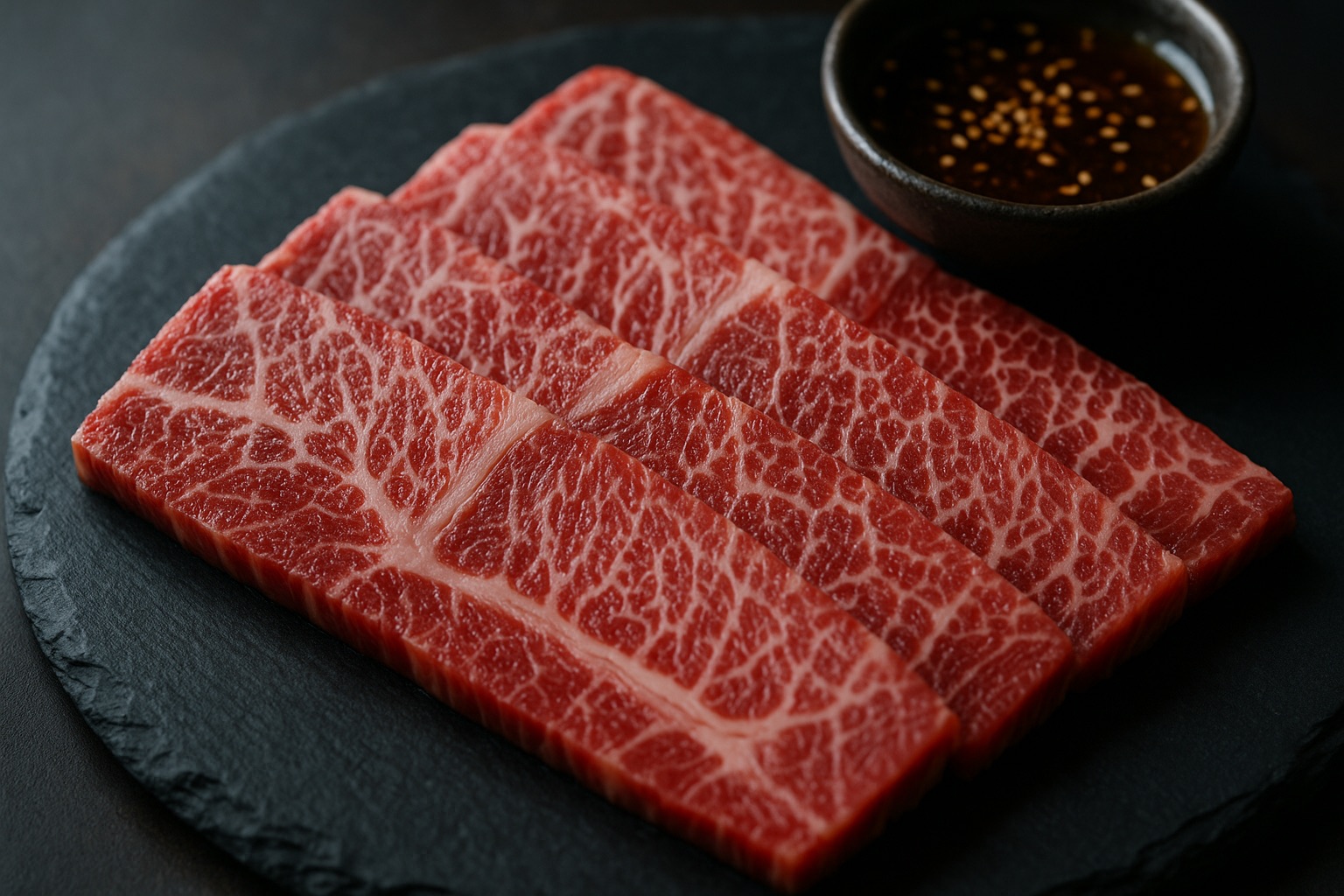
The more expensive the meat, the more likely you want salt.Salt shows you the ingredient. Tare (the sweet-savory dipping sauce) adds flavour but masks the meat's natural character. A-grade wagyu eaten with tare is still excellent. The same wagyu eaten with good sea salt and a squeeze of lemon is revealing. Most yakishi at top-tier counters will specify which condiment for each piece — follow their guidance.
✦ AI-generated illustration — not a photograph of the actual site
Tier 1 — The Counter Experience
¥15,000+ per person · reservation required · yakishi or counter service
Yakiniku COWSI
焼肉COWSI · Tenjin-Minami Station, 3 min walk
¥7,000+
Dinner from
COWSI is run directly by a butcher — which means the people serving the meat are also the people who sourced, selected, and aged it. This matters because it removes an entire layer of the supply chain. The restaurant's philosophy is built around in-house dry aging: every cut is aged in-house, optimised by part and by intended cooking method. The aged tenderloin and aged tongue are the signature pieces — both benefit from aging in ways that standard yakiniku meat does not.
The format is six counter seats only — a format borrowed from omakase sushi. You sit at the counter, watch the preparation, and receive each piece as it's ready. The primary beef used is Nobuyuki-gyufrom the Aso highlands — raised under environmentally conscious farming practices on volcanic pasture. It's a specific choice that reflects a philosophy about how animals should be raised, not just a marketing term.
The lunch operation is more accessible: an Iki beef sukiyaki set from ¥1,800. The dinner aged wagyu course starts around ¥7,000. COWSI also operates sister restaurants — Haruyoshi Akami-ya (red meat specialist), Daimyo COWSI CAMP, and Kiyokawa COWSI MEAT — if the main counter is fully booked.
Yakiniku Sudo Haruyoshi
焼肉 須藤 春吉 · Tabelog Bronze · 5 min from Nakasu
¥7,000–15,000
omakase course
Chef Sudo spent seven years at Yakiniku Kunimotoin Hamamatsucho, Tokyo — a restaurant with a reputation as one of Japan's most serious destinations for rare cuts. The philosophy Sudo absorbed there, and brought back to Fukuoka: buy the whole animal, use every part, and develop the technical knowledge to cook each cut exactly as it should be cooked. The yakishi model — where the chef grills every piece for every customer — is the direct expression of this philosophy.
The omakase course at approximately ¥7,000 includes aged tongue, Kuroge Wagyu in multiple cuts, and finishes with a signature spiced curry made from the trimmings — a resourceful and genuinely memorable ending to the meal. Tabelog Bronze and consistently listed in Japan's Top 100 restaurants. The brick facade makes it recognisable from the street; the compact interior and charcoal smoke make it feel like somewhere that takes itself seriously without being precious.
Tier 2 — Premium À La Carte
¥5,000–15,000 per person · reservation recommended · self-grill
Daitouen Honten
大東園 本店 · Established 1970 · Gion Station, 2 min
¥2,400–10,000
Daitouen has been operating since 1970 — over 50 years in the same area. The philosophy is “eye over brand”: the restaurant sources directly from Kyushu farms based on the owner's assessment of quality, not on brand certification. This approach keeps prices lower than branded restaurants while maintaining consistent quality. The signature set (Daitouen teishoku, ¥2,400) includes tongue, short rib, rice, soup, and dessert — an extremely reliable reference meal if you want to understand what baseline good yakiniku looks like in Fukuoka.
Three floors: ground floor counter and table seating, second and third floors with private rooms for groups. The house-made kimchi and hand-cut cold noodles (reimen) have their own following. Lunch menus from ¥1,000 make this the most accessible quality option for budget-conscious visitors.
Nikuya Nikuichi
肉屋 肉一 · Hakata Station 5 min · Yakuin branch also
¥4,000–8,000
Nikuichi is the most practical choice for English-speaking visitors. Ordering works through a tablet system available in Japanese, English, Korean, and Chinese. You can take your time, read every description, and order at your own pace without any language anxiety. The staff is experienced with international guests.
The meat is A4 and A5 Kyushu Kuroge Wagyu, sourced in bulk to keep prices reasonable. The kitchen slices each cut to the optimal thickness — thinner for high-fat pieces (to control richness), thicker with scored patterns for leaner pieces (to tenderise). The seven-cut wagyu platter is the signature — it's the best way to understand how different parts of the same animal taste completely different from each other.
✦ AI-generated illustration — not a photograph of the actual site
Tier 3 — Casual & Everyday
¥3,000–8,000 per person · walk-in or easy booking
Yakiniku Champion
焼肉チャンピオン · Hakata Station, AMU Plaza 10F
The most convenient option in Fukuoka — inside the shopping complex directly connected to Hakata Station. A5 Kyushu Kuroge Wagyu, accessible lunch buffet, no reservation needed for weekday visits. The right choice when you want good yakiniku with zero planning overhead.
Hakata Yakiniku YASOHACHI
博多焼肉YASOHACHI · 8 min from Hakata Station
YASOHACHI's differentiation is in the rice — Hokkaido Yumepirrika, milled fresh daily. The concept is that the best wagyu deserves the best rice, and the combination is taken seriously. Signature dishes include the green onion-wrapped beef tongue, golden sukiyaki short rib, and a wagyu hotpot rice. Traditional sunken-floor (horigotatsu) seating — the most Japanese dining format and worth experiencing once.
Yakiniku Benjamin
焼肉ベンジャミン · Akasaka / Yakuin area
A sister restaurant to Nikuichi, Benjamin runs across three floors with capacity for large groups — the right venue for parties of 6+ who want something more atmospheric than a chain. Kyushu Kuroge Wagyu at approachable prices, English-friendly service, and no need for reservation on weeknights. The go-to option for group celebrations.
Understanding Kyushu Wagyu — What Makes It Different
Wagyu (“Japanese beef”) refers to four specific cattle breeds, of which Kuroge Wagyu (Japanese Black) produces the majority of premium beef. All Japanese wagyu is graded on a matrix of yield (A–C) and quality score (1–5), producing grades like A5 (highest) to C1 (lowest). But the grade alone doesn't tell you where the animal was raised or how — and for Kyushu beef, those details matter.
| Brand | Origin | Character |
|---|---|---|
| Saga Beef (佐賀牛) | Saga Prefecture | Balanced marbling and lean; pronounced sweetness; three-time national champion |
| Miyazaki Beef (宮崎牛) | Miyazaki Prefecture | National top prize 2017; exceptionally soft texture; large production volume |
| Kagoshima Beef (鹿児島牛) | Kagoshima Prefecture | Japan's 2nd largest producer; elegant, refined fat sweetness; consistent quality |
| Iki Beef (壱岐牛) | Iki Island, Nagasaki | Rare island-raised; clean, lean red meat character; lower fat than mainland breeds |
| Aso Nobuyuki-gyu (伸幸牛) | Aso, Kumamoto | Volcanic highland pasture; environmentally conscious farming; COWSI's primary supplier |
A5 Is Not Always the Best Choice
A5 wagyu has the highest marbling score. That's genuine quality — but it's not automatically the most enjoyable eating experience for everyone. Very high marbling can be rich to the point of heaviness after 3–4 pieces. Many yakiniku connoisseurs prefer A4 or carefully selected A5 with lower BMS (Beef Marbling Standard), which provides flavour depth without overwhelming fat. When a restaurant like Sudo or COWSI chooses their specific cut of beef, they're making exactly this kind of nuanced call — not just buying the highest grade available.
How to Make a Reservation (For Non-Japanese Speakers)
Tier 1 restaurants in Fukuoka — particularly Sudo — are not easy to book without a Japanese intermediary if you try to call directly. The following platforms remove that barrier:
Cancellation
Top-tier yakiniku counters typically charge a cancellation fee for no-shows or same-day cancellations (often ¥5,000–10,000 per person). This is standard in Japan for omakase-format restaurants. Cancel at least 48–72 hours in advance.
Practical Tips
Solo Yakiniku
Counter-style restaurants like COWSI are naturally solo-friendly. Nikuichi's Hakata branch also accommodates solo diners comfortably. Most Tier 1 counters are designed for 1–2 people.
Lunch Value
COWSI's Iki beef sukiyaki lunch starts at ¥1,800. Daitouen's lunch from ¥1,000. Champion's lunch buffet from ¥2,000. All offer significantly better value than dinner for the same quality beef.
Groups & Families
Daitouen (3 floors, private rooms) and Benjamin (3 floors, large groups) are the best choices for 6+ people. Book at least a week ahead for weekend groups.
Smoke & Clothes
Yakiniku smoke permeates clothing significantly. If you have an evening event after dinner, change first. Most good restaurants have ventilation systems, but no grill avoids all smoke.
Budget Guide
| Budget | Best option | What you get |
|---|---|---|
| ¥2,000–4,000 | Champion (lunch) / Daitouen (lunch) | Quality wagyu set meal, no fuss |
| ¥5,000–8,000 | Daitouen / Nikuichi | À la carte premium cuts, good value |
| ¥8,000–12,000 | YASOHACHI / Benjamin | Full dinner, good atmosphere |
| ¥15,000+ | COWSI / Sudo | Aged wagyu, counter experience, full yakishi service |
A Single Plate, Many People Behind It
The best yakiniku in Fukuoka is the convergence of three things: a Kyushu farmer who raised cattle with care, a Tokyo-trained chef who left the capital to work closer to the source, and a butcher with decades of knowledge about how each cut ages and how each cut should be cooked. That combination exists here in a way that Tokyo, with all its prestige, cannot replicate — because the animal grew up two hours from where it arrived on the plate.
Whether you spend ¥2,400 on Daitouen's lunch set or ¥15,000 on a counter at COWSI, you are eating in the right city for it.
All Restaurants at a Glance
| Restaurant | Type | Price | English | Best for |
|---|---|---|---|---|
| Yakiniku COWSI | Butcher-owned counter | ¥7,000+ | △ | Aged meat counter experience |
| Yakiniku Sudo Haruyoshi | Yakishi grill master | ¥7,000–15,000 | ○ | Full yakishi omakase experience |
| Daitouen Honten | Long-established (est. 1970) | ¥2,400–10,000 | △ | Lunch to group dinners |
| Nikuya Nikuichi | À la carte, multilingual | ¥4,000–8,000 | ◎ | English-speaker friendly |
| Yakiniku Champion | Station-connected | ¥2,000–5,000 | ○ | Convenience · tourists |
| YASOHACHI | Premium rice × wagyu | ¥6,000–12,000 | △ | Traditional sunken-floor seating |
| Yakiniku Benjamin | Group friendly | ¥3,000–6,000 | ○ | Groups · affordable |
Written by
A Local in Oita, Japan
A Japanese local born and raised in Oita, Kyushu. Sharing the Japan that guidebooks miss — from someone who actually lives here.
About this site →More from Japan Local Travel
JR Kyushu Rail Pass: Is It Worth It? A Local's Honest Guide
A local breaks down the JR Kyushu Rail Pass — the 3, 5, and 7-day options, what's covered, real price math for popular routes, how to buy and use it, and the honest answer to whether it's worth it for your trip.
Best Time to Visit Kyushu: A Month-by-Month Season Guide
When should you visit Kyushu? A local walks you through the seasons month by month — cherry blossoms, the rainy season, summer heat, golden autumn, and mild onsen winters — so you pick the right time for your trip.
Driving in Kyushu: Renting a Car & the Best Road Trips
Should you rent a car in Kyushu? A local explains the license you need, what driving here is really like, costs and tolls, where a car beats the train — and the island's most beautiful road trips.