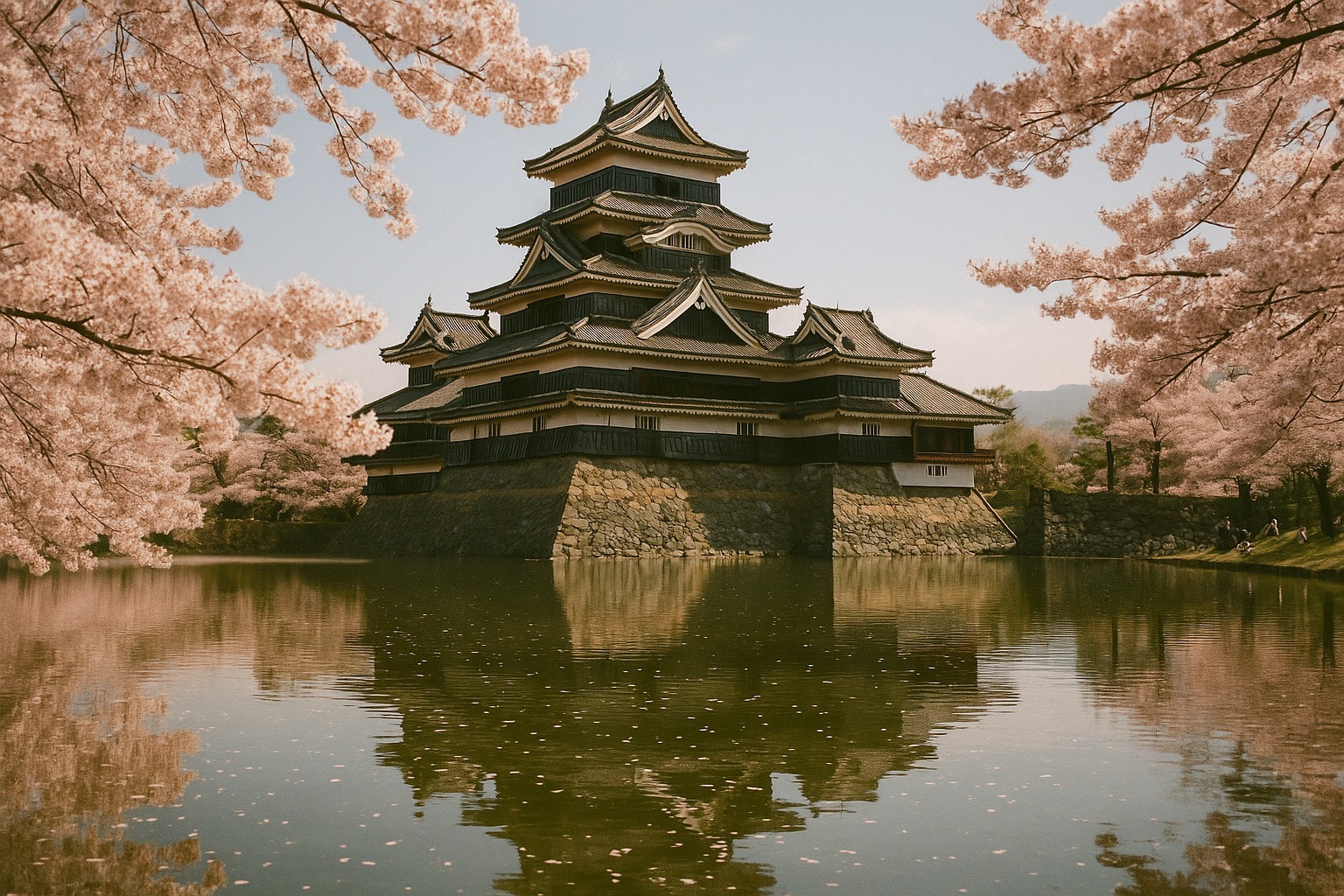
Here's the cherry-blossom secret the Tokyo-Kyoto crowd doesn't act on: Japan's sakura season opens in Kyushu.The warm south blooms first — typically the third week of March, often a week ahead of Tokyo — which means you can either start your bloom-chasing trip here, or escape south to catch a "second spring" if the famous cities peaked early.
And you do it with a fraction of the crowds. The same castle moat lined with blossom that would be shoulder-to-shoulder in Tokyo is, in Fukuoka or Kumamoto, simply a beautiful spring afternoon. Here's where to go, when, and how to picnic like a local.
Why See Sakura in Kyushu
- •It blooms first. Kyushu's south (Kagoshima) and Fukuoka are among the earliest spots in Japan to open — great for trip-planning certainty and for "catching up" with a bloom that escaped you up north.
- •The crowds are gentle. Kyushu's flagship sakura sites see Japanese domestic visitors, not the international crush. You'll get your castle-and-blossom photo without a queue.
- •The settings are world-class. Kyushu has the castles, moats, riverbanks, and mountain temples that make the great sakura images — and warm enough weather that hanami picnics are genuinely pleasant.
- •Everything else is in bloom too. Late March pairs sakura with plum blossoms lingering at Dazaifu, early rape-flower fields, and onsen towns at their loveliest. A spring Kyushu trip is more than the cherry trees.
When — The Bloom Calendar
Sakura timing shifts a little each year with winter temperatures, but Kyushu's pattern is dependable: first blooms in the third week of March, full bloom (mankai) late March to the very start of April. Full bloom lasts only about a week, and a hard rain can end it early — which is why you plan around the forecast (last section), not the calendar.
Rough Kyushu Bloom Order
The altitude spread is your friend: if the lowland blossoms drop while you're here, drive up toward Aso or the onsen highlands and you can find them blooming a week later.
The Best Spots, by Type
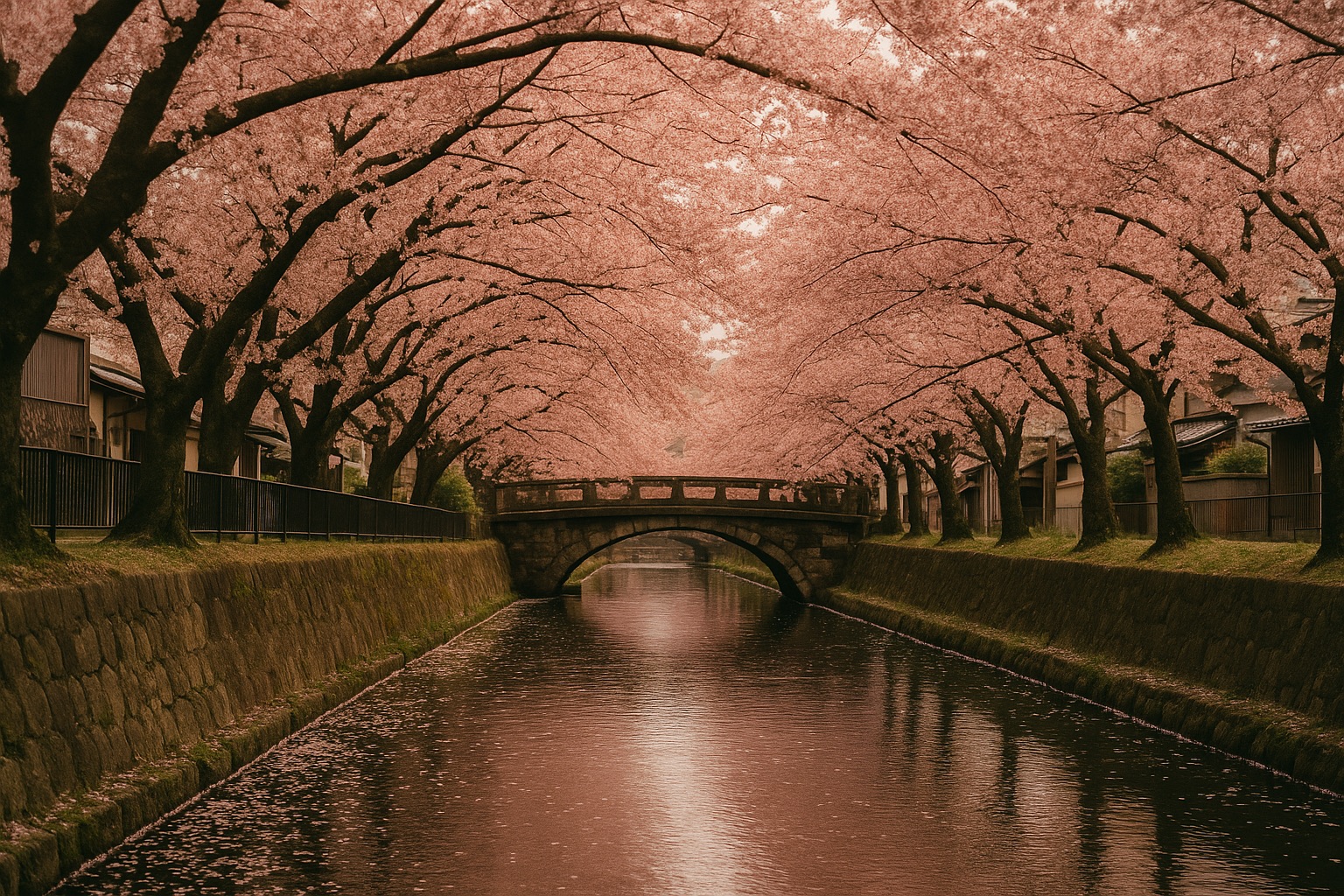
✦ AI-generated illustration — not a photograph of the actual site
🏯 Castles & Moats
The iconic combination. Maizuru Park / Fukuoka Castle (~1,000 trees, with the Fukuoka Castle Sakura Festival), Kumamoto Castle (~560 trees against those dramatic black walls — see our Kumamoto guide), and the ruined ramparts of Oka Castle and Kokura Castle. Blossoms + stone keeps = the photograph you came for.
🌊 Riversides & Tunnels
Rows of trees arching over water, petals drifting downstream. Fukuoka's rivers, the canals of Yanagawa(sakura from a punt boat — a sublime combination), and countless small-town riverbanks where you'll be the only visitor. The most relaxed way to see blossom.
⛩️ Shrines, Temples & Mountains
Dazaifu Tenmangu overlaps late plum with early cherry (and its forest-roofed hall — our Dazaifu guide). Mountain temples and the Aso highlands bloom latest, extending your window. Kagoshima even has its volcanic backdrop for blossom against Sakurajima.
How Hanami Actually Works
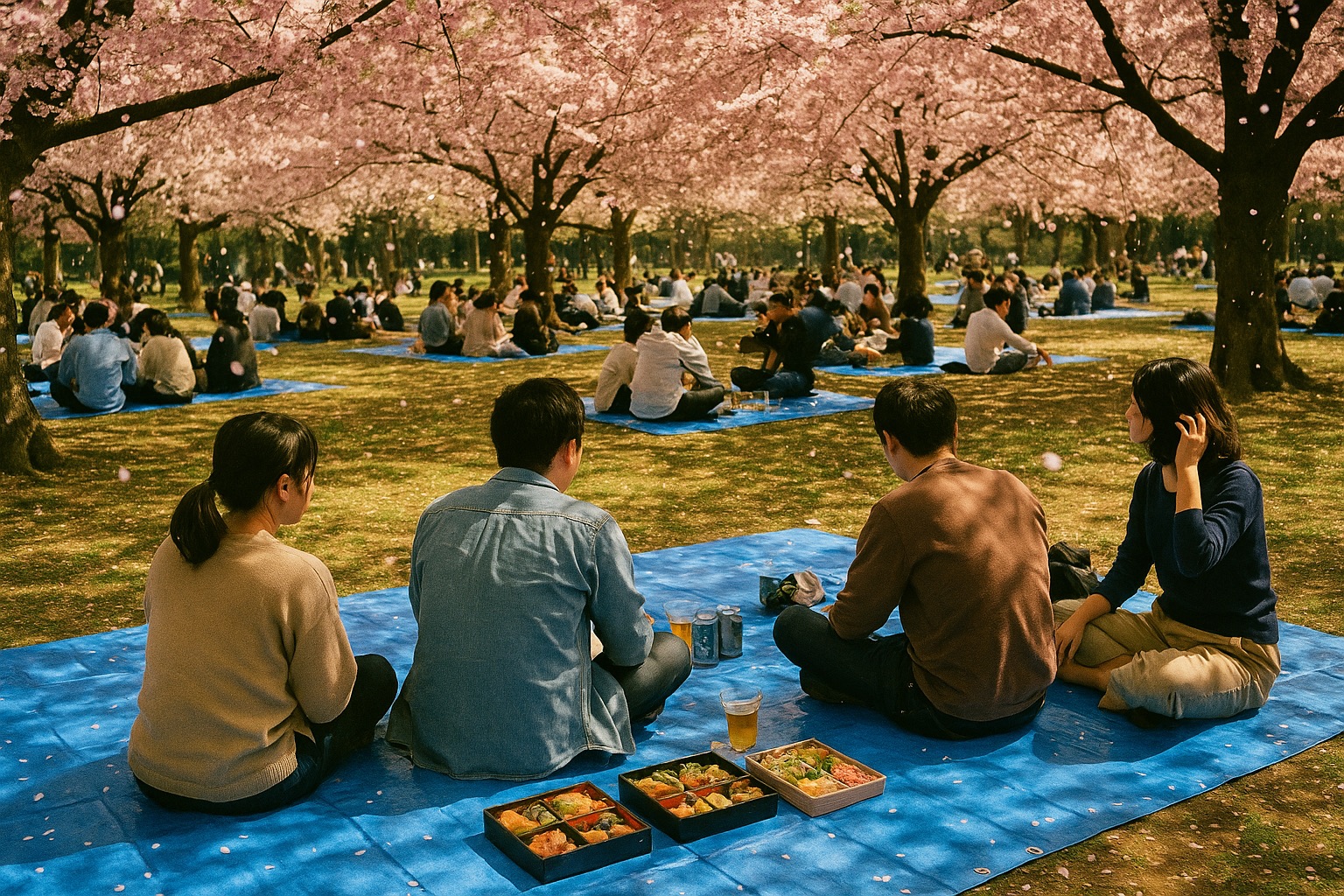
✦ AI-generated illustration — not a photograph of the actual site
Hanami is a picnic, not a hike — bring a tarp and a konbini feast
Hanami ("flower viewing") is the national ritual of sitting under the blossoms and enjoying them — usually with food, drink, and friends, on a blue tarp spread on the grass. For a visitor it's wonderfully easy to join:
- •Grab a tarp/leisure sheet (¥100–300 at any Daiso/konbini) and stake out a spot. Big parks have prime real estate claimed by mid-morning on peak weekends.
- •Provision at the konbini — this is sakura's killer app: seasonal sakura-flavored everything, bento, fried chicken, and cold drinks. Our konbini guide is basically a hanami shopping list.
- •Shoes off on the tarp, take your trash with you (bins are scarce), keep music low. That's the entire etiquette.
- •Yozakura (night blossoms): major parks light the trees after dark — a completely different, magical mood. Bring a layer; spring nights stay cold.
Planning Around the Forecast
The cruel truth of sakura travel is that the peak is a moving, ~7-day target you can't book a flight against six months out. How to handle it:
- •Watch the forecasts from January — the Japan Meteorological Corporation and Weathernews publish increasingly precise bloom predictions per city. Kyushu's appear first.
- •Build in flexibility. Aim your trip at the last few days of March as the safest single bet for Kyushu's lowlands, and keep your itinerary loose enough to chase altitude if needed.
- •Have a backup that isn't blossom. The genius of Kyushu in spring is that even if the timing misses, you have onsen, food, castles, and volcanoes waiting — a trip that doesn't live or die on the trees. See is Kyushu worth visiting and the 7-day itinerary.
🌸
The same blossoms, the same castles, a week earlier — and room to breathe under the trees.
Aim for late March, pack a tarp and a konbini feast, and keep one eye on the forecast. Kyushu's spring is Japan's best-kept sakura secret.
Plan Your Spring Trip