You're planning a Japan trip. Tokyo and Kyoto are locked in — everyone says they're unmissable, and everyone is right. But you keep seeing this island called Kyushu mentioned in Reddit threads and "hidden Japan" lists, and you're wondering whether it deserves your limited days.
I live here, so discount my bias accordingly — but here's my honest answer: for a first trip of under 10 days, probably not. For a first trip of 14+ days, or any second trip to Japan — yes, emphatically, and here's the case.
That answer probably surprised you coming from a Kyushu site. But the fastest way to make someone hate a place is to send them at the wrong time, and the fastest way to earn trust is to tell you when notto come. So let's break down the real decision.
First Trip to Japan? Read This Part
If you have 7–10 days and have never been to Japan, do the classic route: Tokyo, Kyoto, maybe Osaka or Hakone. Not because it's better than Kyushu, but because those places carry a cultural weight you genuinely should experience once — and squeezing Kyushu into a short first trip means rushing everything.
But if you have two weeks or more, the math flips. The classic route comfortably fills 8–9 days. The question becomes what to do with the rest — and the standard answers (more Tokyo, a Hiroshima day trip, Nara's deer) are fine. Kyushu is better: a flight or shinkansen ride away, and suddenly you're in a Japan with one-tenth the tourists and arguably better food.
And if this is your second trip— you've done the golden route, you loved it, you want to go deeper — stop deliberating. Kyushu is the answer to exactly that question.
What Kyushu Actually Has
✦ AI-generated illustration — not a photograph of the actual site
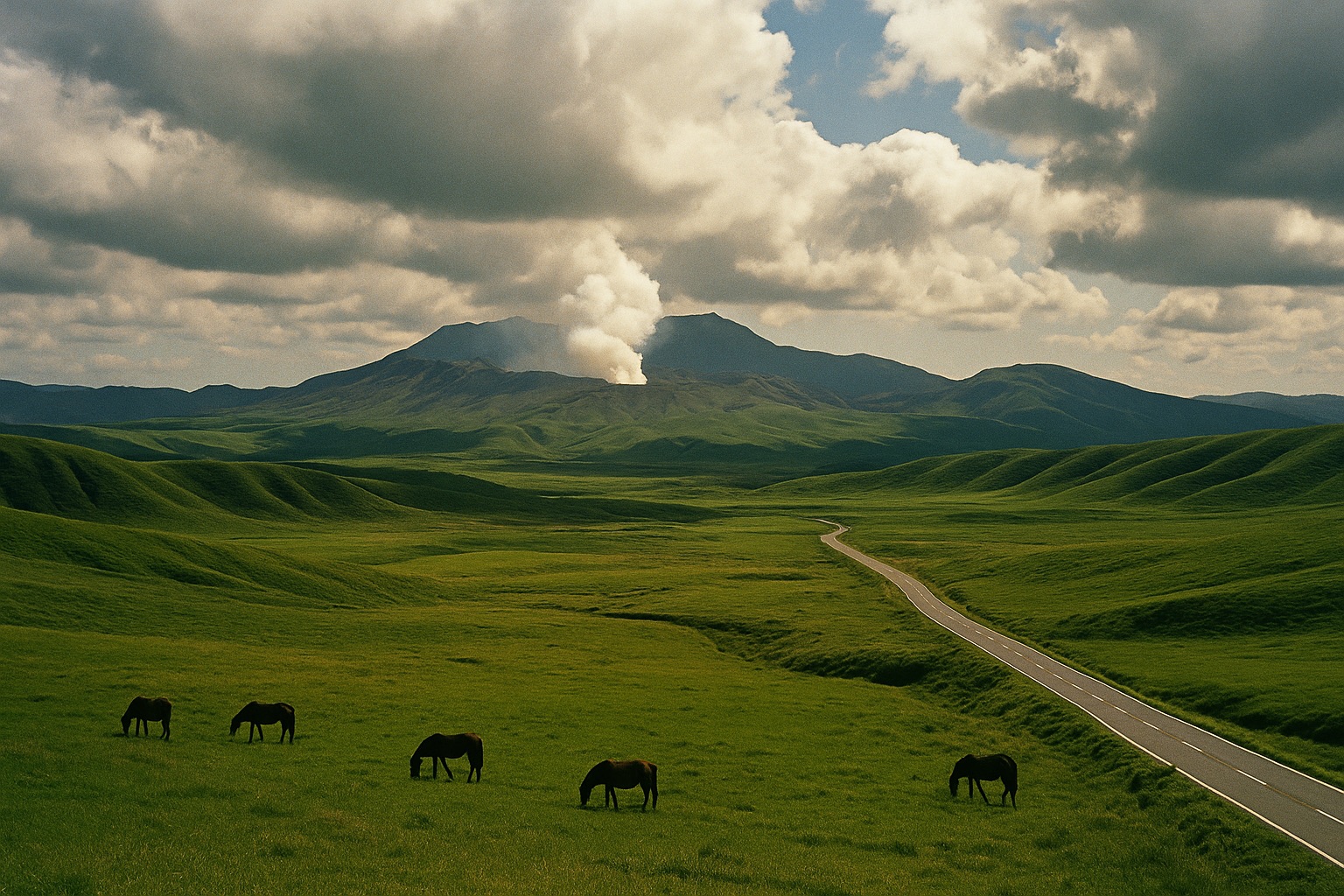
The Aso caldera — scale that feels closer to an American national park than to a Kyoto garden
Japan's best food city
Ask Japanese people where they'd travel just to eat and Fukuoka keeps coming up. Tonkotsu ramen at its source, the country's last yatai street-stall culture, sushi at half Tokyo prices. We wrote a full 3-day eating plan — and a Fukuoka vs Osaka comparison if you're choosing between food cities.
Read the guide →The onsen capital of the world
Beppu alone has ~2,800 hot spring sources — more than anywhere on the planet. Steam rises from street gutters. You can be buried in volcanic sand, soak in cobalt-blue water, and eat dinner cooked by the earth itself. If you have tattoos, Beppu is also Japan's most tattoo-friendly bathing city.
Read the guide →Live volcanoes at national-park scale
The Aso caldera is one of the world's largest, with grasslands that read more 'Montana' than 'Japan.' In Kagoshima, the Sakurajima volcano puffs ash over a city of 600,000 that simply carries umbrellas. Nothing on the golden route feels like this.
Read the guide →History without the crowds
Christian rebellions, the last samurai's final stand, the castle that inspired Star Wars, Japan's window to the world in Nagasaki. Kyushu's history is dramatic and almost entirely tourist-free. Our castle series covers all seven prefectures.
Read the guide →Pop culture pilgrimage
Demon Slayer's shrines, Attack on Titan's hometown dam, Sanrio's outdoor theme park, and Japan's best Pokémon manhole trail. The anime-adjacent travel that Americans actually search for — most of it is here.
Read the guide →The Crowd Math — 2026 Reality
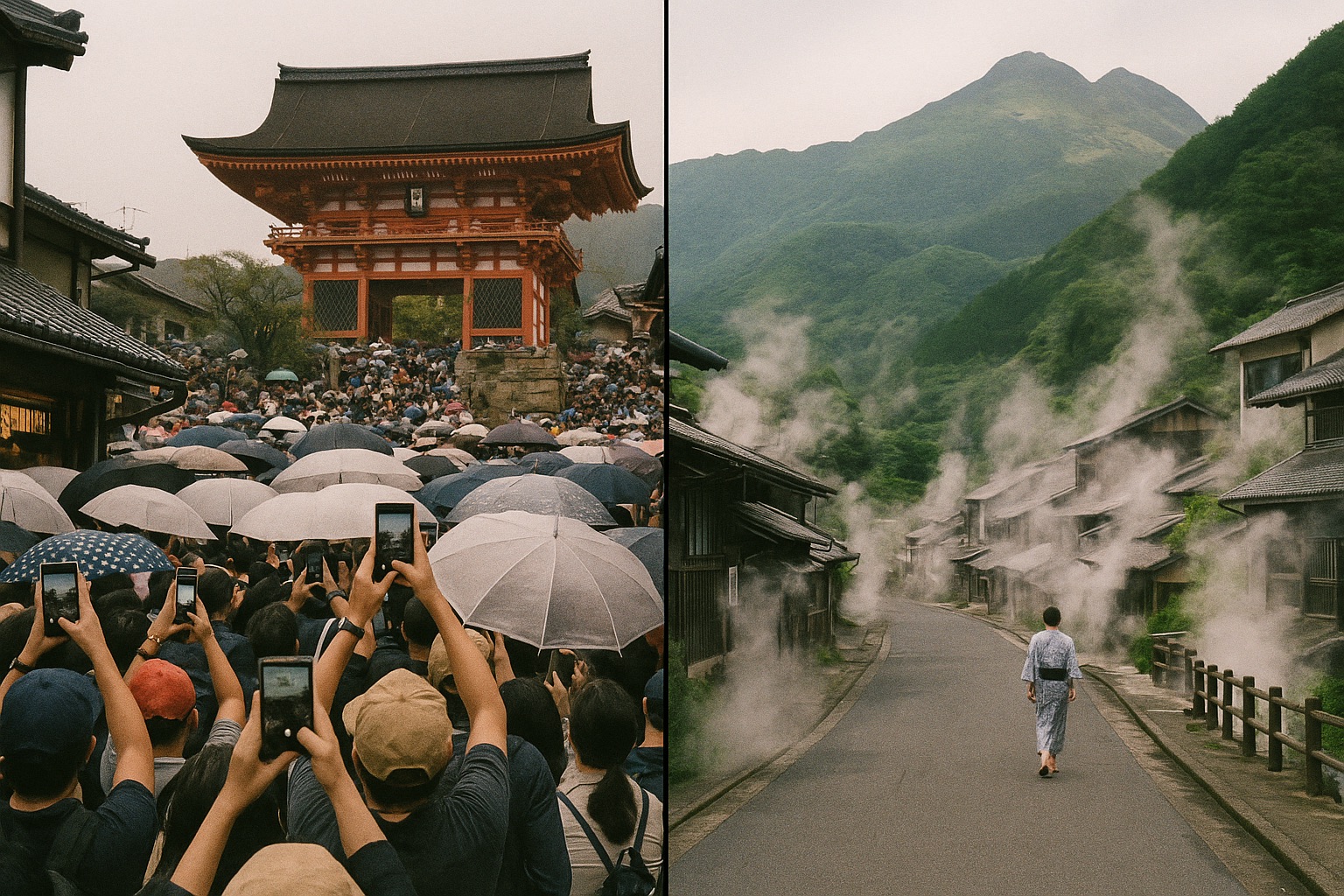
Japan's tourism boom is real and it is concentrated. Kyoto's flagship sights now involve queues to take photographs of queues; Tokyo's famous neighborhoods feel like festivals every weekend. None of this makes those places bad — but it changes what your days feel like.
Kyushu receives a small fraction of Japan's international visitors, most of them from nearby Asia on short Fukuoka city breaks. Outside central Fukuoka, the difference is stark: you can have a 400-year-old castle keep essentially to yourself on a weekday. At famous onsen towns, the "crowd" is Japanese travelers on weekend trips. The experience that golden-route visitors fly home describing wistfully — "I wish we'd seen the normal Japan" — is the default here.
One caveat for honesty: less tourism also means less English signage, fewer English menus, and more pointing and smiling. We see this as a feature. Know yourself.
Who Should Come (And Who Shouldn't)
◎ Kyushu will reward you if...
- ✓Food is a primary reason you travel
- ✓You want onsen culture at full strength
- ✓You like landscapes and road-trip energy (volcanoes, calderas, coastlines)
- ✓Crowds drain you
- ✓This is your second Japan trip
- ✓You have tattoos and want to bathe (seriously — see below)
✗ Skip it (for now) if...
- ✗You have under 10 days and it's your first trip
- ✗Your Japan list is specifically Tokyo pop culture and Kyoto temples
- ✗You need English everywhere to feel comfortable
- ✗You won't rent a car and hate buses (rural Kyushu rewards drivers)
The Logistics — Easier Than You Think
✦ AI-generated illustration — not a photograph of the actual site
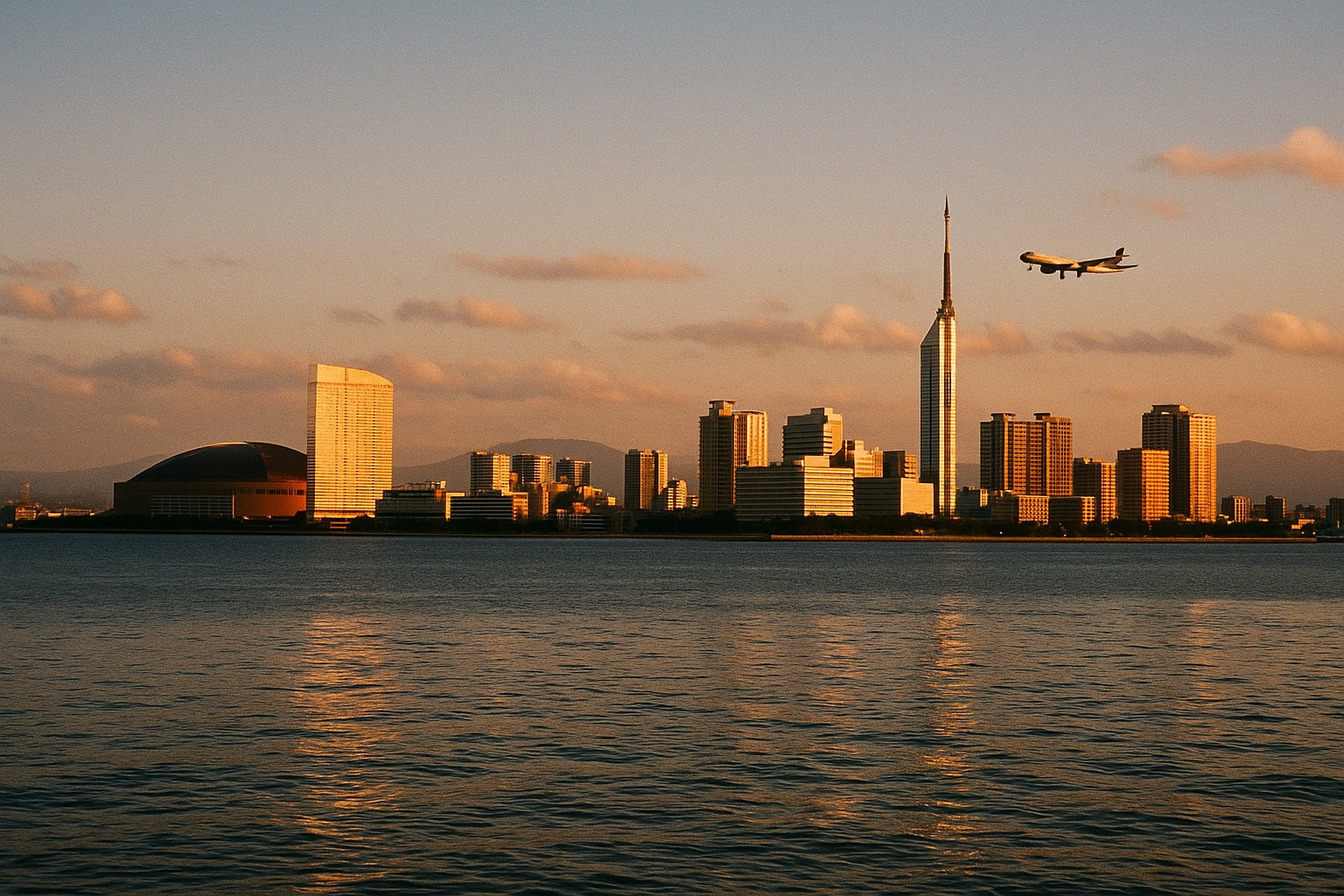
Fukuoka — a major city whose airport is 5 minutes from downtown by subway
- ✈️Getting here: Fukuoka has one of the world's most convenient airports — two subway stops from the city center. Frequent flights from Tokyo (under 2 hours, often $50–100 on LCCs) and direct international routes across Asia. From Osaka/Kyoto, the shinkansen runs direct to Hakata in about 2.5 hours.
- 🚄Getting around: The Kyushu Shinkansen spines the west coast (Fukuoka→Kumamoto→Kagoshima in ~1h20m). Limited expresses reach Beppu, Nagasaki, and Miyazaki. A JR Kyushu rail pass covers it. For Aso, Kurokawa, and the coastal back roads, rent a car — driving here is easy and parking is cheap.
- 💴Cost: Meaningfully cheaper than the golden route — hotels run 30–50% less than Kyoto equivalents, great meals cost half of Tokyo, and many of the best experiences (onsen, viewpoints, neighborhoods) cost pocket change. Your dollar goes further here.
If You Come: How to Spend 5–7 Days
The shape that works for most first Kyushu visits:
Fukuoka
Eat. Yatai at night, ramen, sushi lunch, a Dazaifu half-day. The food itinerary has the full sequence.
Beppu (+ Yufuin)
The onsen deep end: hells, hidden bathhouses, hell-steamed food, bay views from the rooftop bath.
Aso or Kagoshima
Caldera grasslands and Kurokawa's lantern-lit lanes — or south to Sakurajima's ash-dusted streets and Ibusuki's sand baths.
Loop back via Kumamoto
The unconquerable castle, then shinkansen back to Hakata for a farewell yatai night.
Want it fully planned? Our 7-day Kyushu itinerary is the long version, day by day, with the honest assessments included.
🗾
Tokyo shows you Japan's future. Kyoto shows you its past. Kyushu shows you its everyday — and feeds you better than either.
If you have the days, come. If you don't, save it — Kyushu is the reason your second Japan trip will be better than your first.
Start Planning
🗾 Kyushu 7-Day Itinerary
The complete day-by-day plan
🍽️ Fukuoka 3-Day Food Itinerary
Japan's best food city, meal by meal
♨️ Beppu Onsen Guide
The onsen capital, explained
🎨 Tattoo-Friendly Onsen
Bathe with ink — here's where
🆚 Fukuoka vs Osaka
The food city showdown
💡 20 Japan Travel Tips
What guidebooks won't tell you