20 Japan Travel Tips Guidebooks Won't Tell YouFrom Someone Who Actually Lives Here
Written by a local in Oita · June 2026 · 17 min read
Every Japan travel tips article tells you not to tip and to be quiet on trains. You already know that. This guide is different.
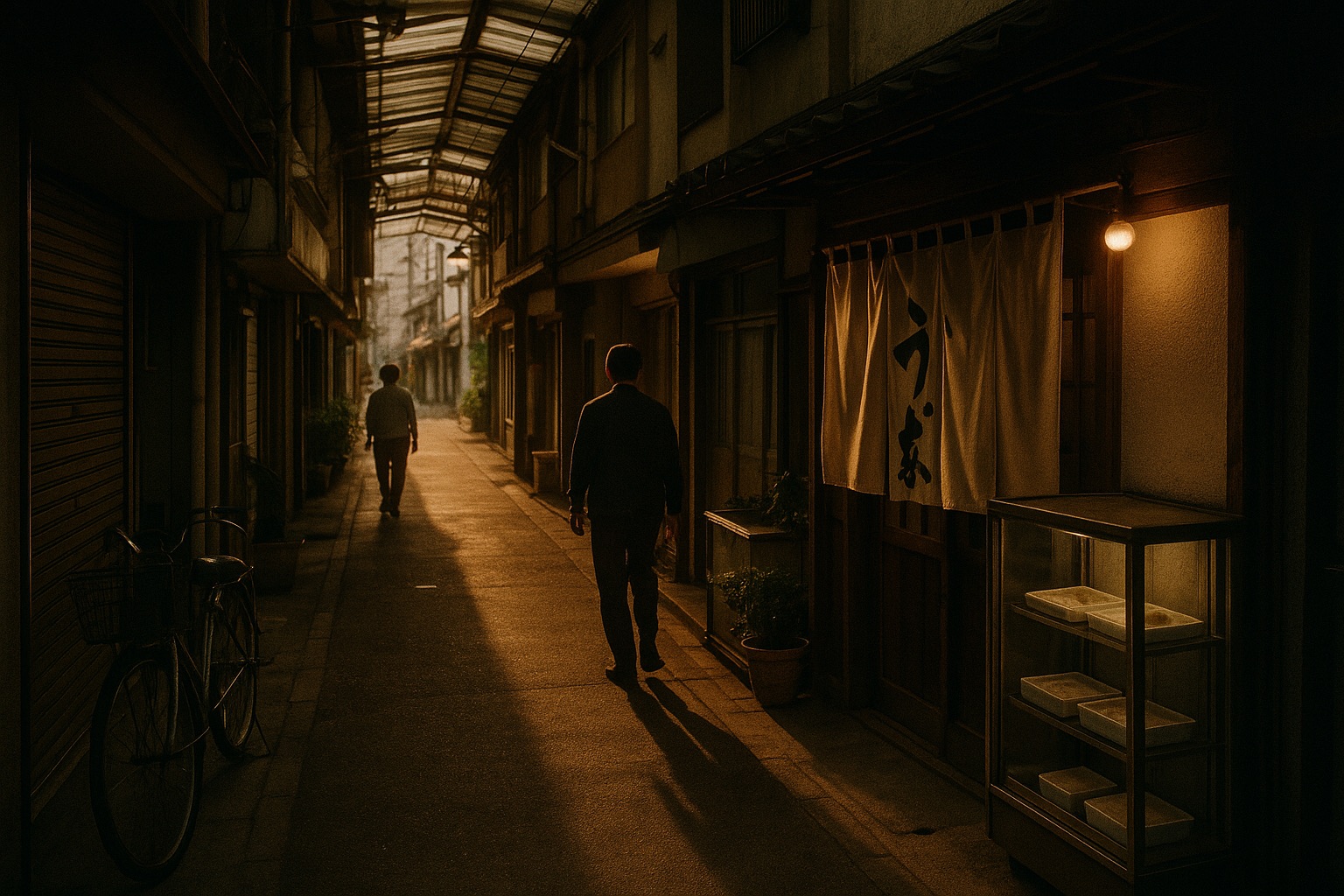
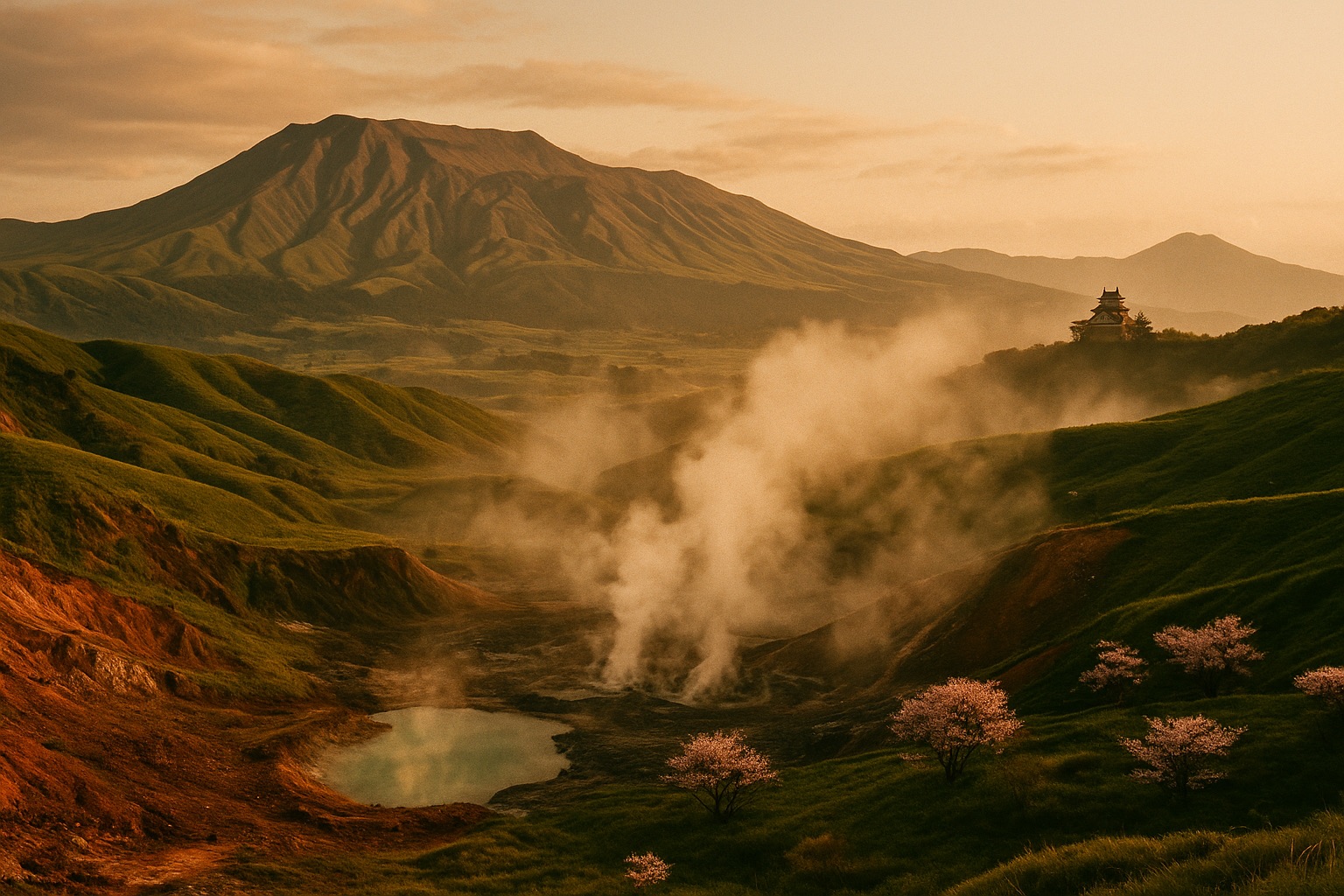
✦ AI-generated illustration — not a photograph of the actual site
I live in Oita Prefecture, Kyushu — 15 minutes from Beppu by train. I've watched thousands of tourists make the same preventable mistakes, miss the same extraordinary things, and spend money in the wrong places.
These are the 20 things I'd tell a close friend visiting Japan for the first time. Not the rules you already know. The things that will make the difference between a good trip and an extraordinary one.
Before You Leave Home
Get an eSIM before you land — not at the airport
The SIM counters at Japanese airports charge a premium and frequently have queues after long-haul flights. There's a better way: buy an eSIM through Airalo, IIJmio, or a Docomo-based provider before you board. You can activate it the moment you land, or even while you're still on the plane.
For coverage: IIJmio and Docomo-based plans are your best choice if you're traveling through Kyushu's mountain and rural areas. Tokyo is well-covered by almost any carrier; the test is whether your signal holds in a Kumamoto valley or a Beppu side street. IIJmio passes it. Many budget options don't.
Download these five apps before you board
This is the most actionable thing in this guide. Do it tonight.
Google Maps (offline mode)
In the app, search each city you're visiting and download the offline map. This is the single most important step. Mountain areas, rural ryokan, and regional train stations regularly have zero data signal. Without an offline map, you're stranded. With one, you're fine.
Google Translate (camera mode)
Open the camera function, point it at any menu, sign, or poster — it reads and translates in real time. This is genuinely life-changing for navigating regional restaurants where no English exists. Download the Japanese language pack for offline use.
Hyperdia / Japan Transit Planner
More detailed than Google Maps for train routing, especially for rural routes and connections involving local lines. Use it to double-check connections in Kyushu's regional rail network.
Tabelog (English version)
Japan's equivalent of Yelp, used by locals rather than tourists. A score of 3.5+ means the local community considers it worth returning to. This is the filter between restaurants that serve tourists and restaurants that serve people who live here.
Tablecheck or OMAKASE
For booking high-end restaurants and sushi counters in English. Many top-tier places in Japan now use one of these systems, and they accept international credit cards. Book weeks or months in advance for omakase counters.
The JR Pass math has changed — check before you buy
After a major price increase in 2023, the nationwide JR Pass is no longer automatically the smart choice it once was. The 7-day national pass now costs ¥50,000 — roughly double what it was three years ago. If your itinerary covers only Tokyo, Kyoto, and Osaka, run the numbers: you may be better off buying individual Shinkansen tickets.
For Kyushu specifically, the regional passes remain excellent value and are priced well:
| Pass | Duration | Price | Coverage |
|---|---|---|---|
| Northern Kyushu | 3 days | ¥10,000 | Fukuoka, Saga, Nagasaki, Oita |
| All Kyushu | 5 days | ¥15,000 | All 7 prefectures |
See our Kyushu 7-day itinerary for a route that makes the most of these passes.
Book trains and popular restaurants months ahead
Japan rewards planners. The “we'll figure it out when we get there” approach works in many countries; it works less well in Japan for anything time-sensitive.
The specific pressure points:
- •Shinkansen reserved seats sell out during peak periods. The Sakura and Mizuho services between Fukuoka and Osaka fill completely during Golden Week and Obon. Book at least two weeks ahead, a month for peak travel.
- •Michelin-starred and omakase restaurants book 1–6 months out. If there is one restaurant you're certain you want, book it the day your trip is confirmed — not the week before you leave.
- •Golden Week 2026 (May 2–6): JTB forecasts 23.9 million domestic travelers in motion during this window. If any part of your trip overlaps, everything — trains, hotels, popular sites — needs to be locked in well in advance.
2026 update: Don't throw away your shopping receipts
Japan's tax refund system for tourists is changing. From late 2026, the government is transitioning from the previous “tax-free at the register” model to an “airport refund” model: you pay consumption tax at purchase, keep your receipts and goods sealed/unused, and claim the refund when you depart at the airport.
The transition is gradual — not all retailers have switched yet as of mid-2026. But the direction is clear: keep every receipt for eligible purchases, and arrive at your departure airport with time to process the refund claim. Eligible categories include most consumer goods (electronics, clothing, cosmetics) with a minimum purchase threshold per day per store.
Money & Practical Logistics
Japan is not as cashless as you think
Urban Tokyo has improved considerably for card and contactless payments. Regional Japan — which is the better part of Japan for most visitors — has not caught up at the same pace. Markets, yatai stalls, local temples, neighborhood ramen shops, and public baths frequently operate on cash only. This is particularly true in Kyushu.
Your best tools:
- →Seven Bank ATMs (inside every 7-Eleven) accept international cards reliably. Withdrawal limit is approximately ¥50,000 per transaction. This is your primary cash source throughout Japan.
- →Revolut, Wise, or Charles Schwab Debit all have minimal or zero foreign transaction fees. Use one of these rather than a standard US credit card that charges 2–3%.
- →PayPay (Japan's dominant QR payment app) is not currently practical for most foreign visitors — account setup requires a Japanese phone number. Skip it.
Convenience stores are not a fallback — they're a destination
The Japanese convenience store is one of the most misunderstood things in travel writing. Western coverage treats it as a fun novelty. It is not a novelty — it is where a significant portion of Japan's working population eats breakfast, buys lunch, and picks up dinner on the way home. The quality reflects that.
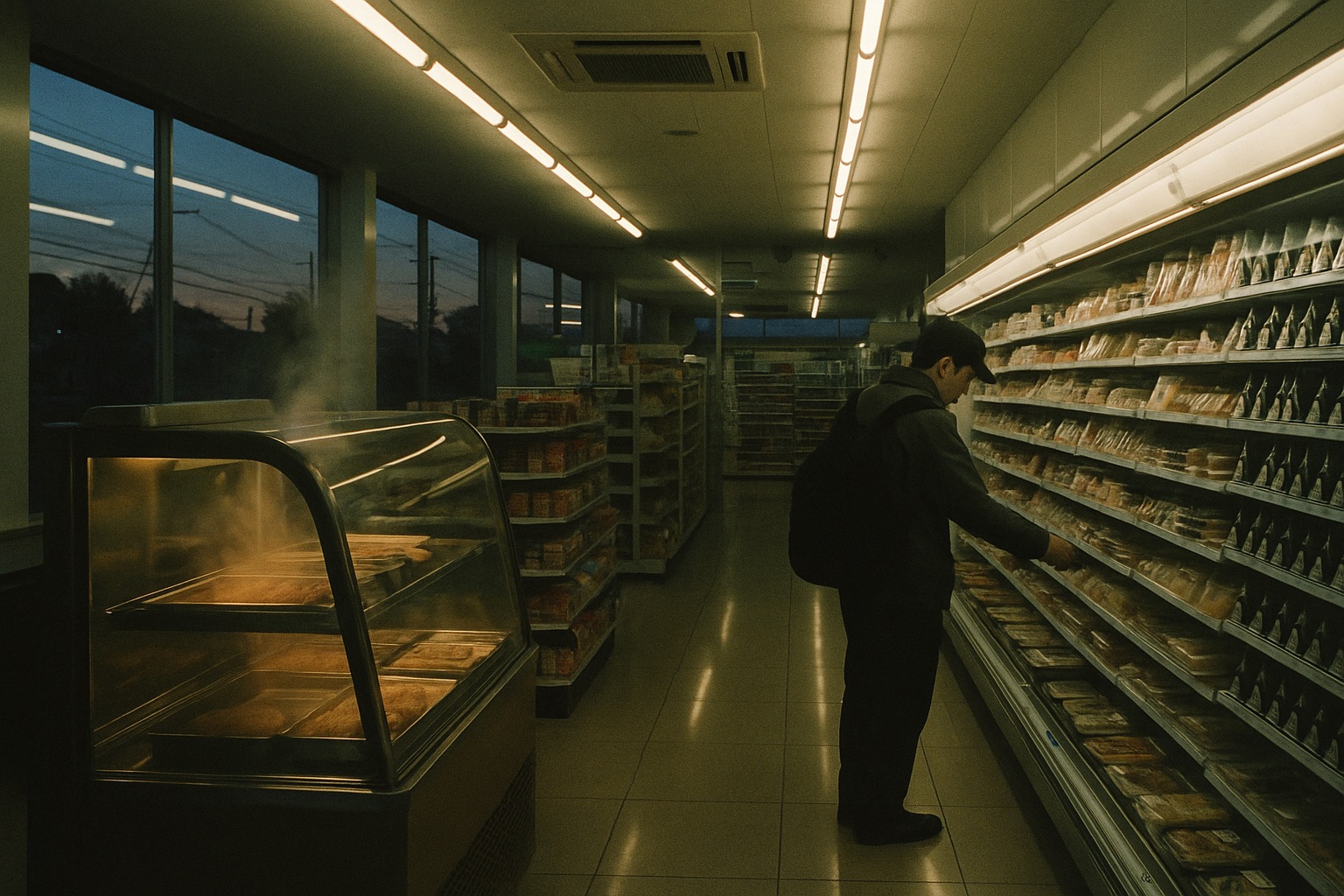
✦ AI-generated illustration — not a photograph of the actual site
What's actually worth buying:
7-Eleven
Hot sandwiches, premium onigiri, sandwiches with thick-cut egg
Lawson
Karaage-kun (fried chicken nuggets), nikuman (pork bun), premium desserts
FamilyMart
Famichiki (fried chicken), onigiri, hot noodles
Universal across all chains: onigiri (rice balls — salmon, plum, tuna mayo), hot tea in cans, warm coffee from the machine at the counter, and every kind of snack you'll want on a train. The ATM in the Seven Bank ATMs inside 7-Eleven also works for international cards — two tasks solved in one stop.
Tipping doesn't just mean “don't tip”
You know you don't tip in Japan. But the reason matters more than the rule, and understanding it will change how you experience service here.
In Japan, exceptional service is understood as the natural expression of professional pride — what is sometimes called shokunin kishitsu(職人気質), the craftsman's spirit. The ramen chef who has spent 20 years perfecting their broth does not want a gratuity; they want acknowledgment that the bowl was right. The ryokan attendant who has arranged your room with specific attention to seasonal decoration is not performing a service for a tip — they are expressing the full form of their craft.
Offering money as an afterthought can read as misunderstanding what just happened. The appropriate response is simple: make eye contact, say arigatou gozaimashita with sincerity, and mean it. That is the full exchange. It is enough.
Getting Around
The Shinkansen is not just transport — treat it as part of the experience
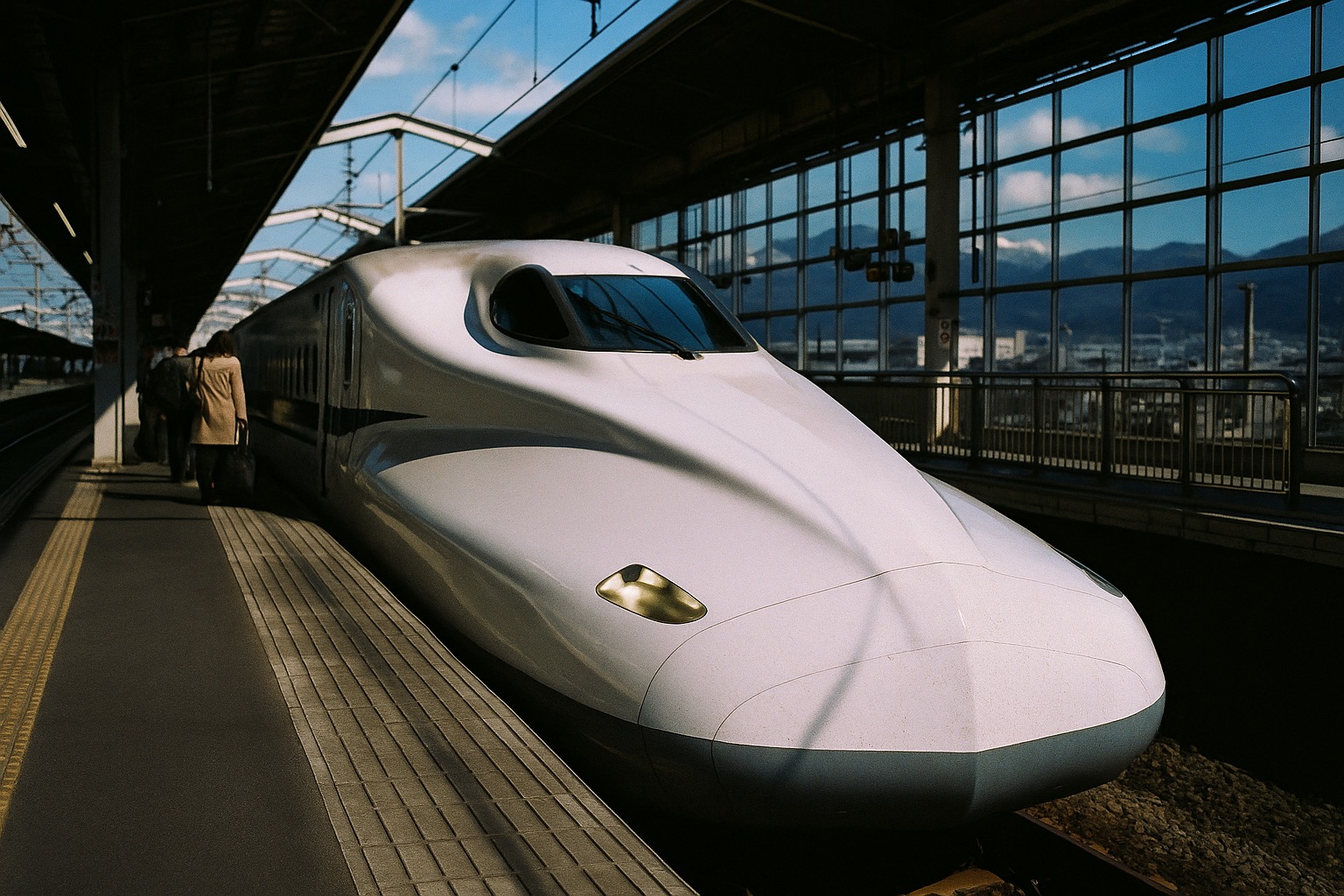
✦ AI-generated illustration — not a photograph of the actual site
The Shinkansen arrives at the exact second it is scheduled to. The platform markers tell you exactly where each car door will stop. The seats recline without disturbing the person behind you. The cleanliness of the car interior, maintained between every run, is consistent regardless of the time of day. All of this is ordinary here. The first time you experience it, none of it will feel ordinary.
Booking: Use eki-net (英語対応) or the official JR site
International cards accepted. Seat reservation costs a small fee above the basic fare — always worth paying for long-distance routes.
The Mt. Fuji seat (Tokyo→Osaka): E seat, window, right side
On the Tokaido Shinkansen heading west, the E seat (window, right side) faces Mt. Fuji between Shin-Fuji and Mishima stations. Request it specifically when booking.
The ice cream: Shinkan-sen Sugoi Katai Aisu
The cart service sells a notoriously hard vanilla ice cream block that, for reasons nobody has fully explained, tastes better than it should. Buy it from the trolley. This is non-optional.
Get a Suica or ICOCA card within your first hour in Japan
An IC card (Suica or ICOCA) is a rechargeable prepaid card that works on trains, subways, buses, and convenience stores across Japan. Loading one should be among the first three things you do after landing — before finding your hotel.
The smarter approach: set up Mobile Suica before you board your flight. Add it to your Apple Wallet (iPhone) or Google Pay (Android). This works for non-Japanese phones and cards, and means you arrive with payment already functional — no queue at a ticket machine.
Transfers are not scary — just follow Google Maps exactly
Japan's rail network looks overwhelming on a full map. In practice, it's not — because Google Maps knows every line, every connection, and the exact platform number you need. Enter your destination, select “transit,” and follow the step-by-step. Japan's trains run on the times shown. If Google Maps says your transfer takes 4 minutes, it will take 4 minutes.
The one real complication: same station name, different rail company, different gates. Shinjuku, Osaka, and some Fukuoka-area stations have exits for multiple rail operators that are not physically connected inside. If you tap out of one operator's gate and need another's, you exit onto the street and re-enter — paying again. Google Maps accounts for this, but it can be confusing the first time it happens.
Cultural Things That Actually Matter
Things Americans do that Japanese people notice (but won't say)
Japanese social culture places significant weight on not openly correcting or confronting strangers. This means that behaviors that would generate immediate feedback in the US — someone saying “hey, could you quiet down?” — simply don't get addressed directly here. The person next to you on the train who is bothered by your phone speaker will not say so. They will sit in silence and think less of you.
The things that actually register:
- •Playing audio through speakers in enclosed spaces — trains, elevators, quiet restaurants. Headphones always.
- •Standing in front of someone for a photo without acknowledging them. A moment of eye contact and a slight bow before stepping into their sightline costs nothing.
- •Eating and walking simultaneously in shrine and temple precincts. Street food in those areas is sold for eating in place, not in motion.
- •Loud restaurant conversations — volume calibration matters more in Japan than almost anywhere else. The ambient noise level in most Japanese dining rooms is lower than in comparable American settings. Match it.
None of these will get you thrown out or reprimanded. But they do affect how you're seen — and Japan at its best is experienced when you blend rather than disrupt.
The photography rules have become real in 2026
Japan's response to overtourism has moved from polite signage to enforceable penalties in some areas. Know what's changed:
Kyoto's Gion District
Private alleys (shidō) have been designated off-limits for tourist photography. The penalty for entering and photographing is ¥10,000. The rule exists because the harassment of maiko (apprentice geisha) by tourists seeking photographs became severe enough to require legal response. The rule is enforced.
The Fujikawaguchiko Lawson (Mount Fuji backdrop)
The convenience store with the famous Mt. Fuji view now has a mesh barrier blocking the most-photographed angle. The barrier went up in 2024 after crowd management became unworkable. It remains in place. The photo no longer exists.
Temples and shrines with commercial photography
A growing number of sites now require advance permission for tripod use and explicit commercial photography. If you're using professional equipment, check before you arrive.
The broader pattern: Japan's famous Instagram locations are disappearing or changing faster than travel content is updated. Check current conditions before planning a trip around a specific shot.
Learn five Japanese phrases — that's genuinely all you need
English proficiency varies significantly by region and generation. In Tokyo and Osaka, you can usually find English support in tourist areas. In regional Kyushu — Beppu, Usuki, Hita — assume none and be grateful when it appears. Google Translate's camera mode covers most of the gap.
But five spoken phrases open a disproportionate number of doors, and learning them takes about 15 minutes:
すみません
Sumimasen — Excuse me / I'm sorry
The most versatile phrase in Japanese. Use it to get someone's attention, apologize for bumping into someone, or ask a question. Gets you through 80% of situations.
ありがとうございました
Arigatou gozaimashita — Thank you (formal, past tense)
The full version used after a service is complete. In a restaurant as you leave, at a hotel when checking out. More meaningful than the casual arigatou.
これをください
Kore wo kudasai — I would like this, please
Point at whatever you want and say this. Works in restaurants, markets, bakeries, anywhere with visible products.
お会計をお願いします
O-kaikei wo onegaishimasu — Check, please
In many Japanese restaurants, the bill doesn't arrive automatically. Say this when you're ready to pay.
写真を撮ってもいいですか
Shashin wo totte mo ii desu ka — May I take a photo?
Ask before photographing people or in unclear settings. The effort of asking — even in halting Japanese — will almost always be met with warmth.
Queue culture is Japan's most important unwritten law
Queuing in Japan is precise. People form orderly lines at bus stops, convenience stores, elevator doors, and ATMs — often before there's any formal indication that a line is forming. You may not see a rope or a sign; you will see a queue.
The invisible queue: at a crowded bus stop or train platform, observe where people are standing. There is a pattern. Insert yourself at the back of it. Do not go to the front. Do not create a parallel cluster.
Among all the behaviors that create friction between foreign visitors and local residents in Japan, cutting or bypassing a queue is the one that generates the most genuine irritation. Not because the Japanese queue culture is performative — but because it is real, it is taken seriously, and it is considered a basic expression of mutual respect.
Food Tips That Will Change Everything
The best meal of your trip will probably cost ¥500
The relationship between price and quality in Japanese food does not work the way it does in most countries. Exceptional food exists at every price tier. The ¥500 counter ramen shop can be more interesting than the ¥15,000 per-head restaurant — not in every case, but in enough cases to change how you approach eating.
The specific example: Ganso Nagahamaya, established in 1952 in Fukuoka. Open 24 hours. Counter seating only. ¥500 for a bowl of tonkotsu ramen. This is the original form of Hakata ramen, eaten by dock workers and fishermen before the restaurant guides ever covered it. The bowl is not a tourist experience. It is the actual thing.
The ¥50,000 omakase counter is also worth experiencing once. But the ¥500 bowl is the one that tends to stay with people longest.
See our best ramen in Fukuoka guide for where to find it and how to order. Cash only — hence Tip 6.
Don't eat at restaurants near major tourist sites
The restaurants immediately surrounding Asakusa, Kinkaku-ji, and Dotonbori are serving tourists. The prices are 30–50% higher, the quality is optimized for throughput rather than craft, and the menus frequently exist to match foreigner expectations rather than local taste. This is not unique to Japan — it's true in every high-volume tourist destination. Japan just has a sharper gradient between the tourist-facing tier and everything else.
The filter that works: Tabelog score 3.5 or above, cross-referenced with a location more than five minutes' walk from a major attraction. A Tabelog score above 3.5 means the local regular customer base considers the restaurant worth returning to. It is a different signal from Google Maps ratings, which are heavily influenced by tourist volume and tend to elevate visible, English-friendly restaurants over quieter neighborhood places.
The Japanese breakfast is the most underrated meal
A traditional Japanese breakfast — grilled fish, rice, miso soup, pickles, tamagoyaki, a small dish of seasonal vegetables — is, in my honest assessment, the best version of breakfast available anywhere in the world. It is also deeply unfamiliar to most Western visitors, who overlook it in favor of convenience.
Where to find it: at a ryokan (it will be served as part of your stay), at a traditional hotel that offers a Japanese breakfast option, or at a local shokudō (neighborhood diner) that opens early. The markets in Fukuoka and Hakata are also worth visiting at 7–9am — small stalls sell hot food prepared for the morning crowd.
The practical counter-argument: a combini breakfast (coffee, onigiri, and a hot item from the case, approximately ¥500) is a completely rational choice on days when you're catching an early train and want to save money and capacity for lunch and dinner. Both approaches have a place on the same trip.
For the full picture of Kyushu's food culture, see our Fukuoka food guide.
The Honest Advice No One Gives
Stop spending all your time in Tokyo and Kyoto
The standard first-Japan itinerary — 4 days Tokyo, 3 days Kyoto, 1 day Osaka — is also the most common source of first-Japan disappointment. Not because these cities are bad. They are extraordinary. But in 2026, with overtourism having materially changed both destinations, spending the majority of your Japan trip in the two most-visited cities in the country means spending most of your time managing crowds rather than experiencing Japan.
What has changed in Kyoto specifically: entry fees for major temples and shrines have increased substantially. Timed-entry systems now restrict access to many popular sites. Gion's private lanes are legally off-limits for tourists. Arashiyama bamboo grove at 10am on a Saturday is a dense crowd rather than an experience.
The case for Kyushu is simple and comes down to three things:
- 1.Not crowded. The equivalent of Kyoto's best temple experiences exists in Kyushu — the onsen village of Kurokawa, the castle ruins of Oka, the shrine complex of Takachiho — with none of the crowd infrastructure. You can actually be there.
- 2.More real. In Kyushu's regional cities, daily life is visible. The morning fish market, the neighborhood shotengai, the salaryman eating alone at the counter — this is the Japan that motivated you to visit. It's easier to find in places where tourist infrastructure hasn't been built around it.
- 3.Everything is here. The food, the onsen, the castles, the history, the natural landscapes — Kyushu contains all of it at a scale that works for a single trip. Our full Kyushu castle series covers the history. Our anime pilgrimage guide covers the cultural geography. The onsen guide covers how to use it all.
If you're planning your first Japan trip and wondering whether to go off the standard route: yes. Spend time in Tokyo — it's worth it. Consider swapping Kyoto for Kyushu on at least part of your itinerary. The solo travel in Kyushu guide covers how it works specifically for independent travelers.
The best Japan experiences are the unplanned ones — but only if you're prepared
This guide has told you to book things early, download apps, plan for crowds, and know the rules in advance. All of that is true. And none of it contradicts the final point: the best thing that will happen to you in Japan will not be on your itinerary.
It will be the 5am outdoor bath at Kurokawa that you wandered into because you woke up early and the rest of your group was asleep. It will be the ¥500 ramen counter at 1am where you end up talking to the man next to you for 40 minutes using Google Translate and gestures. It will be the alley you turned into because the light was interesting, which turned out to contain a 200-year-old sake brewery that still sells direct.
These things happen in Japan because Japan is extraordinarily safe for the kind of exploration that produces them. You can wander. You can take a wrong turn. You can miss your train and have a better experience waiting for the next one. The preparation — the apps, the booked tickets, the cash in your pocket — is not what makes the trip. It's what makes the exploration available. The structure creates the freedom.
Leave 30% of your days genuinely unscheduled. Not “flexible” — actually empty. Walk somewhere without a destination. The countries where that kind of wandering produces the most reward are rare. Japan is at the top of that list.
“The most important preparation for a Japan trip isn't a perfect plan — it's curiosity. Plan what needs to be planned. Book what needs to be booked. Then leave room for the country to surprise you. It will. Japan always does.”
Start Planning Your Japan Trip
Written by
A Local in Oita, Japan
A Japanese local born and raised in Oita, Kyushu. Sharing the Japan that guidebooks miss — from someone who actually lives here.
About this site →Related Articles
JR Kyushu Rail Pass: Is It Worth It? A Local's Honest Guide
A local breaks down the JR Kyushu Rail Pass — the 3, 5, and 7-day options, what's covered, real price math for popular routes, how to buy and use it, and the honest answer to whether it's worth it for your trip.
Best Time to Visit Kyushu: A Month-by-Month Season Guide
When should you visit Kyushu? A local walks you through the seasons month by month — cherry blossoms, the rainy season, summer heat, golden autumn, and mild onsen winters — so you pick the right time for your trip.
Driving in Kyushu: Renting a Car & the Best Road Trips
Should you rent a car in Kyushu? A local explains the license you need, what driving here is really like, costs and tolls, where a car beats the train — and the island's most beautiful road trips.