
Somewhere around your second day in Japan, it happens: you walk into a convenience store for a bottle of water and walk out, twenty minutes later, holding an egg sandwich, two onigiri, fried chicken, a perfect iced coffee, and a small pudding — having spent about eight dollars and experienced something close to joy.
The internet did not oversell the konbini. As a local, my only correction to the viral videos is that they don't go deep enough. Here's the full local playbook — including the items you can only get here in Kyushu.
Why Konbini Deserve the Hype
Japan has over 55,000 convenience stores, and they compete on food qualitythe way American chains compete on price. Items are developed by serious R&D teams, delivered fresh multiple times daily, and ruthlessly discontinued if they don't sell. The egg sandwich that made Anthony Bourdain rhapsodize is the product of decades of iteration on bread softness and egg-to-mayo ratio.
For travelers, konbini solve real problems: breakfast before trains, dinner after late arrivals, picnics for road-trip days, and the 10 p.m. "I need a snack and a beer" moment — all at ¥100–500 per item, open 24 hours, every few hundred meters. Eating konbini sometimes isn't settling. It's playing Japan correctly.
The Big Three — And What Each Does Best
| Chain | Superpower | Order This |
|---|---|---|
| 7-Eleven | Overall food quality; the gold-standard egg sando; excellent coffee machines | Egg sandwich, onigiri, chilled noodles in summer |
| Lawson | Desserts & fried chicken; the premium 'Baschee' sweets line | Karaage-kun chicken nuggets, premium roll cake, Baschee cheesecake |
| FamilyMart | Famichiki — the fried chicken that has its own fan culture | Famichiki (eat it outside, immediately), spicy version when available |
The correct approach is nondenominational: locals have a chain loyalty and ignore it constantly. Visit all three in your first 48 hours and run your own championship.
The Must-Eats, Ranked
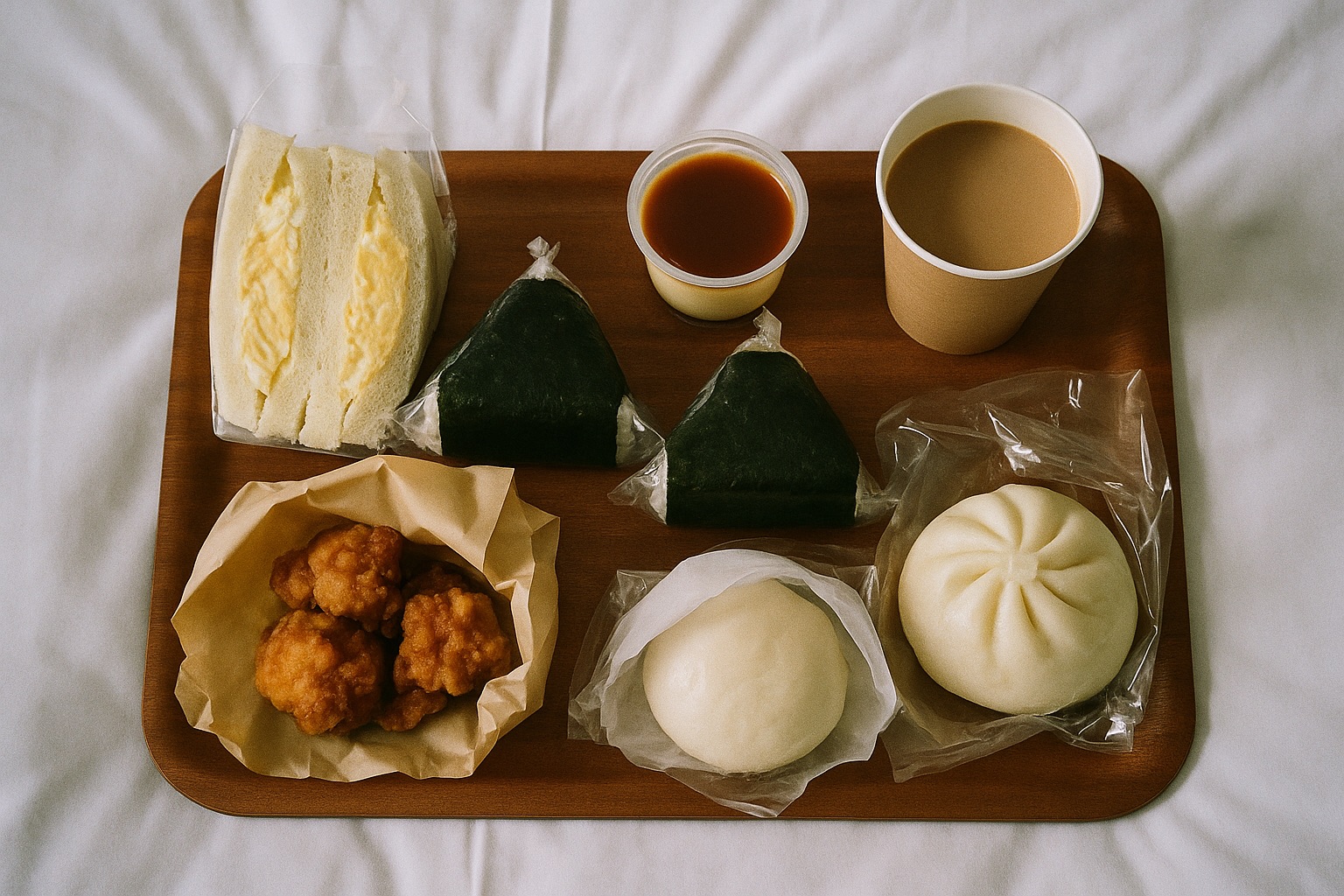
✦ AI-generated illustration — not a photograph of the actual site
The hotel-bed feast — a legitimate Japanese travel tradition
1. Tamago sando (egg sandwich)
Cloud-soft white bread, eggy-mayo filling with whole-yolk richness. Yes, it's worth the hype. ~¥250–300.
2. Onigiri (rice balls)
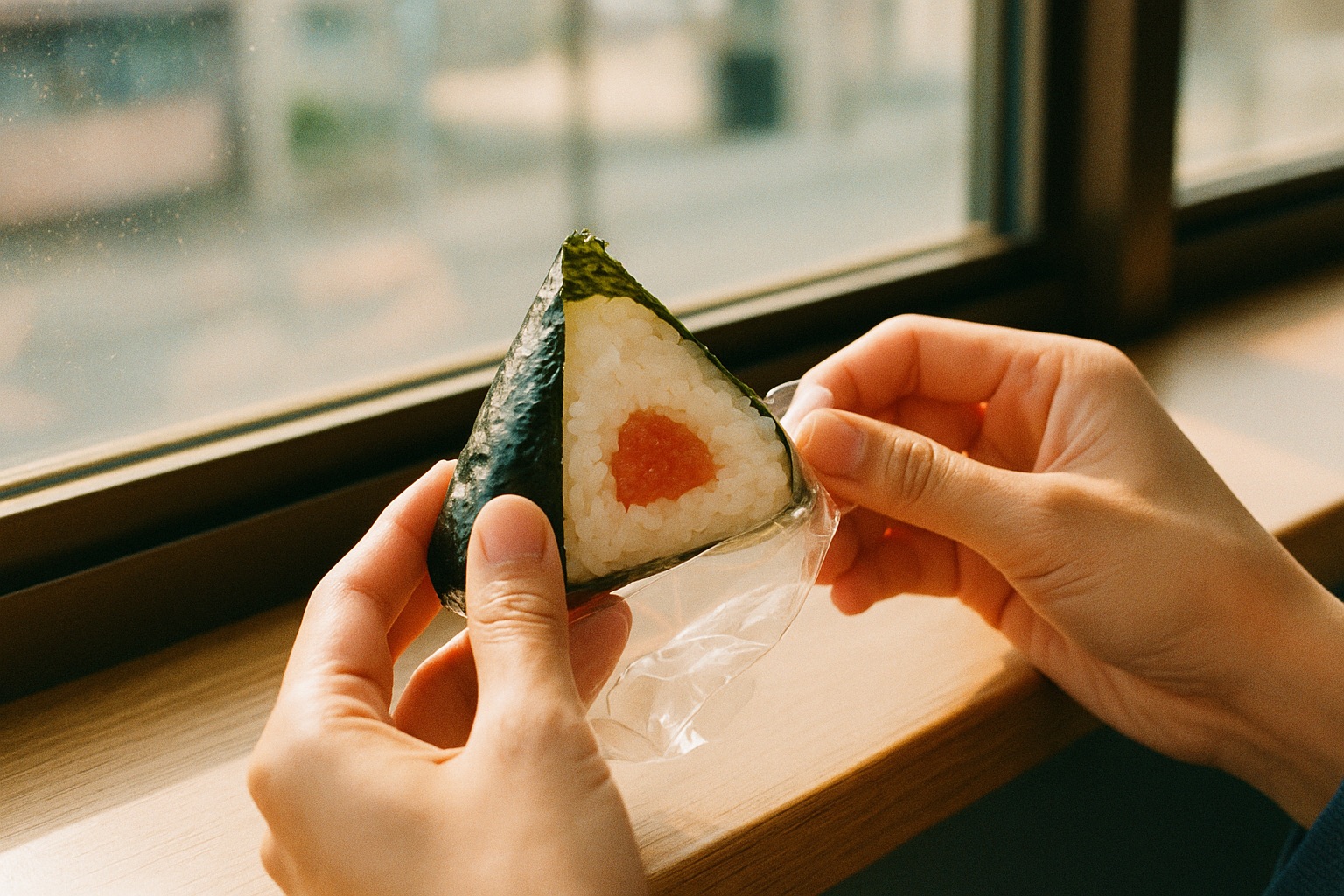
The perfect travel food. Start with tuna-mayo or salmon; graduate to mentaiko (see Kyushu section). The wrapper keeps the nori crisp until the moment of assembly — follow the numbered tabs.
3. Counter fried chicken
Famichiki (FamilyMart) vs Karaage-kun (Lawson) vs Nanachiki (7-Eleven) is a national debate. All are excellent. ~¥200–280, ask at the register.
4. Machine coffee
Modern konbini grind beans to order for ¥120–200. Iced coffee: buy the cup of ice from the freezer, pay, brew at the machine. Better than most airport cafés.
5. Chilled desserts
Japanese purin (custard pudding), roll cakes, mochi sweets, seasonal limited flavors. The ¥200–350 dessert shelf embarrasses many pâtisseries.
6. Oden (winter)
The steaming counter pot of dashi-simmered eggs, daikon, and fish cakes from fall through spring — point at what you want. A ¥500 hot dinner.
The Kyushu-Only Items
✦ AI-generated illustration — not a photograph of the actual site
Konbini regionalize quietly — and Kyushu's shelves carry items the Tokyo videos never show:
- •Mentaiko everything: Fukuoka's spicy cod roe appears in onigiri, pasta, bread, and snacks at densities unseen elsewhere. The mentaiko onigiri here uses better roe — this is the home turf of the producers in our Fukuoka food guide.
- •Kyushu sweet soy sauce items: bento and onigiri seasoned with the region's distinctive sweeter shoyu — taste a karaage bento here and in Osaka and you'll notice.
- •Local drink exclusives: kabosu citrus drinks (Oita), amaou strawberry sweets and milks (Fukuoka), Kumamoto ikinari-dango style sweets, and regional shochu cups for the brave.
- •Tonkotsu cup ramen editions: regional collaborations with famous Fukuoka ramen shops rotate constantly — a ¥300 souvenir that survives any suitcase.
Rituals & Etiquette — Using Konbini Like a Local
- ✓"Atatamemasu ka?" — staff offering to microwave your bento. Say yes ("onegaishimasu"). Chopsticks, spoons, and hand wipes appear unasked.
- ✓Don't eat while walking. Eat at the in-store counter, outside by the wall (the universal Famichiki stance), or back at the hotel. It's the one real rule.
- ✓Trash goes back to the konbini — bins are inside the door (street bins barely exist in Japan). Sort as labeled.
- ✓Pay attention to the seasonal banners. Limited items (sakura in spring, chestnut in autumn, regional fairs) are where konbini R&D shows off — locals genuinely track these releases.
Beyond Food — The Travel Utility Belt
The konbini is also your travel infrastructure: 7-Eleven ATMs reliably accept foreign cards (the single most useful fact in this article — Japan still loves cash), restrooms are usually available and spotless, you can buy umbrellas mid-downpour, print documents, ship luggage ahead between hotels (takkyubin counter service), and pay for concert and museum tickets at the terminal machines.
Stranded, hungry, cashless, rain-soaked, or lost: in Japan, the answer to all five is the same glowing storefront, never more than a few minutes away. Learn to use it on day one — every other day improves.
🏪
Japan's temples show you its past, its trains show you its precision — and its convenience stores show you its everyday genius.
¥1,000, a hotel bed, and the egg sandwich of legend. Some of your best meals here will have a barcode — and that's not a compromise, it's the culture.
Keep Eating
🍽️ Fukuoka 3-Day Food Itinerary
The restaurant-level deep dive
🍜 Fukuoka Food Guide
Mentaiko's home turf, explained
💡 20 Japan Travel Tips
More local survival knowledge
🍵 Yame Tea Guide
Upgrade from konbini green tea
🌋 Beppu Food Guide
What volcanoes cook
🤔 Is Kyushu Worth Visiting?
Plan the trip around the snacks