America is drinking Japan's matcha faster than Japan can grow it — café shortages, purchase limits, viral lattes. And in the scramble, two place names dominate: Uji and Shizuoka.
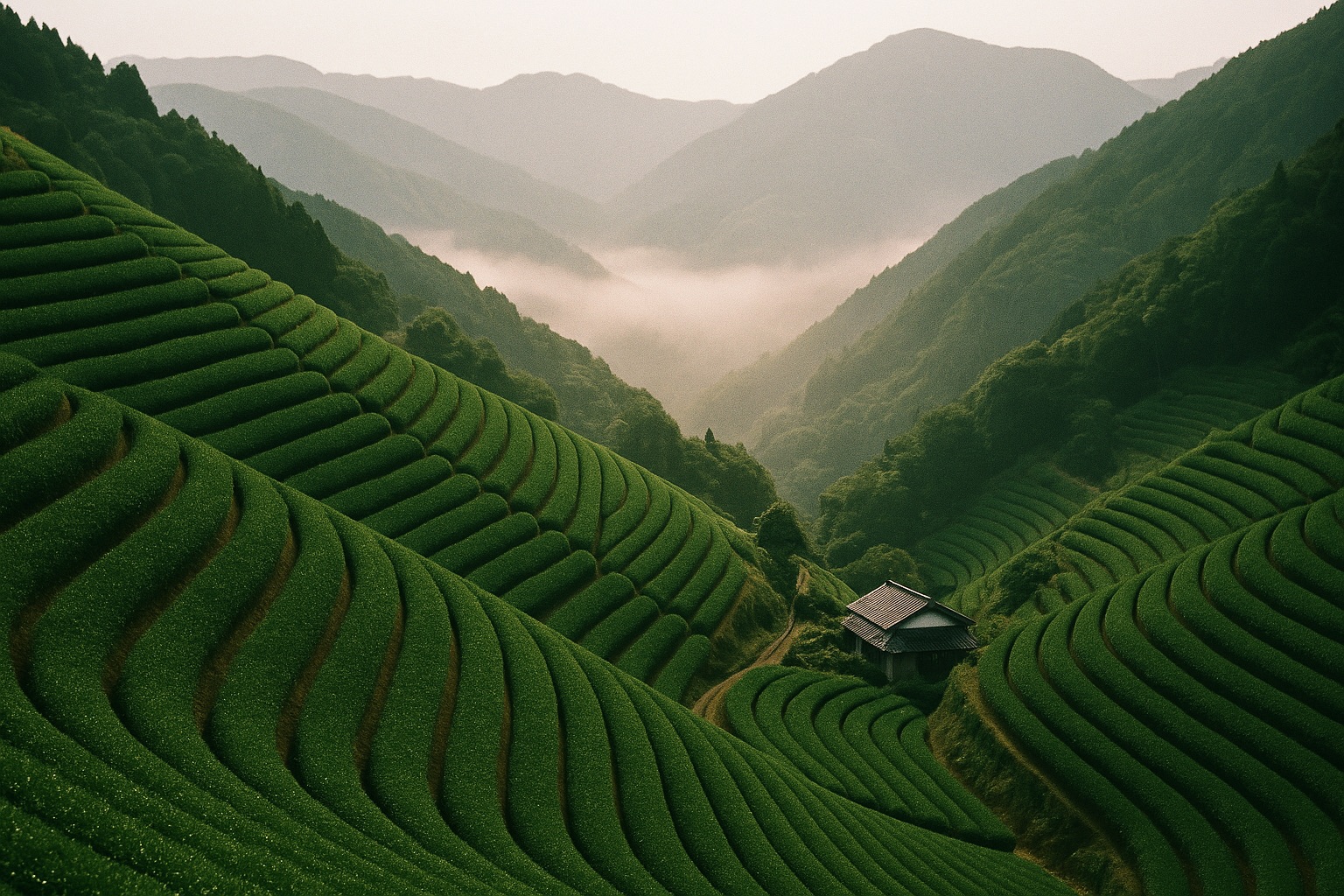
Meanwhile, an hour south of Fukuoka, the tea region that wins Japan's own competitions more than anyone sits in misty mountains that almost no foreign tea lover visits. Yame's gyokuro has taken the national championship 27 times— and you can walk its fields, taste at the source, and carry home tea most shops abroad will never stock. Here's the guide.
The Matcha Boom & the Region Nobody Mentions
If you've tried to buy good matcha recently, you've felt it: global demand has outrun supply, prices have climbed, and famous Uji brands ration their tins. The boom is real and deserved — but it has compressed the world's understanding of Japanese tea into a single word and a single region.
Japan's tea map is far richer. And by the country's own measuring stick — the annual National Tea Competition — the region that keeps taking the top prizes in the luxury categories isn't in Kyoto at all. It's Yame (八女), a basin of foggy river valleys and steep tea terraces in southern Fukuoka Prefecture, whose mountain heart, Hoshino Village, produces what many Japanese tea professionals quietly consider the finest gyokuro on Earth.
For a traveler this is the good kind of inefficiency: world-class product, zero crowds, farm-gate prices.
What Makes Yame Tea Different
Yame's tea history runs back about six centuries, to a monk who returned from Ming China with seeds and the method. The terroir does the rest: inland basin fog off the Yabe River, sharp day-night temperature swings, and mineral mountain soil — conditions that slow the leaf down and concentrate sweetness.
The result is a regional style: where Uji tends toward elegant astringency and Shizuoka toward clean freshness, Yame tea is rich, round, and sweet — high in umami, low in bite. Japanese tea menus list it as a luxury option; competition judges keep handing it gold medals; and the regional specialty, gyokuro, is the most extreme expression of that sweetness.
Yame at a Glance
Gyokuro — The Tea Grown in the Dark
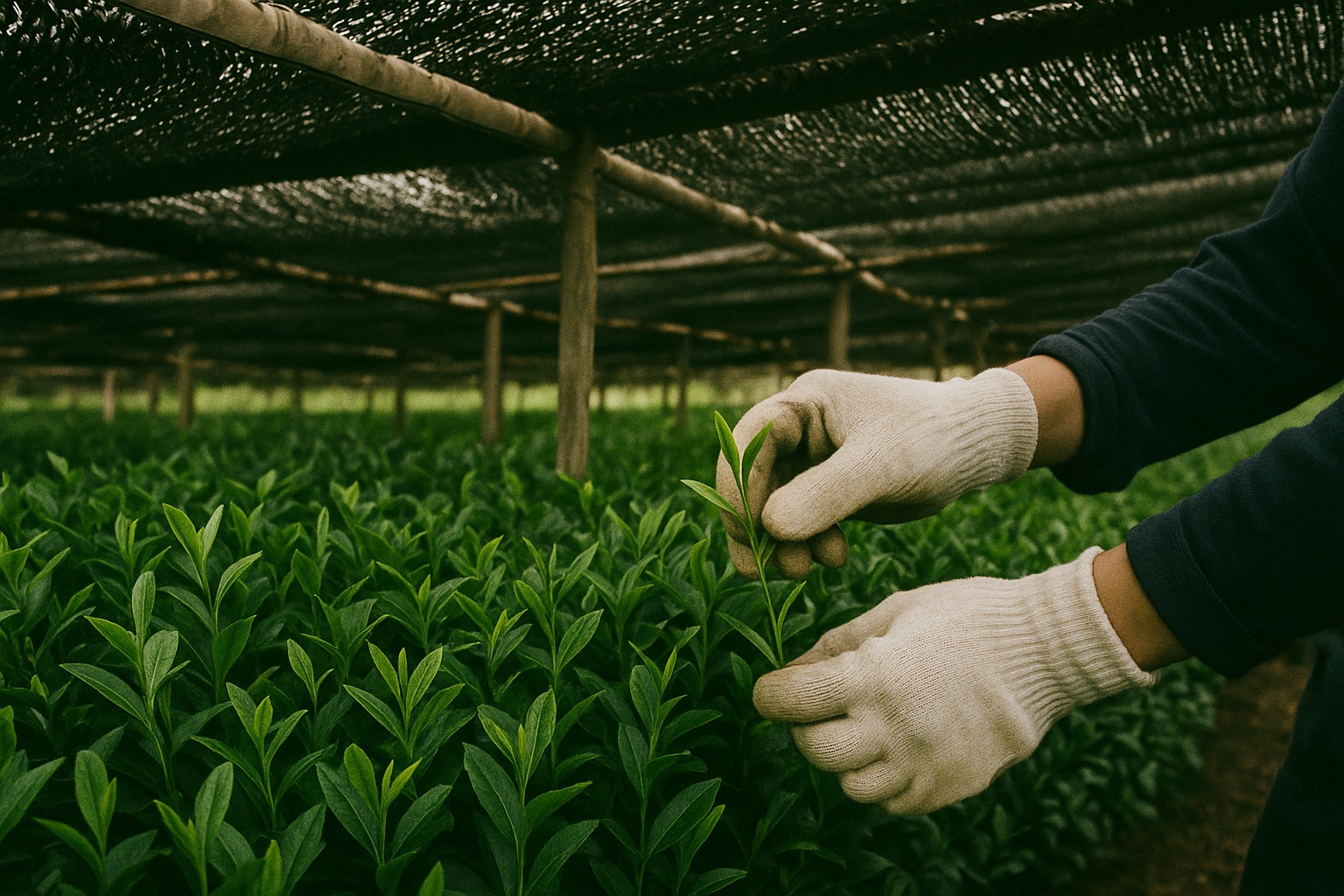
✦ AI-generated illustration — not a photograph of the actual site
Shading the fields starves the leaf of light — and floods it with umami
Gyokuro ("jade dew") is what happens when farmers deliberately starve tea of sunlight. Weeks before harvest, the fields disappear under shade canopies; the plant, desperate for light, supercharges its leaves with chlorophyll and L-theanine — the amino acid responsible for both umami flavor and the calm-alert feeling tea people chase.
Brewed properly (low temperature, tiny pot — see below), the result barely resembles "green tea": it's closer to a savory broth, almost dashi-like, with a sweetness that coats the mouth and a quiet caffeine clarity. First-timers regularly describe the experience as "I didn't know tea could do that."
This is also matcha's secret: tencha — matcha's raw material — is shade-grown the same way, and Yame's shading mastery is exactly why its matcha deserves attention as the famous brands ration their tins.
Visiting Yame — Fields, Tastings & the Tea Village
🍵 The Tea Culture Center (Hoshino Village)
The region's showcase — taste competition-grade gyokuro brewed correctly for a few hundred yen, learn the shading process, and try matcha grinding. The staff's brewing demonstration alone will change how you make tea forever.
🌄 The Tea Terraces
Hoshino's terraced fields curve along mountainsides like green contour lines — at their most beautiful in the late-April to May harvest season, when the new flush glows and (in shading season) the canopies create striking black-and-green patchwork. Drive the village roads slowly; viewpoints are everywhere.
🏘️ Yame Fukushima — The Preserved Merchant Town
Down in the basin, Yame's old town keeps streets of white-walled Edo and Meiji merchant houses — tea wholesalers, washi paper, Buddhist altar crafts, a handful of beautiful cafés in renovated machiya. Pair the mountain fields with this town and you have a full, deeply un-touristed day.
🌌 Stay the Night — for the Stars
Hoshino means "star field," and the village takes it seriously: minimal light pollution, an observatory, and some of Kyushu's clearest night skies. Tea terraces by day, the Milky Way by night — an unbeatable rural Japan combination.
How to Drink It (You're Probably Brewing It Wrong)
✦ AI-generated illustration — not a photograph of the actual site
The single biggest mistake with fine Japanese tea is boiling water. High-grade gyokuro wants to be coaxed, not scalded:
Gyokuro, the Yame Way
- 1.Cool the water to ~50°C / 120°F (pour boiled water between cups a few times).
- 2.Generous leaves, tiny pot, just enough water to cover.
- 3.Steep ~2 minutes. Pour to the last drop — the final drops are the richest.
- 4.Sip — a few mouthfuls of concentrated umami, not a mug. Re-steep the same leaves 3–4 times at rising temperatures.
- 5.Finale, the local move: eat the spent leaves with a drop of ponzu. Shade-grown leaves are tender as salad greens.
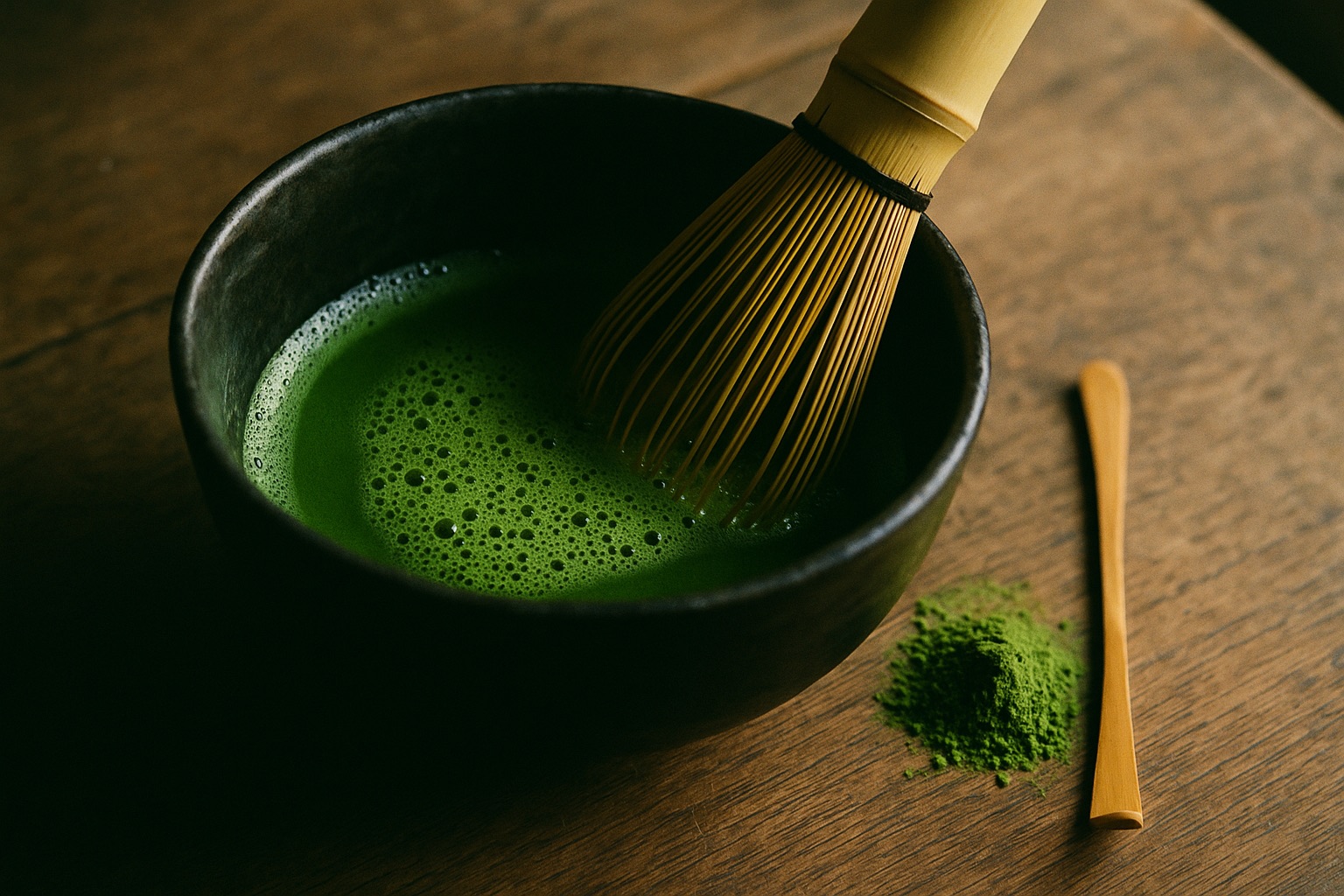
Matcha, by contrast, is simple at home: ~2g sifted, 70ml of 80°C water, whisk in a W-motion until foamy. Quality powder matters infinitely more than technique.
What to Buy & Bring Home
- ✓Hoshino gyokuro — the flagship. Competition grades cost what they cost (¥3,000–10,000+/100g); standard farm gyokuro from ¥1,500 is still a revelation. Vacuum-packed tins travel perfectly.
- ✓Yame matcha — ceremonial grades at prices that undercut the rationed famous brands, often fresher. Buy small tins; matcha fades after opening.
- ✓Kabusecha / kabuse sencha — lightly-shaded middle ground: gyokuro's sweetness at sencha prices. The daily-drinker to actually stock your kitchen with.
- ✓US customs note: commercially packaged tea is fine to bring into the States — load up.
No time for Yame itself? Hakata Station's food halls and Fukuoka department stores carry the major Yame producers — a five-minute detour on your food itinerary upgrades every cup of tea you make for the next year.
🍵
The world is fighting over matcha tins. The mountains that out-medal everyone are an hour from Fukuoka, wrapped in fog, and nearly empty.
Go taste what shade, patience, and six hundred years actually mean — then bring home tea with a story no café in the States can sell you.
More Food & Day Trips
🍽️ Fukuoka 3-Day Food Itinerary
The city base for a Yame day
⛩️ Dazaifu Day Trip
The other classic Fukuoka excursion
🍜 Fukuoka Food Guide
The full food-city story
🛁 How to Use a Public Onsen
Another ritual worth learning
🤔 Is Kyushu Worth Visiting?
The honest decision guide
🗾 7-Day Kyushu Itinerary
Fit Yame into the loop