Everyone comes to Beppu for the onsen. Almost nobody comes for the food — and that's a mistake I'd like to correct, because I live 15 minutes away and eat here constantly.
Beppu's food culture is shaped by the same volcanic forces as its baths: dishes literally cooked by the earth, a chicken tempura obsession found nowhere else in Japan, and a Korean-born cold noodle that evolved into something unique in this one small city. None of it is expensive. All of it is worth planning a day around.
Why Beppu's Food Deserves Your Attention
Oita Prefecture quietly produces some of Japan's best ingredients: kabosu citrus (90%+ of national production), premium seki saba and seki aji mackerel from the fierce Hoyo Strait currents, Bungo wagyu, and more chicken consumed per capita than anywhere in Japan. Beppu is where all of it lands on the table — at onsen-town prices, not Tokyo prices.
And then there's the thing no other city has: kitchens powered directly by the planet.
Jigoku-mushi — Cooking with the Hells
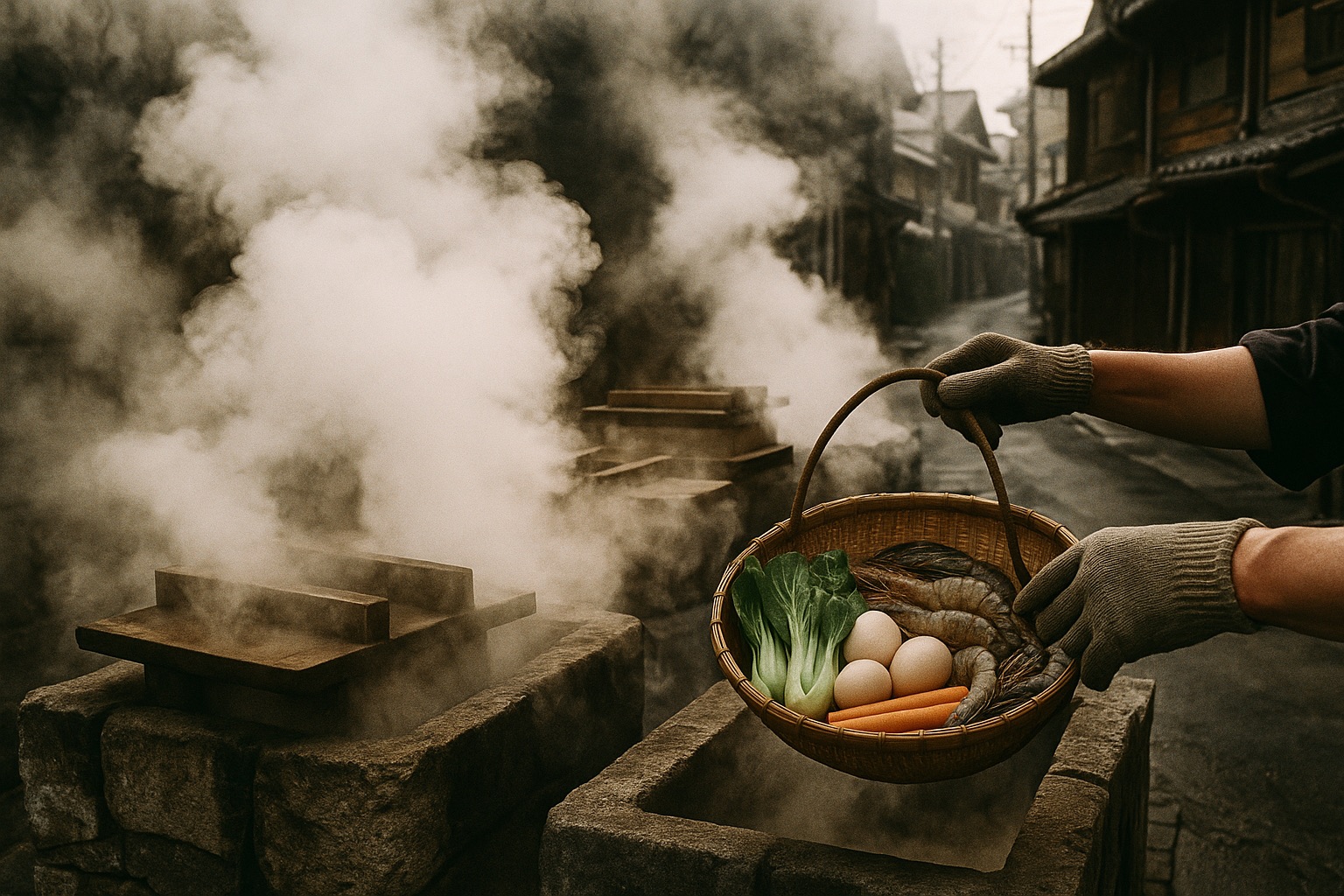
In the Kannawa district, where steam rises from gutters and garden walls, locals have cooked with natural volcanic steam for centuries. Jigoku-mushi ("hell-steaming") uses 100°C mineral-rich steam vented straight from the ground — no gas, no electricity, just geology.
The flagship experience is the Jigoku Mushi Kobo Kannawa(Hell Steaming Workshop), a public facility where you rent a steam pot, buy ingredients (or bring your own), and cook them yourself. Vegetables emerge impossibly sweet, eggs custardy, seafood clean and saline. The steam carries a faint minerality you won't taste anywhere else.
How It Works
- 1.Buy a ticket for a steam pot (around ¥400–600 for 30 minutes) plus ingredient sets — mixed vegetables, seafood, eggs, even pudding.
- 2.Staff lower your basket into the steam vault. Gloves and timers provided.
- 3.15–30 minutes later, lunch — eaten at communal tables with kabosu and salt.
Weekends and holidays can mean a 60–90 minute wait at midday; go before 11:00 or after 14:00. While you wait, the free ashi-mushi (foot steam baths) outside are the most pleasant queue in Japan. Full Kannawa district context is in our Beppu onsen guide.
Toriten — Oita's Chicken Tempura Obsession
✦ AI-generated illustration — not a photograph of the actual site
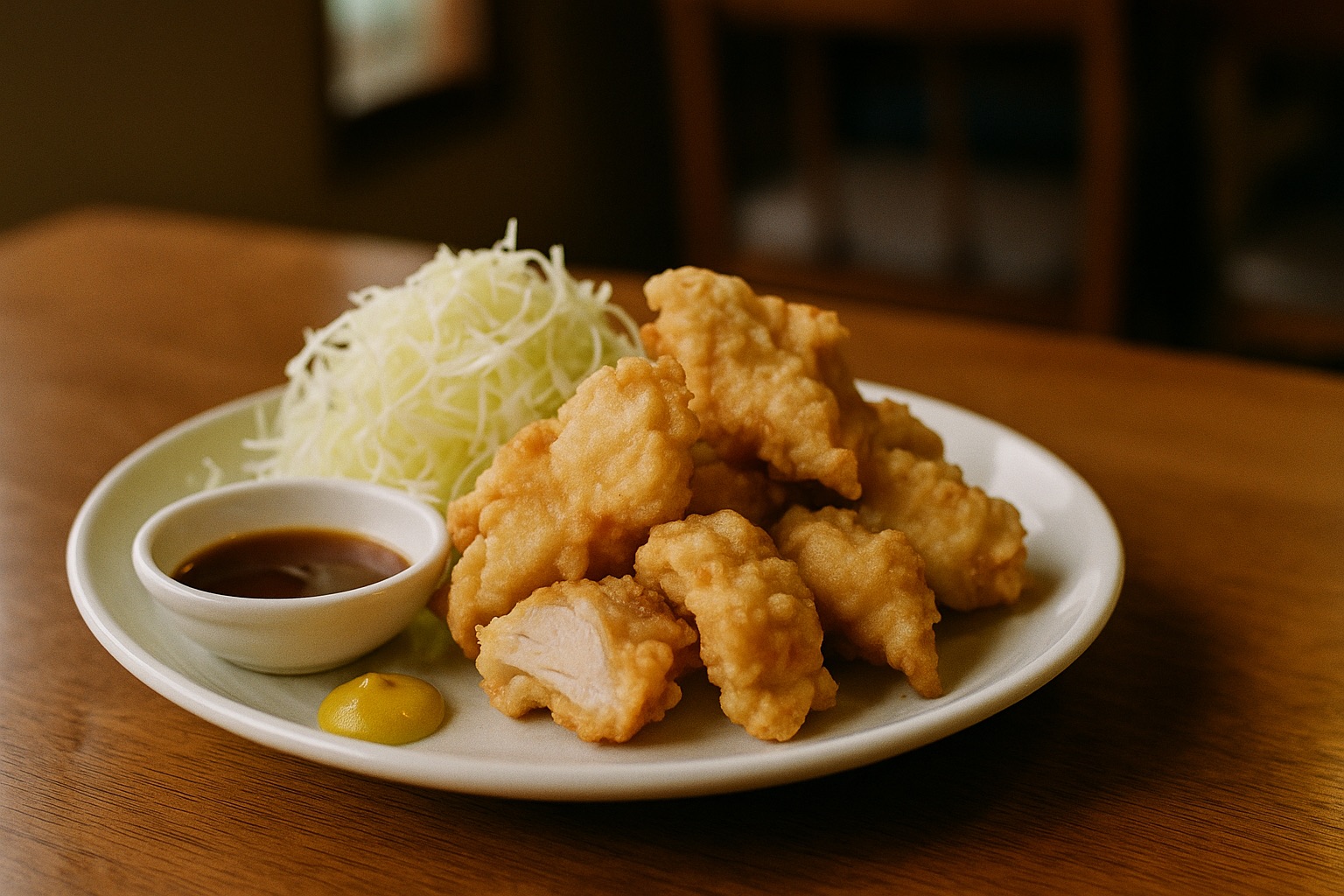
Toriten with kabosu ponzu and hot mustard — the holy trinity of Oita eating
Karaage gets the national fame, but in Oita the soul food is toriten: chicken tempura, born in Beppu's restaurants in the early 20th century. The difference from karaage matters — tempura batter instead of seasoned coating, marinated thigh or breast inside, served fresh and hot with kabosu-spiked ponzu and a dab of hot mustard.
The result is lighter than karaage, juicier, and dangerously eatable in quantity. It appears everywhere: teishoku restaurants, izakaya, school lunches, convenience stores, the local Joyfull family restaurant chain. Oita people moving away describe missing toriten the way Fukuoka people miss goma saba.
🍋 The kabosu rule
Whatever you eat in Beppu, a wedge of kabosu — Oita's sharp, fragrant green citrus — will appear next to it. Use it. On toriten, in the reimen, over grilled fish, in your shochu. It's the prefecture's flavor signature, and the reason Oita dishes taste cleaner than their fried-food reputation suggests.
Beppu Reimen — The Cold Noodle Mystery
✦ AI-generated illustration — not a photograph of the actual site
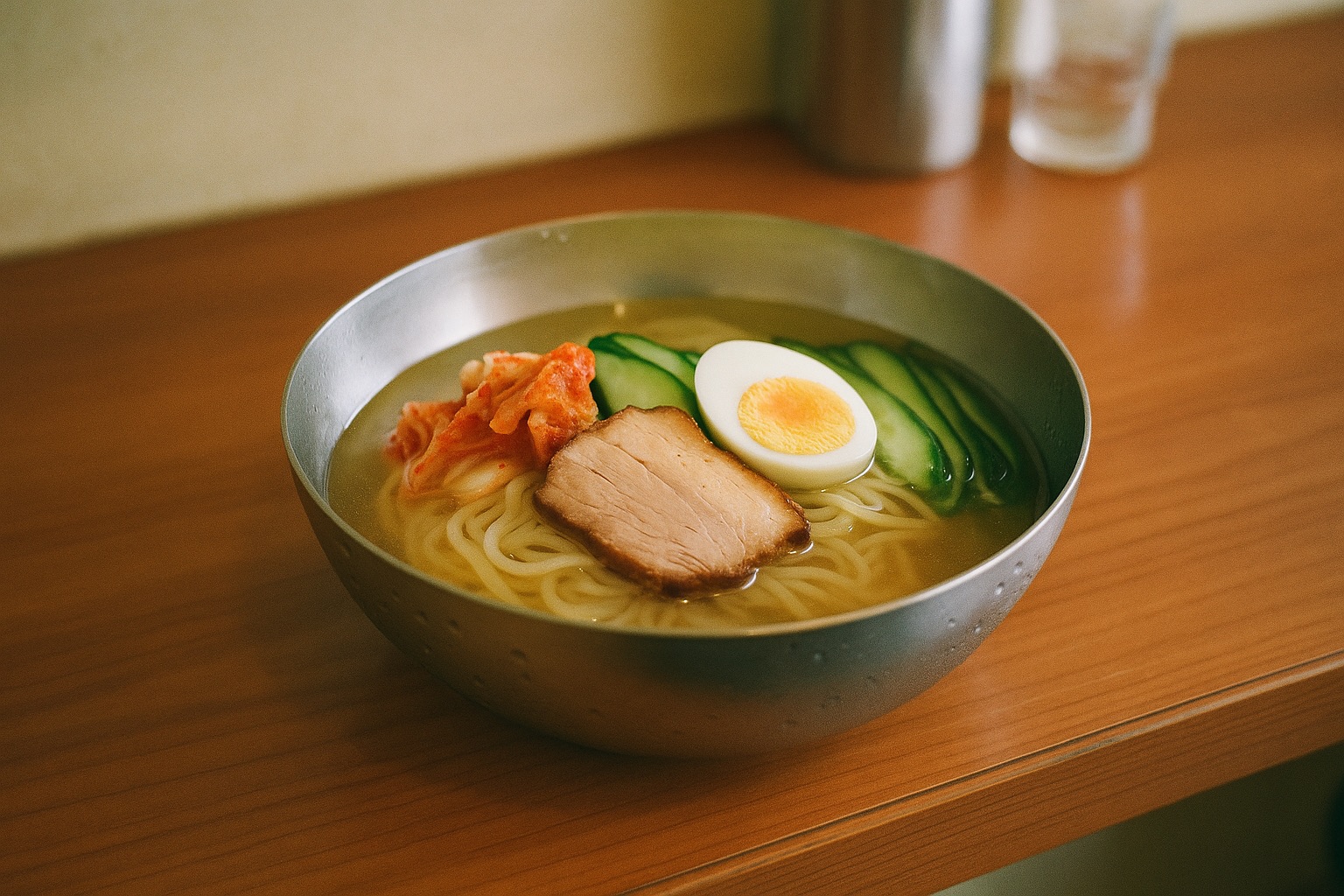
Ice-cold broth, chewy noodles — the perfect post-onsen meal
Here's a dish with a story: after WWII, chefs familiar with Korean naengmyeon-style cold noodles settled in Beppu, and the dish evolved locally into Beppu reimen— now one of only two famous "cold ramen" cities in Japan (the other is Morioka, with a related history).
Beppu's version: thick, intensely chewy noodles (often buckwheat-blended), a clear chilled broth usually built on beef and seafood, chashu, a boiled egg, and cabbage kimchi whose lactic heat builds as you eat. Shops vary widely — some serve soft noodles, some serve noodles you genuinely have to fight — and locals argue about which is correct.
Why it matters to you: this is the perfect post-onsen meal. After an hour in 42°C water, your body wants exactly this — cold, savory, slightly spicy, restorative. The onsen-then-reimen sequence is one of Beppu's great one-two punches, and it's built into our Harmonyland + Beppu day plan too.
Dango-jiru, Seki Fish & the Rest of the Table
🍲 Dango-jiru
Oita's farmhouse comfort food: wide, hand-stretched flat dumpling-noodles in a miso soup heavy with root vegetables and pork. The "dango" are noodles, not balls — confusing everyone from outside the prefecture. Order it in winter, or whenever a teishoku set offers it as the soup.
🐟 Seki saba & seki aji (when you can get them)
From the channel between Oita and Shikoku, line-caught one fish at a time: Japan's most prestigious branded mackerel. Seki saba is served raw — unthinkable for ordinary saba — firm, clean, and sweet. The real thing is expensive (¥3,000+ for a serving) and mostly found in Oita City and Saganoseki, but spotting it on a Beppu menu is a buy-on-sight situation.
🍮 Jigoku-mushi pudding & onsen eggs
Custard pudding steamed by the hells — slightly bitter caramel, dense custard — sold around Kannawa and at Myoban's hillside huts. Alongside: onsen tamago in countless variations, including eggs slow-cooked in the hot spring sources themselves.
🍗 Beppu karaage
Northern Oita (Usa and Nakatsu) claims the title of karaage's spiritual capital, and specialist takeout karaage shops dot Beppu too. The local style: soy-garlic-ginger marinade, thin crust, eaten from the bag while walking. A fine companion on the way to your next bath.
Where to Eat — A One-Day Beppu Eating Route
Morning bath at Takegawara or a jimoto bathhouse
Earn your appetite the Beppu way
Jigoku Mushi Kobo Kannawa
Hell-steamed early lunch — beat the midday queue
Jigoku-mushi pudding & Kannawa wandering
Dessert among the steam vents
Afternoon onsen (Kannawa or Myoban)
The main event — see our Beppu onsen guide
Beppu reimen
Cold noodles after hot water — the perfect sequence
Toriten izakaya dinner near Beppu Station
Toriten, kabosu sour, local sashimi if seki fish appears
Total food budget for the day: roughly ¥4,000–6,000 — about the price of one mid-range Tokyo dinner, for an entire day of eating things that exist nowhere else.
♨️
Beppu feeds you the way it bathes you: with the volcano doing half the work.
Steam-cooked vegetables, chicken tempura with mountain citrus, ice-cold noodles after scalding water. Come for the onsen — but skip the hotel buffet and eat the town. It's been cooking for a very long time.
Continue Exploring Beppu & Oita