Kumamoto is the stoic heart of Kyushu — a samurai city built around one of the three greatest castles in Japan, a place that took the island's worst modern earthquake on the chin in 2016 and has spent the years since visibly, proudly rebuilding. Its mascot is a black bear with red cheeks beloved across the planet; its ramen comes loaded with fried garlic; and it sits exactly where you change trains for Mount Aso.
Most travelers pass through Kumamoto on the shinkansen between Fukuoka and Kagoshima. Give it a day and it rewards you with a castle that defines "unbreakable," a garden that miniaturizes all of Japan, and food you'll think about later. Here's the local guide.
Why Kumamoto Is Worth a Stop
Forty-three minutes from Hakata by shinkansen and an hour from Kagoshima, Kumamoto is the natural midpoint of a Kyushu trip — and the gateway inland to Aso and Kurokawa Onsen. The compact center is walkable and tram-served, the castle and garden are its anchors, and the recovery story gives the city a quiet dignity you feel walking around it.
It's also genuinely uncrowded by international visitors — a major Japanese city (population ~730,000) where you can stand before a national-treasure castle on a weekday with room to breathe. (The deep warlord history — Kato Kiyomasa, Musashi's final years, the Satsuma Rebellion siege — is in our Kumamoto castles & history guide.)
Kumamoto Castle — The Unbreakable One
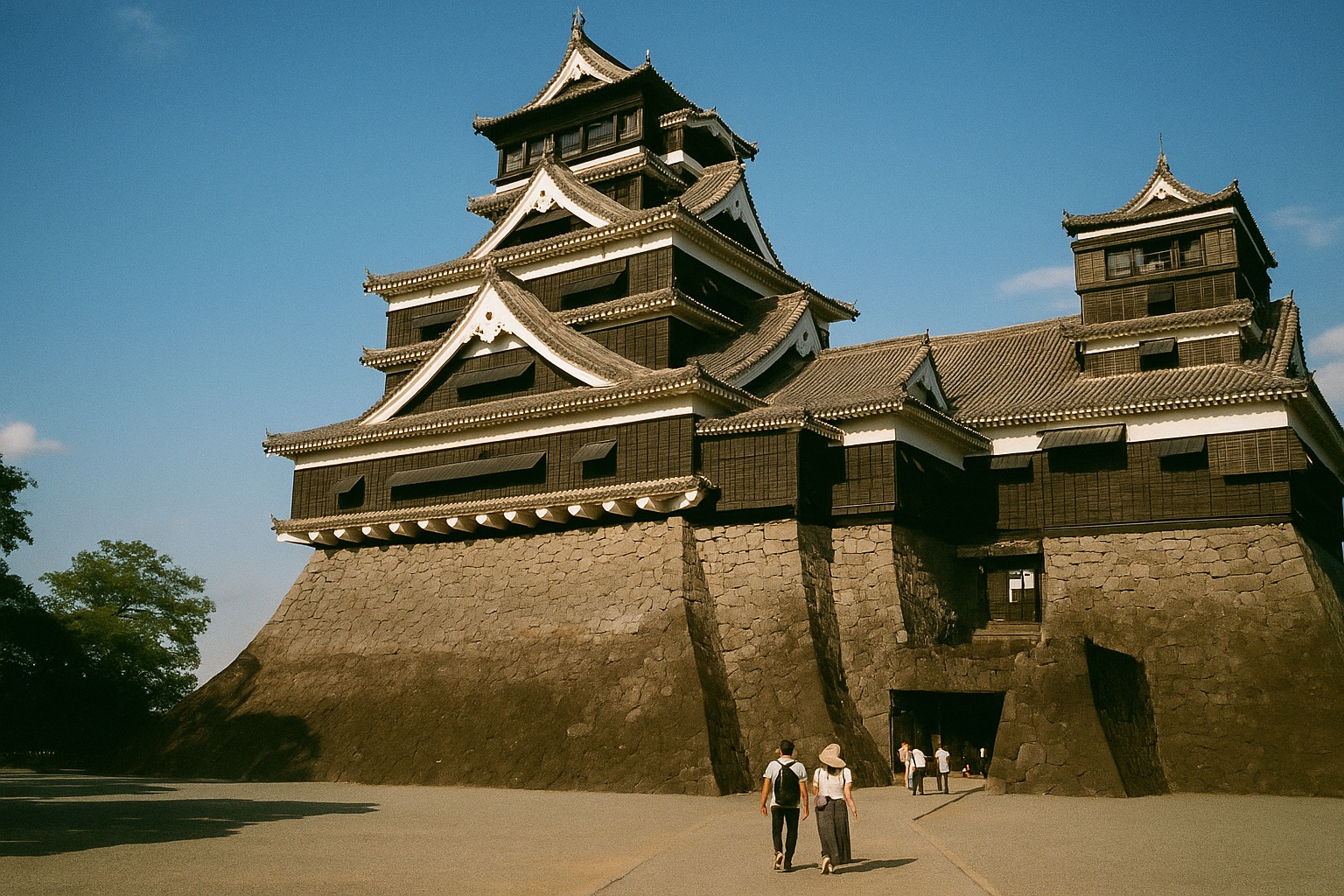
Built by the master castle-engineer Kato Kiyomasa around 1607, Kumamoto Castle was designed to never fall — and in 1877 it proved it, withstanding a 50-day siege by Saigo Takamori's rebel samurai. Its signature is the musha-gaeshi: stone walls that start gently and curve to a near-vertical overhang at the top, impossible to climb. Standing beneath them, you understand the engineering as intimidation.
The 2016 Kumamoto earthquakes badly damaged the castle — walls collapsed, the keep's roof tiles rained down. The restoration became a symbol of the whole region's recovery: the main keep reopened in 2021, beautifully restored, and work on the surrounding structures continues. Visiting now means seeing both the finished grandeur and the ongoing craft of rebuilding a national treasure stone by numbered stone.
Visiting Notes
- •Allow 90 minutes–2 hours; the keep's interior is now a modern museum with English.
- •The elevated Special Viewing Route (a raised walkway) lets you see restoration areas up close.
- •Late March: ~560 cherry trees bloom across the grounds — one of Kyushu's great sakura spots.
- •Adjacent Sakuranobaba Josaien is the souvenir-and-snack street — convenient, if touristy.
Suizenji Garden — A Tiny Tokaido
✦ AI-generated illustration — not a photograph of the actual site
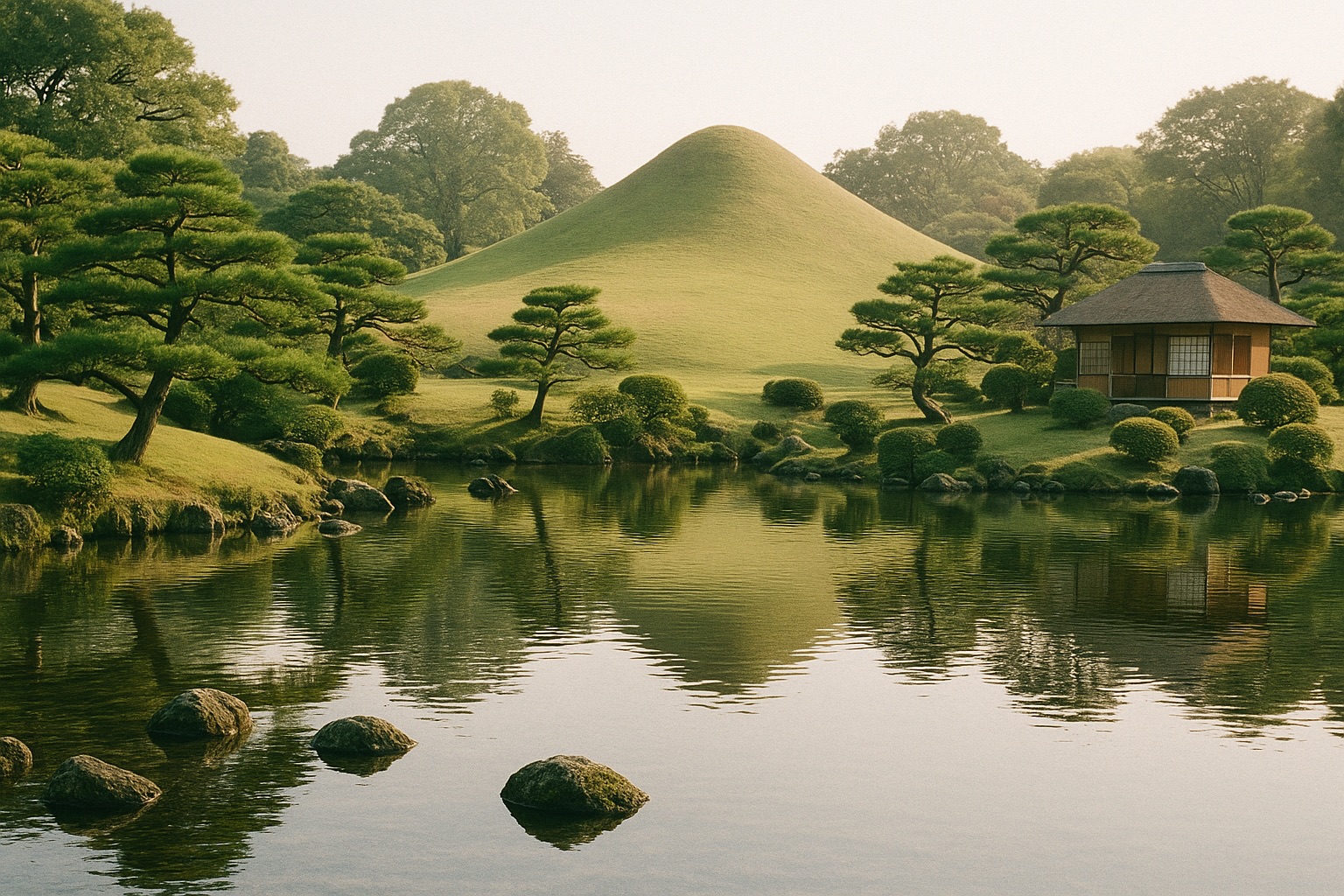
Suizenji's miniature Mount Fuji — the Tokaido road, shrunk to a stroll
A short tram ride from the center, Suizenji Jojuen is a 350-year-old stroll garden built by the ruling Hosokawa lords — and its concept is delightful: the garden recreates the 53 stations of the old Tokaido highway between Kyoto and Tokyo in miniature, complete with a small grass-covered Mount Fuji rising beside a pond fed by pure Aso snowmelt springs.
Walk the circuit (30–40 minutes), pay your respects at the Izumi Shrine, and stop at the centuries-old teahouse for matcha overlooking the water — the kind of refined, unhurried Japan that the castle's drama makes you appreciate all the more. For the full version of this experience, our ryokan guide covers the overnight equivalent.
What to Eat — Ramen, Basashi & Karashi Renkon
✦ AI-generated illustration — not a photograph of the actual site
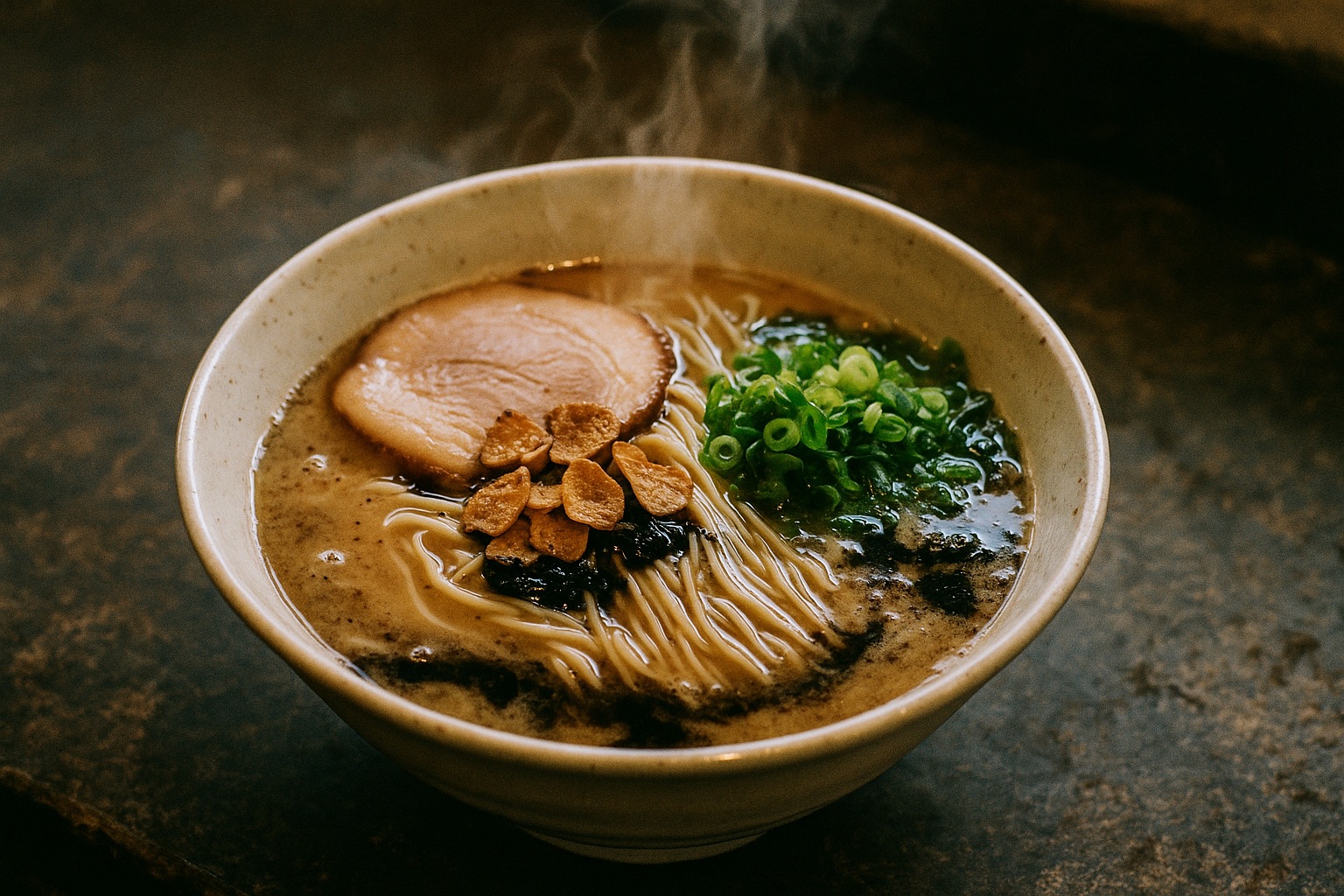
Kumamoto ramen — tonkotsu with a hit of fried-garlic mayu oil
- 🍜Kumamoto ramen — a heartier cousin of Fukuoka's tonkotsu, with thicker straight noodles and the signature hit of mayu (black fried-garlic oil) and crispy garlic chips. Deeper and more pungent than Hakata ramen; the two make a great compare-and-contrast for noodle travelers (see our Fukuoka ramen guide).
- 🐴Basashi (horse sashimi) — Kumamoto's most famous and most divisive specialty. Lean, sweet, served with garlic and ginger, eaten raw. A genuine local delicacy that adventurous eaters shouldn't dismiss; the prefecture is Japan's horse-meat capital.
- 🪷Karashi renkon — lotus root stuffed with mustard-miso, battered and fried. Invented to nourish a sickly local lord, now the city's favorite crunchy souvenir snack and izakaya plate.
- 🍮Akaushi beef & ikinari dango — the red wagyu from nearby Aso appears on city menus, and ikinari dango (sweet-potato-and-bean dumplings) is the cheap, beloved local sweet.
Kumamon & the City Itself
You will not escape Kumamon — the rosy-cheeked black bear who became the most successful regional mascot in Japanese history, generating billions in licensed-goods sales and genuine international fame. There's a Kumamon Squarein the city center where the bear makes scheduled appearances and the shop sells every conceivable Kumamon product. It's gloriously silly and a only-in-Kumamoto stop.
Beyond the bear, the city center around the Shimotori and Kamitori arcadesis a pleasant, locally-flavored shopping-and-eating district — covered streets, izakaya, and the everyday life of a confident regional capital. The tram (one of Japan's nicest streetcar systems) makes it all easy.
Using Kumamoto as a Base
- •→ Mount Aso: the JR Hohi line crosses the great caldera; Kumamoto is the western gateway. A day trip or the first leg toward the highlands.
- •→ Kurokawa Onsen: ~2.5 hours by bus into the mountains — Kumamoto castle by day, lantern-lit onsen village by night is a classic pairing.
- •→ Shinkansen spine: 43 min to Fukuoka, ~50 min to Kagoshima — Kumamoto fits perfectly into day 4–5 of our 7-day itinerary.
- •One-day plan: Castle (morning) → ramen lunch in the center → Suizenji garden (afternoon) → Kumamon Square + arcade evening. Comfortable and complete.
🏯
A castle that wouldn't fall, a garden that holds all of old Japan, and a bear that conquered the world.
Don't just change trains in Kumamoto — give it the day. Kyushu's stoic heart rewards the visitors who stop.