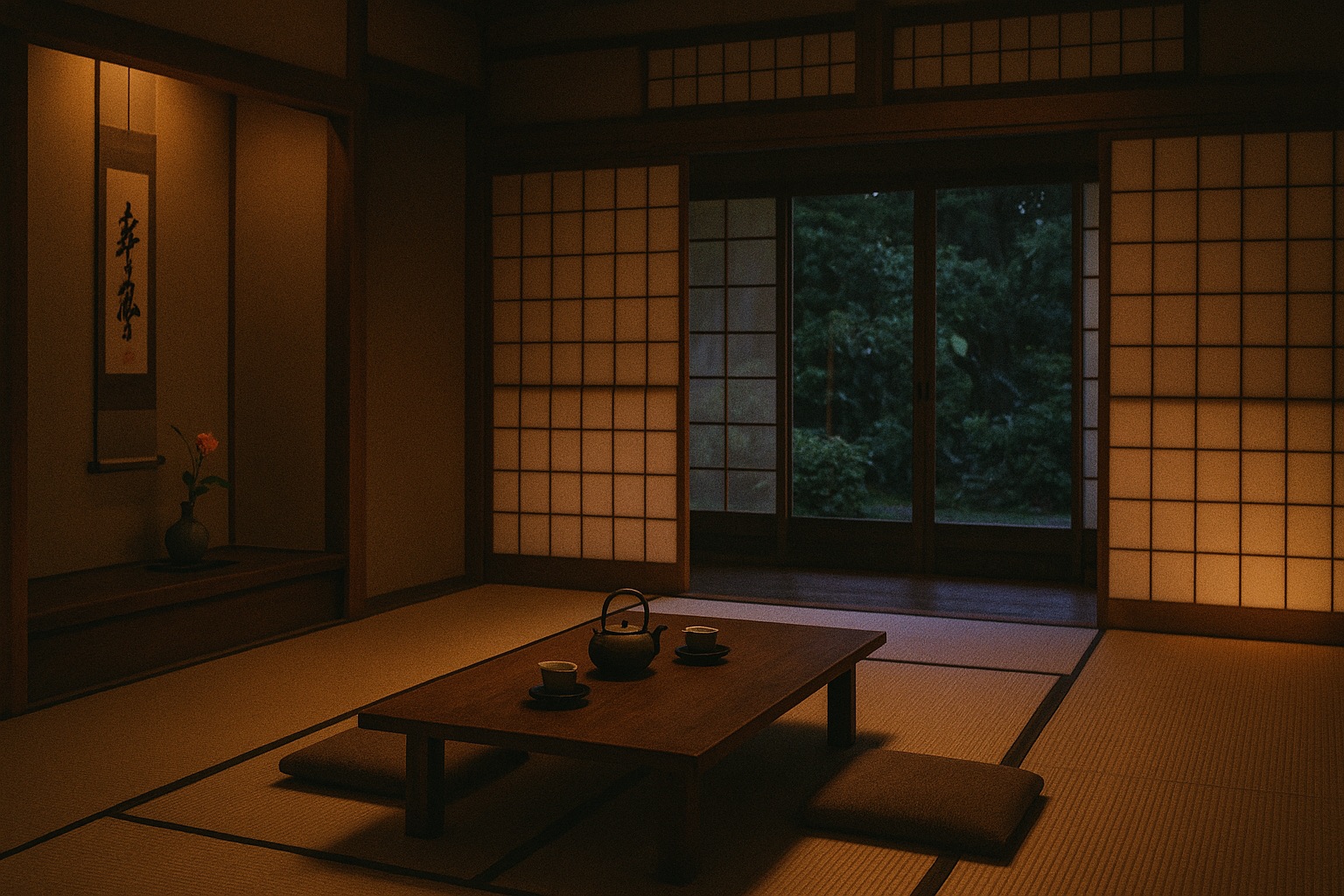
A ryokan night is the single most concentrated dose of Japanese culture money can buy — and also the experience travelers are most nervous about. The anxieties are always the same: When do I take off my shoes? What if I tie the robe wrong? Do I tip? What if I can't eat something? Will I sleep on the floor?
Take a breath. Ryokan have been welcoming first-timers for centuries — confusion is expected, kindness is the default, and every "rule" exists to make you comfortable, not to test you. Here's the entire experience, hour by hour, so nothing surprises you except how good the dinner is.
What a Ryokan Actually Is (And Isn't)
A ryokan is not "a hotel with tatami." It's closer to being a guest in an extraordinarily formalized home: one price typically covers your room, an elaborate multi-course dinner, breakfast, baths, and a level of attention Western hospitality rarely attempts. The stay itself is the destination — which is why ryokan towns like Kurokawahave almost no "attractions." The inn is the attraction.
Three consequences first-timers should internalize:
- 1.Pricing is per person, not per room — because dinner and breakfast for each guest are most of what you're buying. ¥15,000–30,000 per person is the honest mid-range; it's a meal+lodging+onsen bundle, and judged that way it's often a bargain.
- 2.The schedule has a shape. Dinner is served at a fixed time you choose at check-in (usually 18:00–19:00). Arrive by late afternoon or you're fighting the whole design.
- 3.You will be taken care of. The staff's entire job is anticipating you. Surrender to the schedule and the experience opens up.
Booking — Reading the Listings Correctly
- ✓"With 2 meals" (一泊二食) is the real ryokan experience — book this, always, for a first stay. Room-only ryokan rates miss the point entirely.
- ✓Tell them about dietary restrictions at booking, not at dinner. Kaiseki is prepared days ahead. Most ryokan handle no-pork, vegetarian, and allergies gracefully with notice; strict vegan needs a specifically equipped inn.
- ✓Have tattoos? Look for rooms with private open-air baths, or book in tattoo-friendly Beppu — our full guide covers the options.
- ✓One ryokan night per trip is enough. The classic itinerary mixes city hotels with one or two ryokan splurges at the onsen stops — that contrast is what makes the night land.
The Stay, Hour by Hour
Arrival & shoes
Shoes come off at the genkan entrance step — slippers appear, staff whisk your luggage away. Follow them; tea and a sweet await in your room.
Room orientation
Staff explain the baths, set your dinner time, and show you the yukata. Then: silence, tatami, tea. Let your pace drop.
Yukata on, first bath
Change into the yukata (left side over right — the only rule that matters) and head to the onsen before dinner. Pre-dinner bathing is the classic rhythm.
Kaiseki dinner
In your room or a dining room — 8–12 small courses across 90 blissful minutes. Details below.
The futon fairies
While you ate, staff laid out futons on the tatami. Thick, layered, and far more comfortable than you fear.
Evening stroll or second bath
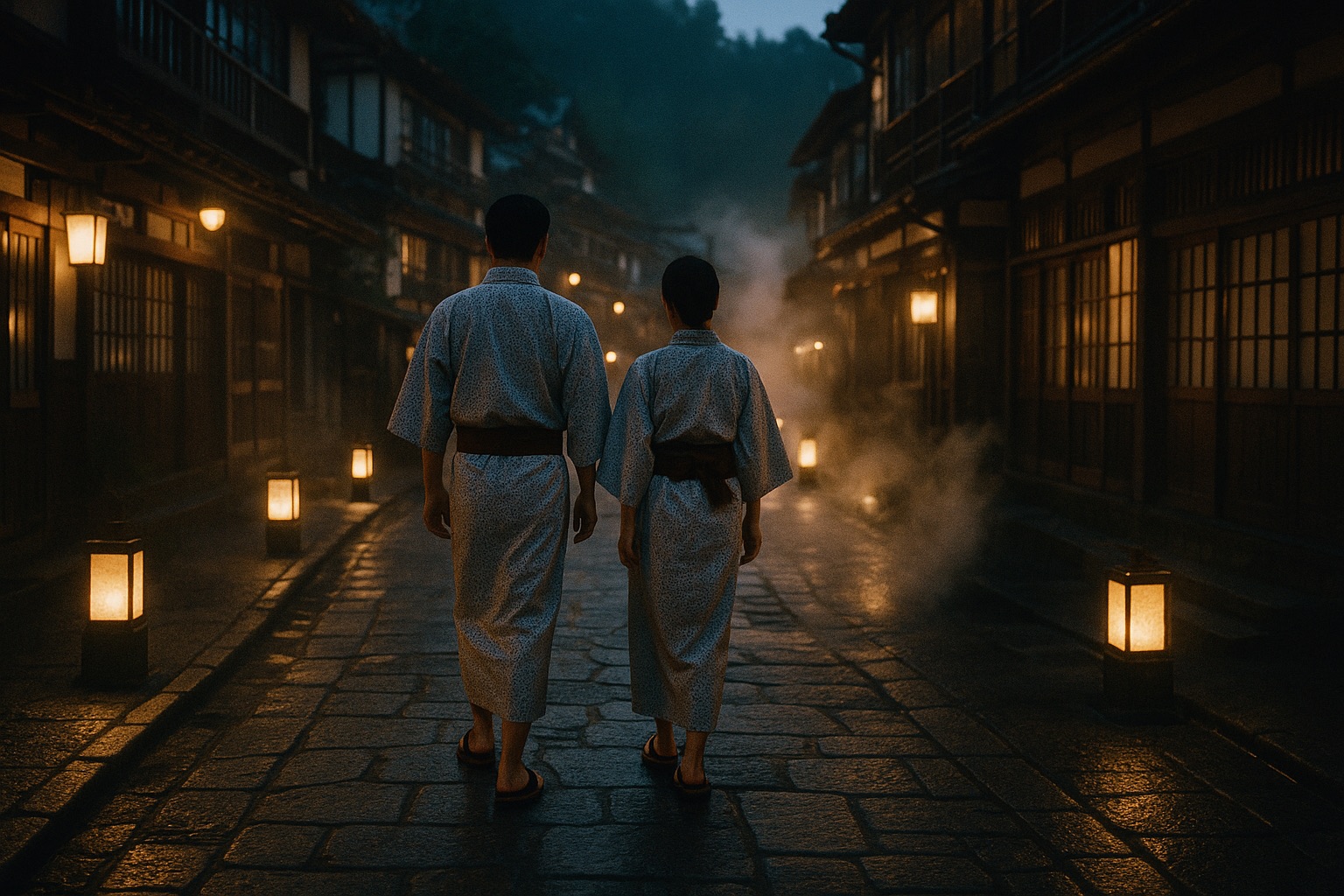
Yukata + geta sandals + lantern-lit streets. In onsen towns this stroll is the whole point of the costume. Night baths are quieter and star-lit.
Dawn bath
The connoisseur's bath — often empty, light coming up over the rotenburo. Don't skip it.
Breakfast
Grilled fish, rice, miso soup, small mysteries. Eat what you can, in any order — it's all 'breakfast food' here.
Checkout
Staff frequently see you off in the driveway, bowing until you're out of sight. Wave back. You'll miss them.
✦ AI-generated illustration — not a photograph of the actual site
The yukata stroll — wearing pajamas in public, with civic approval
The Kaiseki Dinner — How to Enjoy It
✦ AI-generated illustration — not a photograph of the actual site
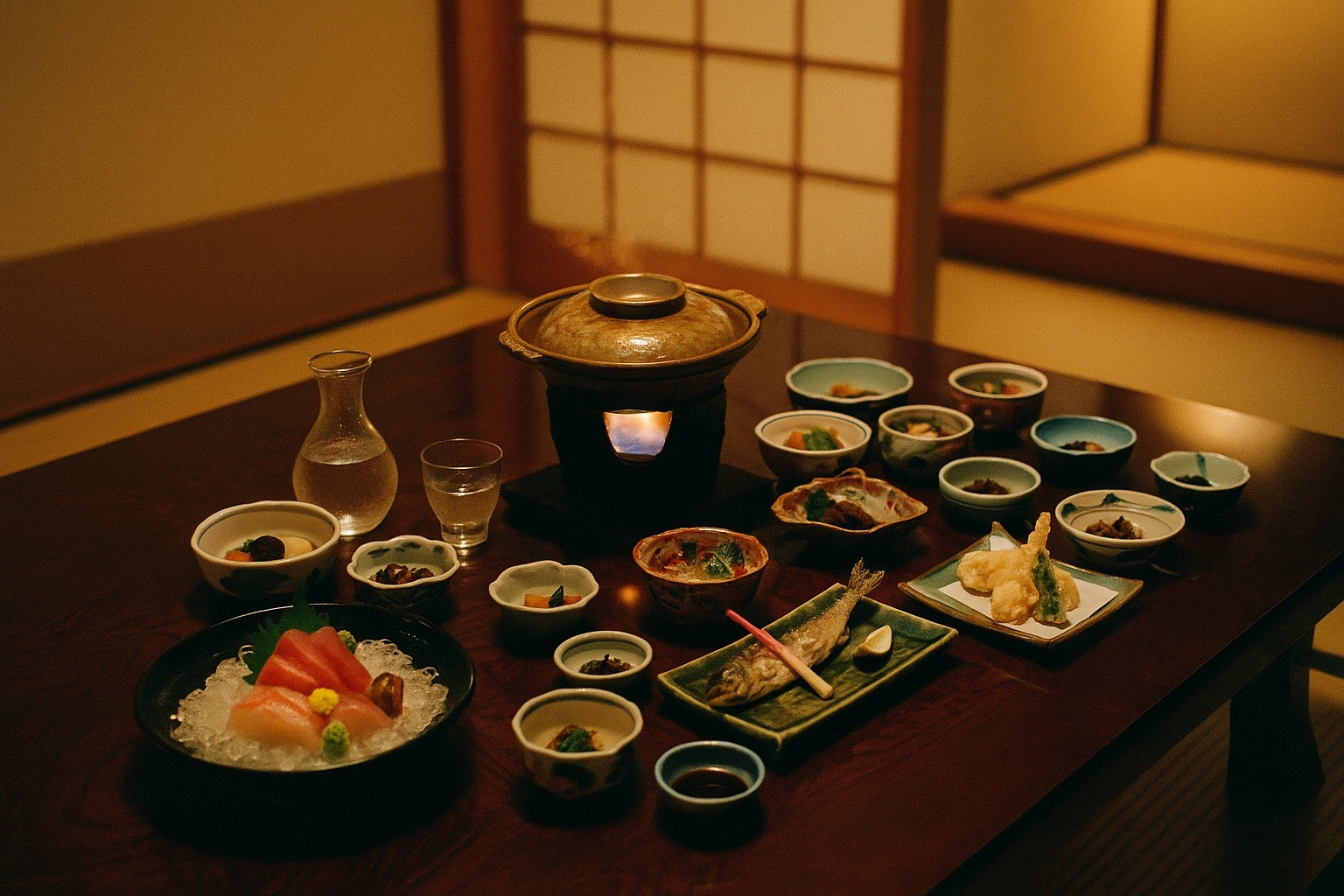
Kaiseki — a seasonal essay written in ten small dishes
Kaiseki is a procession of small courses — a sashimi moment, a simmered moment, something grilled, something fried, a clay pot lit at your table, rice and miso to close, fruit to land. Each dish is small on purpose; the meal is a marathon of sprints. Two pieces of practical advice transform it for first-timers:
- •Pace yourself and don't fill up on rice early — when the rice course arrives near the end, that's the traditional signal the meal is closing.
- •You don't need to identify everything to enjoy it. Part of kaiseki's pleasure is the mystery bite. Staff will happily explain any dish — pointing and asking is normal, not rude.
Drink-wise: local sake or — here in Kyushu — shochu is the natural pairing, but tea and soft drinks are unremarkable choices too. Nobody is grading you.
The Questions You're Too Embarrassed to Ask
Q. Do I tip?
No. Not at check-in, not at dinner, not at checkout. Truly, completely no — service is included and offering cash creates awkwardness. The one traditional exception (a small gift envelope for exceptional kindness) is optional and rare even among Japanese guests.
Q. Which way does the yukata close?
Left side OVER right — for everyone, all genders. (Right over left dresses the deceased at funerals; staff will quietly fix it if you err, and no one will mention it.) The obi belt ties at the side or back, snugly. Cold? A tanzen over-jacket hangs in the closet.
Q. Can I wear the yukata outside my room?
Yes — that's the point. To the baths, to dinner (at most onsen ryokan), and around town in onsen resorts. At upscale city ryokan, check; when other guests are strolling in yukata, you can too.
Q. What about the baths and... nudity?
Yes, communal baths are nude and gender-separated, and within ten minutes you'll realize no one is looking at anyone. Wash thoroughly first, towel stays out of the water. Full walkthrough: our onsen guide. Genuinely not ready? Book a room with a private bath — that's what they're for.
Q. I'm a light sleeper — are futons okay?
Modern ryokan futons are thick, layered systems, often closer to a firm mattress than the 'mat on floor' you're imagining. Ask for an extra mattress pad (shiki-buton) if needed. The deep silence of onsen towns does the rest.
Q. What if I'm late for dinner?
Don't be — kaiseki timing is real cooking, not buffet trays. If your train is delayed, call ahead; inns can usually shift you to the later seating. Arriving after dinner service entirely means forfeiting the meal (and its cost).
Where to Have Your First Stay in Kyushu
- 🎋Kurokawa Onsen — the platonic ideal: a whole village of riverside ryokan, lantern light, and bath-hopping. The single best first-ryokan destination in Japan, in our biased-but-defensible local opinion.
- 🏔️Yufuin — boutique ryokan with Mount Yufu views; polished, accessible by direct train, gentle for nervous first-timers.
- ♨️Beppu — more variety and better value than anywhere, from grand old inns to family-run gems, plus tattoo-friendly options and the city's unbeatable food.
- 🌋Uchinomaki (Aso) — pair the caldera day from our Mount Aso guide with a grassland-town ryokan and akaushi beef kaiseki.
🏮
The ryokan's secret is that all the etiquette you're nervous about amounts to one instruction: let yourself be taken care of.
Shoes off, left over right, wash before you soak, and surrender to the schedule. By the dawn bath you won't want to leave — nobody ever does.
Complete Your Onsen Education
🛁 How to Use a Public Onsen
The bath walkthrough, step by step
🎋 Kurokawa Onsen Guide
The dream first-ryokan village
🎨 Tattoo-Friendly Onsen
Inked? Here's your plan
🆚 Yufuin vs Beppu
Choosing your onsen town
🏨 Suginoi Hotel Guide
The resort-scale alternative
🤔 Is Kyushu Worth Visiting?
Build the trip around the inn