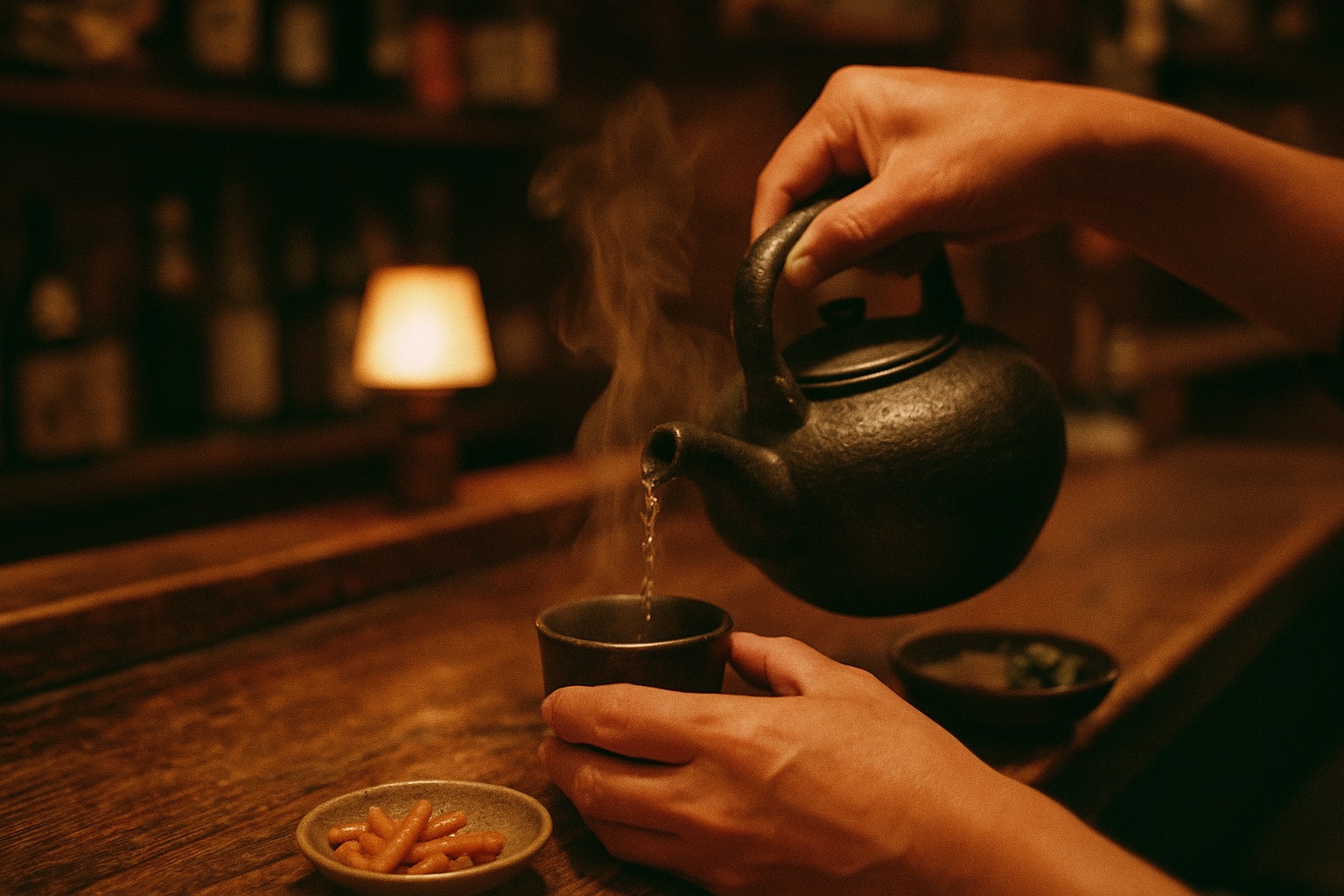
Order "Japanese alcohol" anywhere in the world and you'll get sake. Order a drink at an izakaya here in Kyushu and look around: the locals are mostly drinking something else — a clear spirit cut with hot water, swirling in ceramic cups, ordered by distillery name the way a Kentuckian orders bourbon.
That's shochu— distilled (not brewed), 500 years old, and so dominant down here that Kyushu drinks it the way the rest of Japan drinks beer. It's also almost unknown to American drinkers, which makes it one of the best discoveries a curious palate can take home from a Kyushu trip. Here's the local's introduction.
What Shochu Is (And What It Isn't)
The one-sentence version: sake is brewed like beer; shochu is distilled like whiskey. Shochu starts from a koji-fermented mash — of sweet potato, barley, rice, and other bases — and is then distilled, landing typically at 20–25% ABV: stronger than wine, gentler than whiskey, built for drinking through a meal.
The label distinction that matters: honkaku (本格) shochu — "authentic" single-distilled spirit that keeps the flavor of its base ingredient, the craft category this article is about — versus korui, the neutral multiple-distilled stuff used in mass-market canned drinks. You want honkaku; in Kyushu, that's what everyone means by shochu anyway.
Also not to be confused with Korean soju (related word, different drink — soju is usually a sweetened diluted neutral spirit) or awamori (Okinawa's cousin, its own proud tradition). Honkaku shochu is its own world — with koji fermentation at its heart, the same magic behind sake, miso, and soy sauce.
The Three Great Styles — Imo, Mugi, Kome
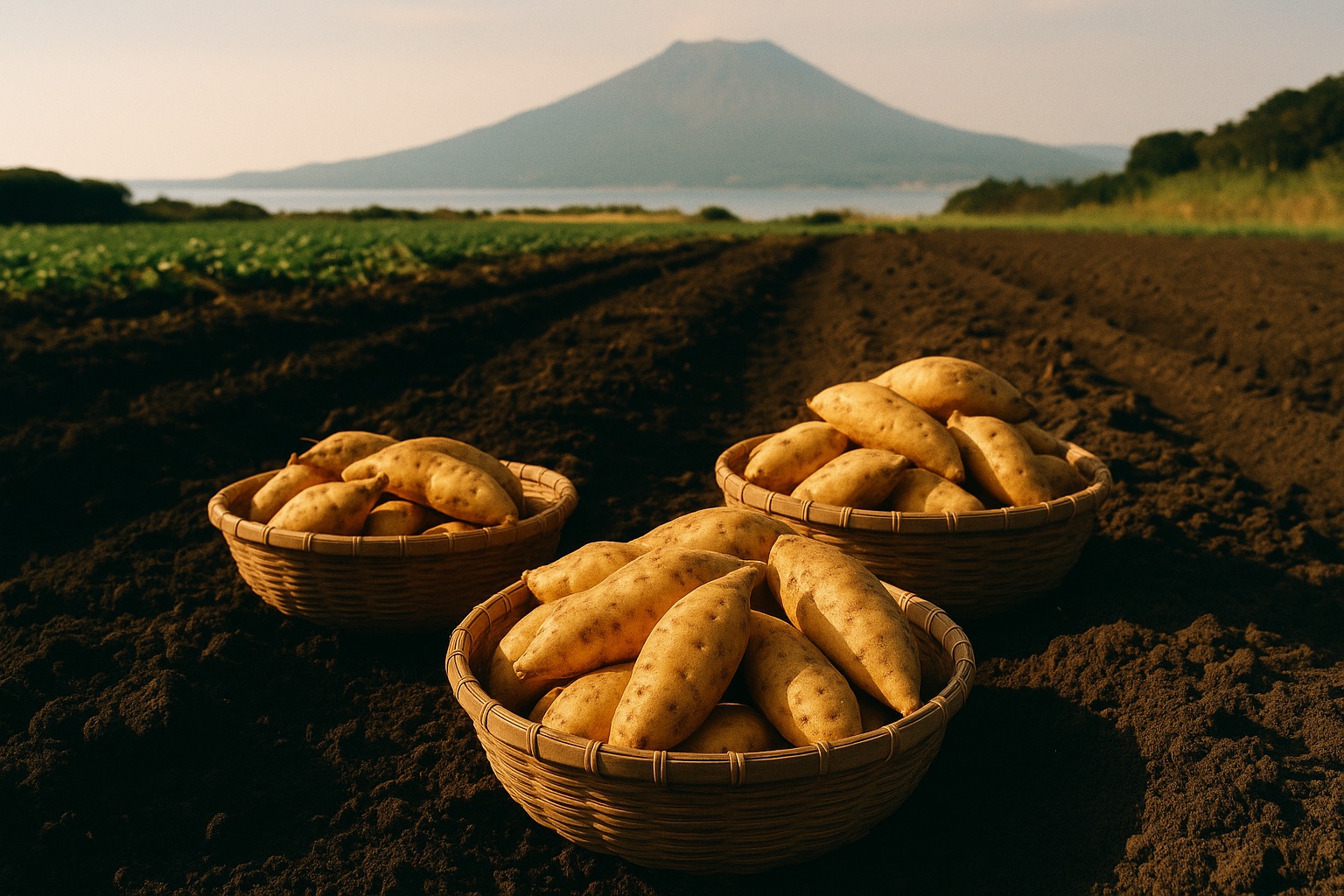
✦ AI-generated illustration — not a photograph of the actual site
Kagoshima's volcanic soil grows the sweet potatoes that define imo shochu
| Style | Base / Homeland | Tastes Like | For Fans Of |
|---|---|---|---|
| Imo (芋) | Sweet potato / Kagoshima & Miyazaki | Earthy, floral, sweet-savory funk — the boldest and most loved-or-debated | Mezcal, funky rum |
| Mugi (麦) | Barley / Oita & Iki Island | Clean, toasty, gently sweet — some versions cask-aged toward whiskey territory | Irish whiskey, genever |
| Kome (米) | Rice / Kumamoto's Kuma Valley | Soft, refined, faintly sake-like — the elegant one, with its own GI (Kuma shochu) | Junmai sake, blanco tequila's clarity |
Beyond the big three: kokuto (brown sugar, Amami Islands), soba (buckwheat), chestnut, sesame — over 50 permitted base ingredients keep the category playful at its edges.
How to Order & Drink It Like a Local
♨️ Oyuwari (お湯割り) — hot water mix
The soul of Kyushu shochu drinking, especially for imo: roughly 6:4 shochu to hot water (pour the water FIRST, then the shochu — it self-stirs). The warmth blooms the aroma like a hot toddy. The traditional kuro-joka ceramic kettle warmed over flame is the ritual's beautiful long form.
🧊 Rokku (ロック) — on the rocks
The modern default for good bottles — one big ice ball, slow dilution, the spirit's full character. How most aged mugi and premium imo gets drunk.
💧 Mizuwari & soda-wari
Cut with cold water (gentle, all-evening pace) or soda (bright, summer). Soda + barley shochu + a squeeze of kabosu citrus is Oita's house highball — we are correct about this.
🍶 Maewari — the connoisseur move
Shochu pre-mixed with water and rested overnight (or days), then gently warmed. The integration is uncanny. Kagoshima and Kuma izakaya sometimes keep house maewari — order it whenever you see it.
Ordering script: name a style and a serve — "imo, oyuwari de" or "mugi, rokku de"— and any izakaya will pour you their house bottle. From there, ask the master what's local. That question opens doors everywhere in Kyushu.
The Kyushu Shochu Map
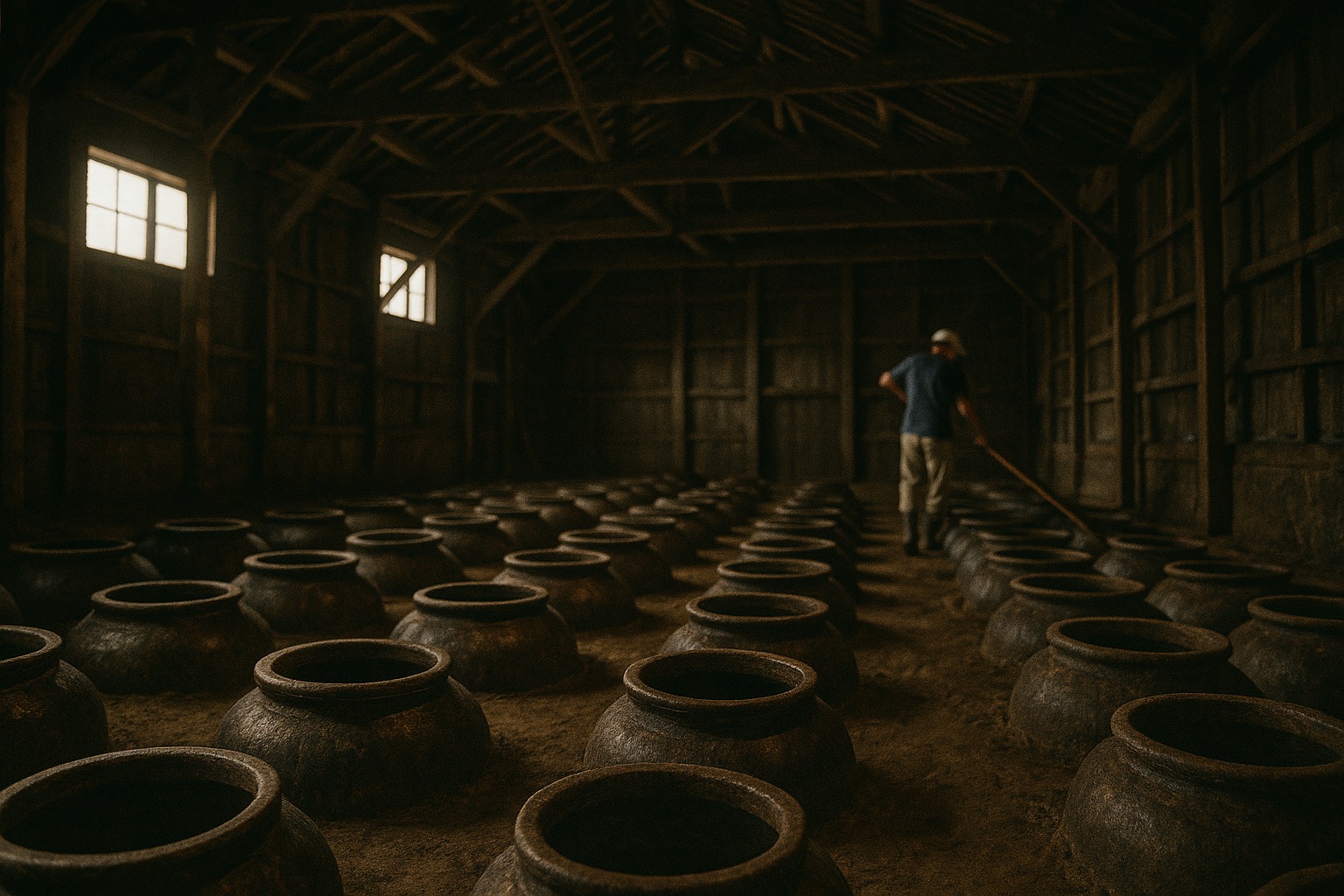
✦ AI-generated illustration — not a photograph of the actual site
- 🍠Kagoshima — the imo capital. Over a hundred distilleries, many open for tours, fed by sweet potatoes from volcanic soil. In Kagoshima izakaya, "a drink" means imo shochu unless you say otherwise — sake menus can be a single line.
- 🌾Oita — barley country. Our home prefecture built the clean mugi style that conquered Japan in the 70s–80s; pair it with toriten and Beppu's izakaya food.
- 🍚Kumamoto — the Kuma Valley. Rice shochu with its own geographic indication (like Champagne or Scotch), made along the Kuma River for five centuries.
- 🏝️Iki Island (Nagasaki) — GI-protected birthplace claim of mugi shochu; Miyazaki — imo and soba with a cult following among young craft drinkers.
For the American Whiskey & Craft Crowd
If the bourbon shelf and the mezcal boom taught American drinkers anything, it's to chase place, base ingredient, and craft scale— and honkaku shochu is exactly that story, untold: single-ingredient spirits, century-old family distilleries, regional GIs, served with food the way wine wishes it were. Japanese whisky's global explosion left its older sibling sitting quietly at the izakaya, at a third of the price.
Drinking it at the source adds what no import can: the oyuwari steam at a counter in Kagoshima, the master's opinion, the bottle with no export label. Visit one distillery (many in Kagoshima and the Kuma Valley welcome visitors with tastings), and you'll come home a one-person evangelist. Lower proof than whiskey also means a long izakaya evening stays civilized — built for the yatai counter, where shochu and conversation are the house pairing.
Bottles to Try & Bring Home
- ✓Strategy over brand names: at any Kyushu liquor shop or department store basement, say the style you enjoyed ("imo" / "mugi" / "kome") and your budget — staff recommendations at ¥1,500–3,500 a bottle land in genuinely excellent territory. Distillery-exclusive bottles from tours are the trophy tier.
- ✓US customs: one liter per adult duty-free, more allowed with (small) duty — pack bottles in checked luggage, wrapped in the towel you definitely also bought.
- ✓Can't carry it? Konbini stock real honkaku in small cups and 900ml paper packs — a ¥300 tasting flight from the convenience store is a legitimate way to find your style before committing to a bottle.
🍶
Sake is Japan's famous drink. Shochu is Japan's localdrink — and you're in the locality.
Order it the Kyushu way — hot water first, shochu second, no hurry whatsoever — and you're not tasting a beverage, you're joining a 500-year-old evening.