 Meiji era
✦ AI-generated illustration — not a photograph of the actual site
Kumamoto Castle
熊本城 · One of Japan's Three Great Castles
Built as the most impregnable castle in Japan — its designer was proven right 270 years later when it held off 20,000 samurai for 50 days
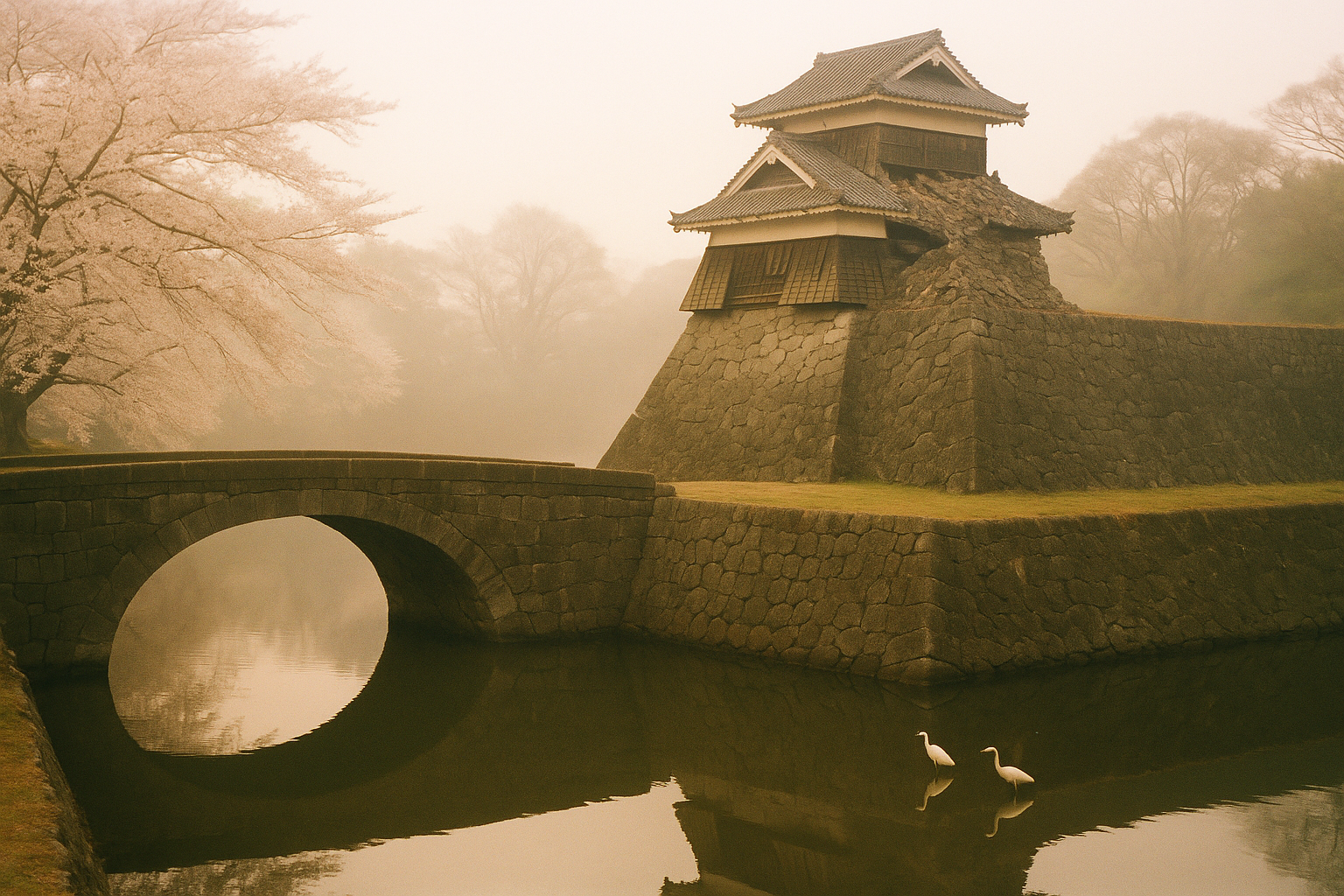
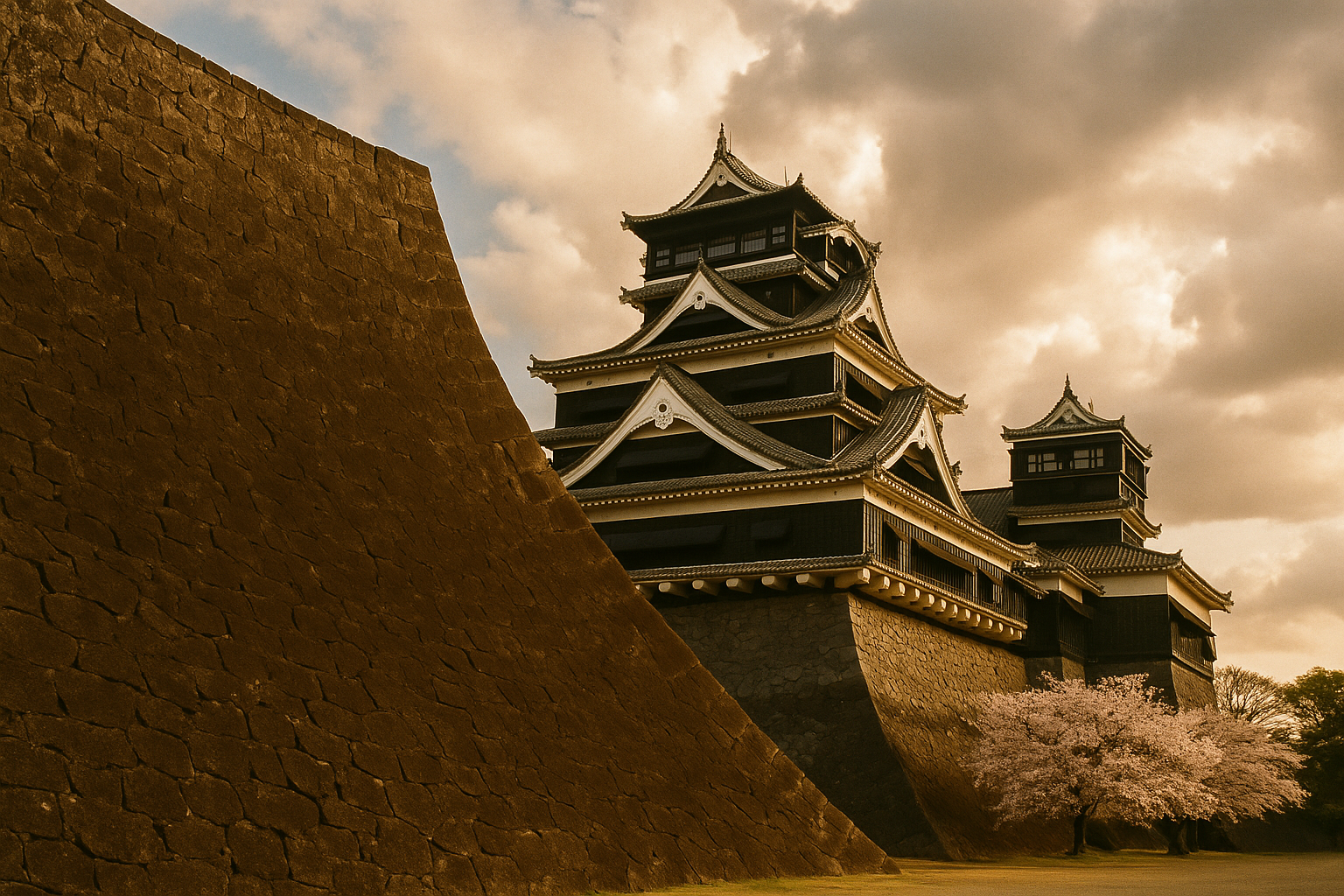
Kumamoto Castle is more than a historical landmark — it is a test that was passed. Katō Kiyomasa designed it after surviving the Siege of Ulsan in Korea, where his garrison nearly died of thirst. He vowed no castle of his would ever fall the same way. He planted ginkgo trees (edible in emergencies), hid food stores in tatami rooms, dug 120 wells inside the walls, and built stone walls so steep — the musha-gaeshi, or "warrior-return" curve — that no attacker could climb them. In 1877, Saigo Takamori's 20,000 samurai besieged the castle for 50 days with a garrison of just 4,000. The castle held. Saigo reportedly said afterward that he had been "defeated not by the Meiji government, but by Kato Kiyomasa." In 2016, a magnitude-7.0 earthquake damaged 50 of its 49 structures and collapsed 30% of its stone walls. Reconstruction is ongoing and expected to complete around 2038.
Historical figures