Japan Local Travel
KyushuKagoshima Castles

Castles of Kyushu · Kagoshima Prefecture 鹿児島県

A Person
Is the Castle

The Shimazu clan ruled Satsuma for 700 years — longer than any other clan held a domain in Japanese history. Their philosophy: don’t build an impregnable castle. Build impregnable people. Their story ends with the men who built modern Japan, and the men who died opposing it.

700+
Years Shimazu ruled Satsuma
1
UNESCO World Heritage Site
1877
End of the samurai era
The Kagoshima paradox: The Shimazu clan survived Sekigahara on the losing side — largely because Yoshihiro’s suicidal escape charge made Tokugawa Ieyasu unwilling to risk attacking Satsuma directly. For 270 more years they stayed in Kagoshima, quietly modernizing. Then their own men — Saigo Takamori and Okubo Toshimichi — overthrew the Shogunate and built modern Japan. Then Saigo tried to stop what he’d helped create. The last chapter was written on Mt. Shiroyama in 1877.

All sites

4 locations
Tsurumaru Castle RuinsMeiji era

✦ AI-generated illustration — not a photograph of the actual site

Ruins / Historic siteKagoshima Prefecture

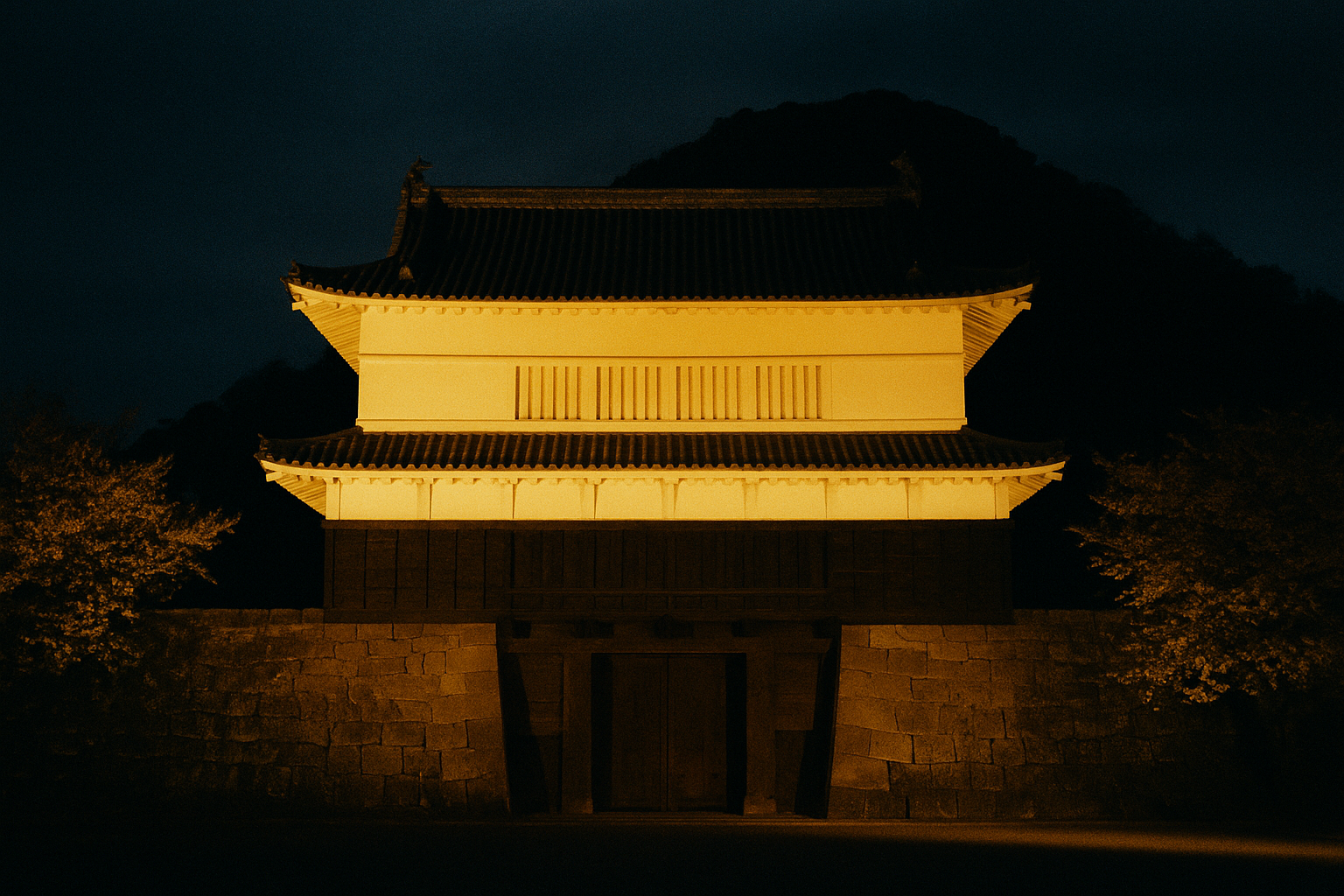
Tsurumaru Castle Ruins

鶴丸城跡 · Kagoshima Castle · "A person is the castle"

Built 1601–1606 (Goromon Gate reconstructed 2020)
Clan Shimazu clan (700+ years, longest-ruling clan in Japanese history)

Headquarters of the Shimazu clan — who ruled Satsuma for 700 years, survived Sekigahara on the losing side, and produced the architects of modern Japan

Tsurumaru Castle was never meant to be impressive from the outside. The Shimazu clan operated on a guiding philosophy: "A person is the castle" (人をもって城と成す). Rather than a single impregnable fortress, they built dozens of small outer castles defended by communities of soldier-farmers across Satsuma, creating a distributed defense system that resisted Toyotomi Hideyoshi, survived Sekigahara on the losing side, and held off the Tokugawa for 270 more years. The castle had no keep. It was a flatland administrative center backed by Mt. Shiroyama — used as the last refuge in emergencies. Its greatest moment came not in medieval warfare but in 1877, when Saigo Takamori made his final stand on that very mountain with 300 men. The massive Goromon Gate — Japan's largest castle gate, reconstructed in 2020 — is now the symbol of Kagoshima. Inside is the Reimeikan Museum, one of the best historical museums in Kyushu.

Historical figures
🚉Tram stop "Shiyakusho-mae" (5 min from Kagoshima-Chuo Station)
🕐Goromon Gate & grounds 24hrs · Reimeikan Museum 9:00–18:00 · Closed Mon
💴Free (grounds) · Reimeikan ¥300
Highlight: The Goromon Gate (2020 reconstruction) — Japan's largest castle gate, 20m high and wide, illuminated until 22:00 with seasonal color changes
Shimazu clan · 700 years
Chiran Samurai District & Peace MuseumMeiji era

✦ AI-generated illustration — not a photograph of the actual site

Original structureKagoshima Prefecture

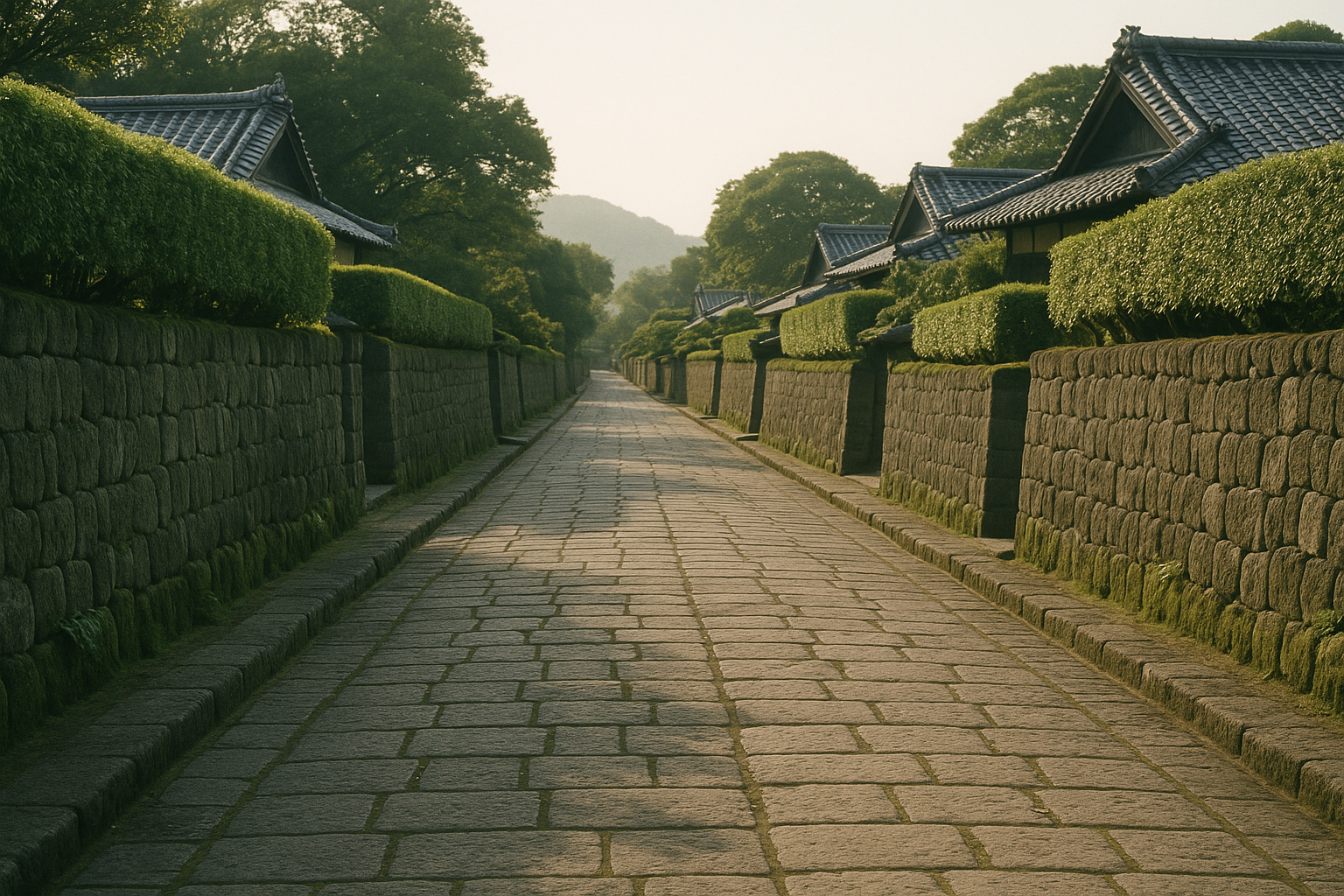
Chiran Samurai District & Peace Museum

知覧武家屋敷群・知覧特攻平和会館 · Samurai gardens from the Edo era · Kamikaze pilots from 1945

Built Samurai district: 18th century · Airbase: 1942–1945
Clan Shimazu clan (outer castle system)

Japan's most complete samurai garden district — on the same ground where 1,036 young pilots departed on one-way missions in 1945

Chiran holds two centuries in one place, and the combination is devastating. The 700-meter samurai district — seven gardens of extraordinary refinement, stone walls trimmed with mathematically precise hedges, no telephone poles or parked cars — is one of the most beautifully preserved Edo-period streetscapes in Japan. Walk it slowly and you feel entirely transported. Then drive 15 minutes to the Chiran Peace Museum, built on the site of the airbase from which 1,036 kamikaze pilots departed on one-way missions in the spring of 1945. The museum holds their photographs, diaries, and final letters. Many were 17 or 18 years old. The juxtaposition — the refined samurai aesthetic of the gardens, and the boys who flew from the same ground — is not something that leaves you easily.

ℹ Note for visitors

The Peace Museum deals with the deaths of young pilots in WWII. It is presented thoughtfully and promotes peace, but visitors should be prepared for a deeply moving experience.

Historical figures

🚉From Kagoshima-Chuo Station: bus ~50 min to Buke-yashiki-iriguchi (samurai district). Taxi or rental car for Peace Museum (15 min further south).
🕐Samurai district 9:00–17:00 · Peace Museum 9:00–17:00 · Both closed Dec 31
💴Samurai district ¥530 adults · Peace Museum ¥500 adults
Highlight: The seven samurai gardens — each one different, all extraordinary — followed by the Peace Museum's collection of final letters from pilots who were 17–22 years old
Most emotionally affecting site in Kyushu
Mt. ShiroyamaMeiji era

✦ AI-generated illustration — not a photograph of the actual site

Original structureKagoshima Prefecture

Mt. Shiroyama

城山 · The last stand of the samurai · Where the Satsuma Rebellion ended

Built Natural hill used as castle redoubt from 1601; final battle September 24, 1877
Clan Shimazu clan → site of Saigo Takamori's last stand

Where Saigo Takamori and the last samurai made their final stand on September 24, 1877 — the symbolic end of the samurai era

Mt. Shiroyama is a forested hill 107 meters above Kagoshima city, immediately behind Tsurumaru Castle. It was always intended as the castle's emergency redoubt — the place to fall back to if the flatland castle fell. On September 24, 1877, it fulfilled that role in the most dramatic way possible. Saigo Takamori, with 300 remaining men (down from 25,000 six months earlier), made his final stand here against 30,000 government troops. At dawn, the imperial army launched its final assault. Saigo was mortally wounded by gunfire. A loyal follower beheaded him at his request. The samurai era ended on this hill. Today Shiroyama is a peaceful forest park with a panoramic view of Kagoshima City, Sakurajima Volcano across the bay, and the Kinko Bay. The cave where Saigo spent his final hours is preserved as a memorial site at the hill's base.

Historical figures

🚉From Tsurumaru Castle ruins, 15 min walk uphill to Saigo's cave. Shiroyama Observation Deck: 20 min walk from cave, or city bus to Shiroyama stop.
🕐Open 24hrs (hill) · Saigo's cave: always open
💴Free
Highlight: Shiroyama Observation Deck view — Kagoshima City, Sakurajima Volcano erupting across the bay, and the Kinko Bay stretching south. Best at sunset.
Best view in Kagoshima
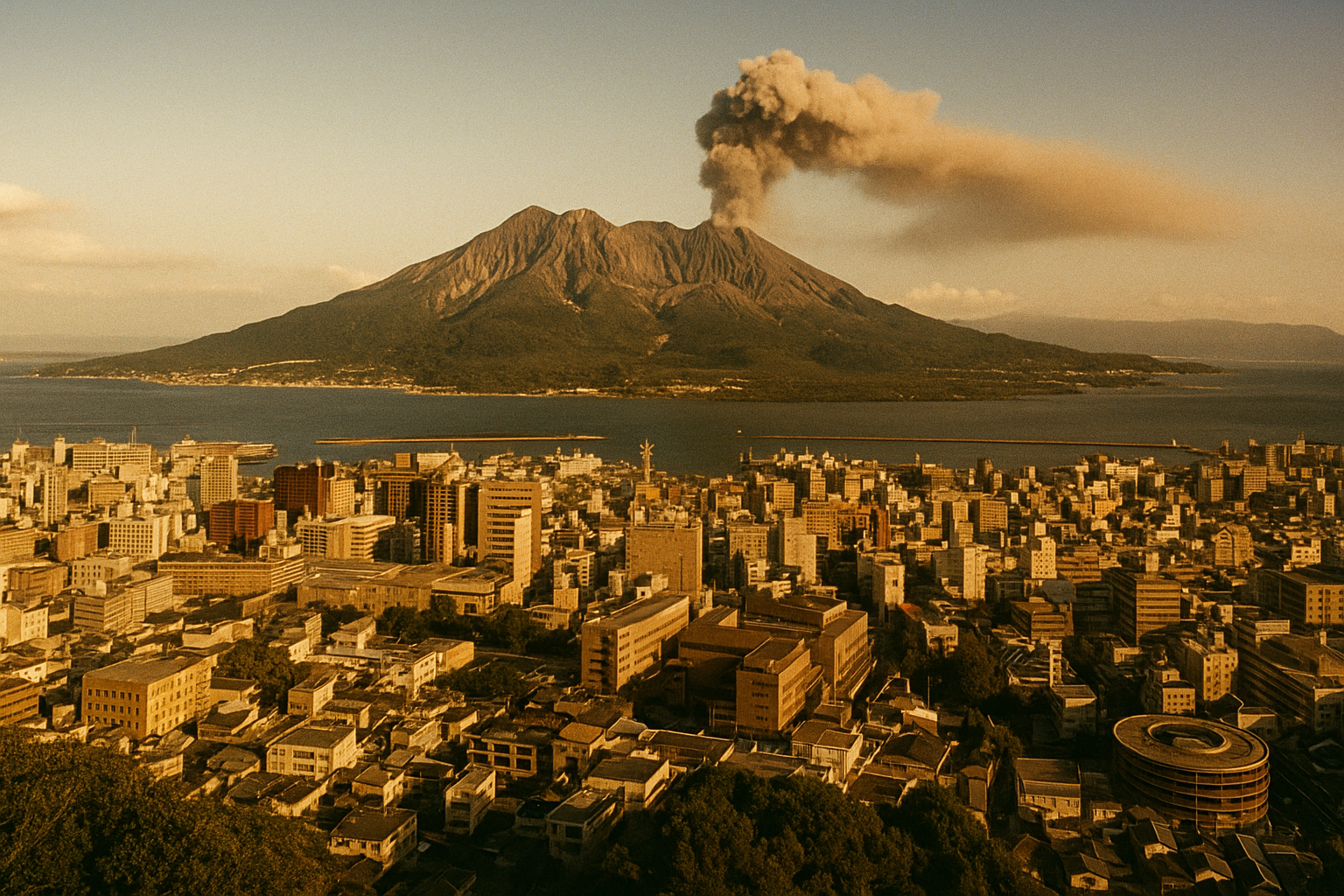
Sakurajima & Senganen GardenMeiji eraUNESCO WH

✦ AI-generated illustration — not a photograph of the actual site

Original structureKagoshima Prefecture

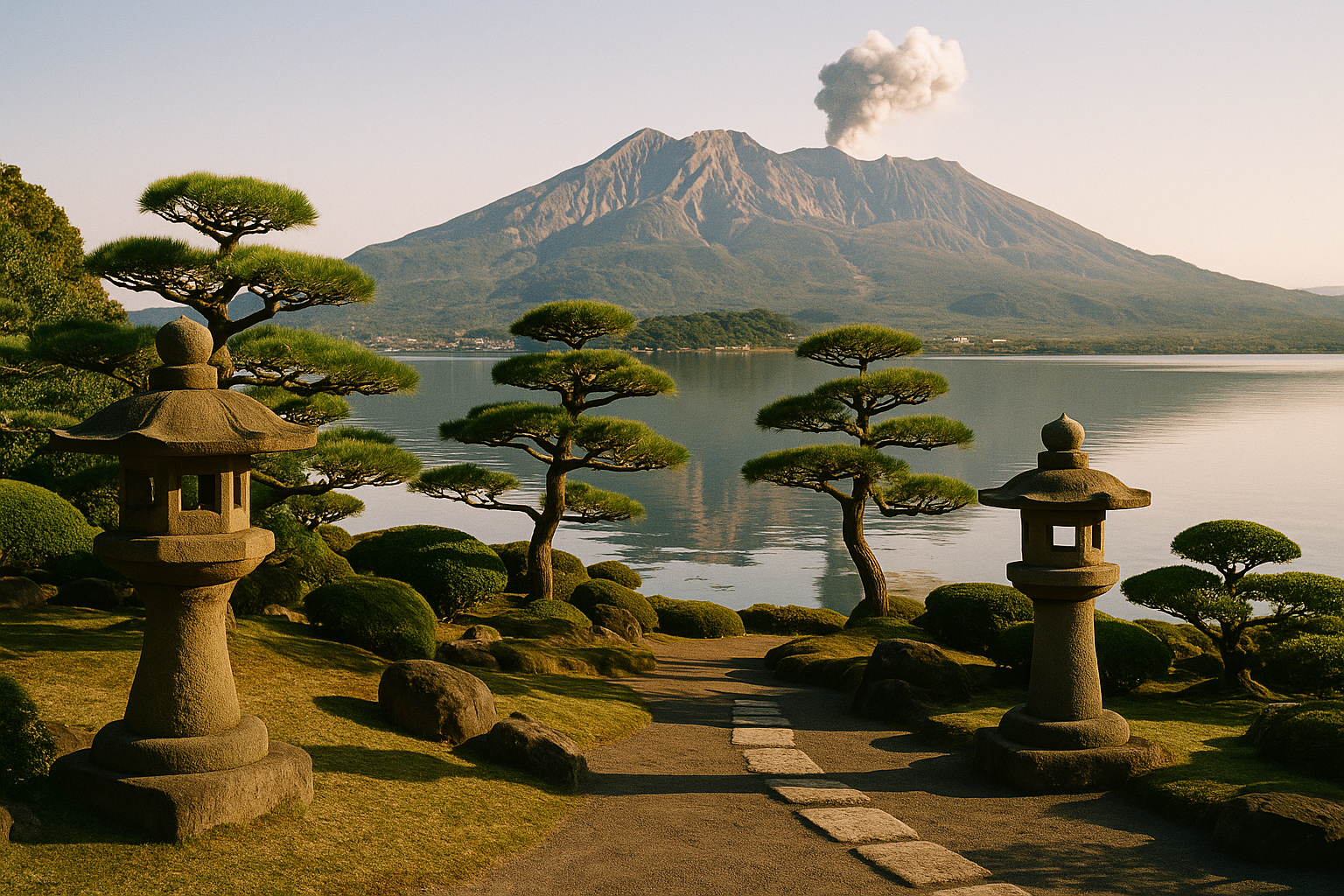
Sakurajima & Senganen Garden

桜島・仙巌園 · The active volcano that watches over Kagoshima · The garden built to frame it

Built Senganen Garden: 1658 · Shūseikan industrial complex: 1851
Clan Shimazu clan

Japan's most active volcano viewed from Japan's most perfectly positioned garden — and the site of Japan's first industrial revolution

Senganen Garden was designed in 1658 by the Shimazu clan to do something no other Japanese garden had attempted: use an active volcano as its borrowed scenery (shakkei). Sakurajima — which erupts hundreds of times a year and has deposited centimeters of volcanic ash on Kagoshima annually since 1955 — frames every view from the garden's stone terraces and bamboo groves. Behind the garden stands the Shūseikan, Japan's first Western-style industrial complex, built by Shimazu Nariakira in 1851. Here Satsuma manufactured modern cannons, produced Japan's first Western-style glass, and experimented with electricity — all while officially living under the Tokugawa Shogunate's isolationist policy. The Shūseikan and its associated sites are now a UNESCO World Heritage Site, recognized as evidence of Japan's first industrial revolution.

Historical figures

🚉Senganen Garden: City View Bus to "Senganen-mae" stop (~25 min from Kagoshima-Chuo). Sakurajima: Ferry 15 min from Kagoshima port (24hrs, every 15 min)
🕐Senganen Garden 8:30–17:30 daily
💴Senganen ¥1,000 adults · Sakurajima ferry ¥200/person
Highlight: Standing in the garden with Sakurajima erupting across the bay — a view that the Shimazu deliberately designed 365 years ago, and that hasn't changed
UNESCO World Heritage Site

From the local

“Kagoshima is different from anywhere else in Kyushu. The volcano across the bay, the Shimazu history, the weight of what happened at Shiroyama — it all adds up to something you don’t find in more comfortable places. The combination of Senganen Garden and Sakurajima on one afternoon is one of the great experiences in Japan.”

— A local living in Kyushu

Series complete

Castles & Warlords of Kyushu

All 7 prefectures covered — 28 castle sites, 50+ historical figures, from Yayoi Queen Himiko to the last samurai.

SagaNagasakiKumamotoOitaFukuokaMiyazaki✓ Kagoshima

← Previous

Castles of Miyazaki

Obi · Nobeoka · Tonokori · Takanabe

← Back to series

Castles & Warlords of Kyushu — All 7 Prefectures