Japan Local Travel
KyushuOita Castles

Castles of Kyushu · Oita Prefecture 大分県

Warlords, Missionaries
& a Song That Never Ends

Oita’s castles connect a Christian warlord who sent Japan’s first mission to the Pope, a master strategist whose face is on the ¥10,000 note, and ruins so beautiful they inspired Japan’s most beloved classical song.

4
Key sites
1551
Year Francis Xavier visited
1km
Stone walls at Oka Castle
The thread connecting all four: The Ōtomo clan. From Funai Castle they controlled two-thirds of Kyushu, hosted Francis Xavier, and built Japan’s first Western hospital. At Usuki, Sōrin made his last stand with cannon fire. At Oka Castle, the ruins they left behind inspired Japan’s most famous song. At Nakatsu, the strategist who helped destroy them built what came next.

All sites

4 locations
Funai Castle RuinsEdo period

✦ AI-generated illustration — not a photograph of the actual site

Ruins / Historic siteOita Prefecture

Funai Castle Ruins

府内城跡 · Oita Castle · Kameyama Castle (Turtle Mountain Castle)

Built 1597–1602 (two surviving turrets original)
Clan Ōtomo clan

Capital of the Ōtomo clan's domain — the most powerful warlords in Kyushu — and home to Japan's first Western-style hospital and university

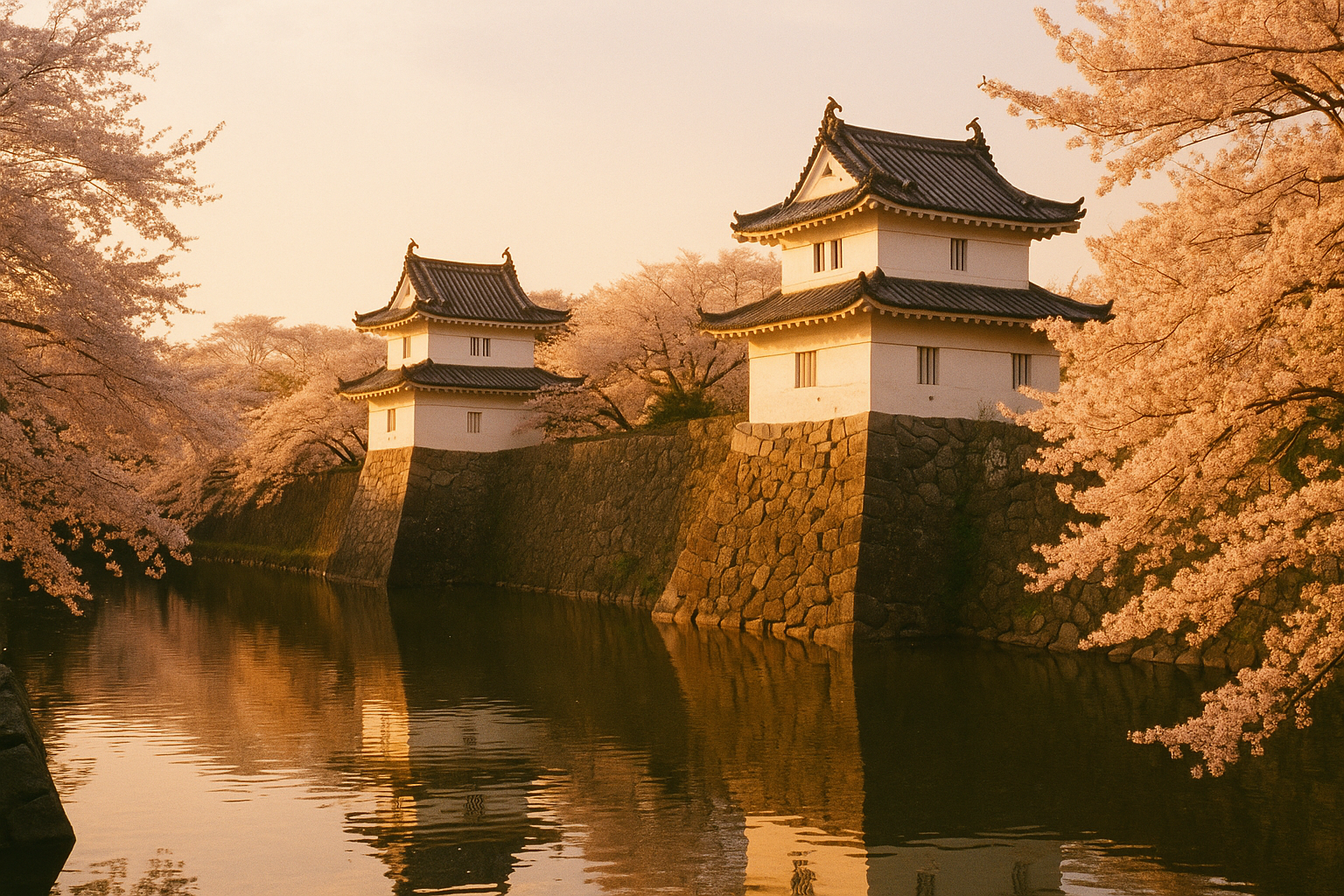
Funai was the capital of the Ōtomo clan at the height of their power, when they controlled two-thirds of Kyushu and styled themselves "Lords of Seven Provinces." Francis Xavier visited here in 1551. Ōtomo Sōrin built Japan's first Western-style hospital and university within the castle town with Jesuit assistance, making Funai briefly one of the most internationally connected cities in Japan. The castle itself was built by successive warlords after Sōrin's clan fell — two original turrets from the early 1600s still stand today, making them among the oldest surviving castle structures in Kyushu. The site is now a park famous for cherry blossoms, with dramatic nighttime light projections that restore the castle's appearance digitally on the ruins.

Local insight

This is basically Oita City's central park. Every local walks past the moat on the way to work. In late March it's wall-to-wall cherry blossoms.

Historical figures

🚉10 min walk from JR Oita Station
🕐Park open 24hrs · Turrets visible from outside
💴Free (park)
Highlight: Two original Edo-period turrets — the oldest surviving castle structures in Oita city — surrounded by 70+ cherry trees
Free entry · Cherry blossom hotspot
Oka Castle RuinsEdo period

✦ AI-generated illustration — not a photograph of the actual site

Ruins / Historic siteOita Prefecture

Oka Castle Ruins

岡城跡 · "Kōjō no Tsuki" — The Moon over the Ruined Castle

Built c.1185 (expanded through Edo period; abandoned 1871)
Clan Ogata clan

Considered by many to be the most beautiful castle ruins in Japan; inspired Japan's most famous classical song

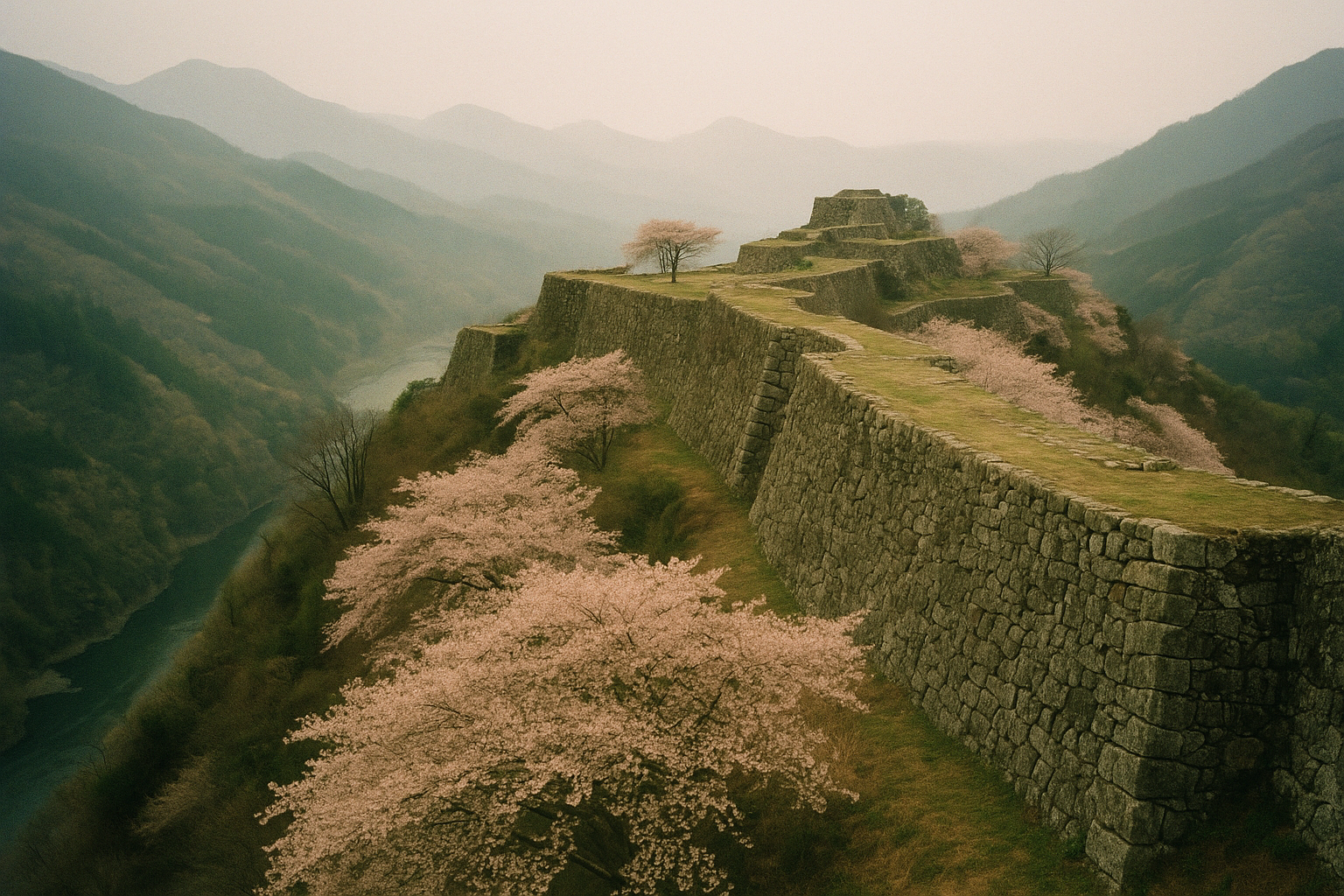
Oka Castle does not have a surviving keep. It has something better: one kilometer of dramatic stone walls running along a mountain ridge 325 meters above sea level, with cliffs dropping on both sides into deep river gorges. The walls turn pink in spring with cherry blossoms, gold in autumn, and white in winter — and at any season, the views over Taketa's mountain-ringed valley feel impossibly cinematic. The ruins inspired composer Rentarō Taki to write "Kōjō no Tsuki" (The Moon over the Ruined Castle) in 1901 — a song so embedded in Japanese culture that it plays at train stations across the country. A bronze statue of Taki now stands at the castle entrance. Oka Castle is consistently rated by castle enthusiasts as the best castle ruins in all of Japan.

Local insight

Taketa is about 1.5 hours from Beppu by car over the mountains. Most tourists skip it. The locals all know Oka-jo is special. Go in cherry blossom season if you possibly can — the walls turn pink.

Historical figures

🚉5 min by car from JR Bungo-Taketa Station (Hohi Line from Oita ~1h20m); free parking on site
🕐9:00–17:00 (Mar–Oct) · 9:00–16:30 (Nov–Feb)
💴¥300 high school and older · ¥150 elementary/junior high
Highlight: The 1km stone wall walk along the ridge — cherry blossoms in April, autumn leaves in November, snow in winter
Best castle ruins in Japan
Nakatsu CastleEdo period

✦ AI-generated illustration — not a photograph of the actual site

ReconstructedOita Prefecture

Nakatsu Castle

中津城 · One of Japan's Three Great Water Castles · birthplace of Fukuzawa Yukichi

Built 1587 (keep reconstructed 1964)
Clan Kuroda clan

One of Japan's three great "water castles"; designed by the strategist who guided Toyotomi Hideyoshi's unification of Japan; birthplace of the man who put Japan's modernization on its ¥10,000 note

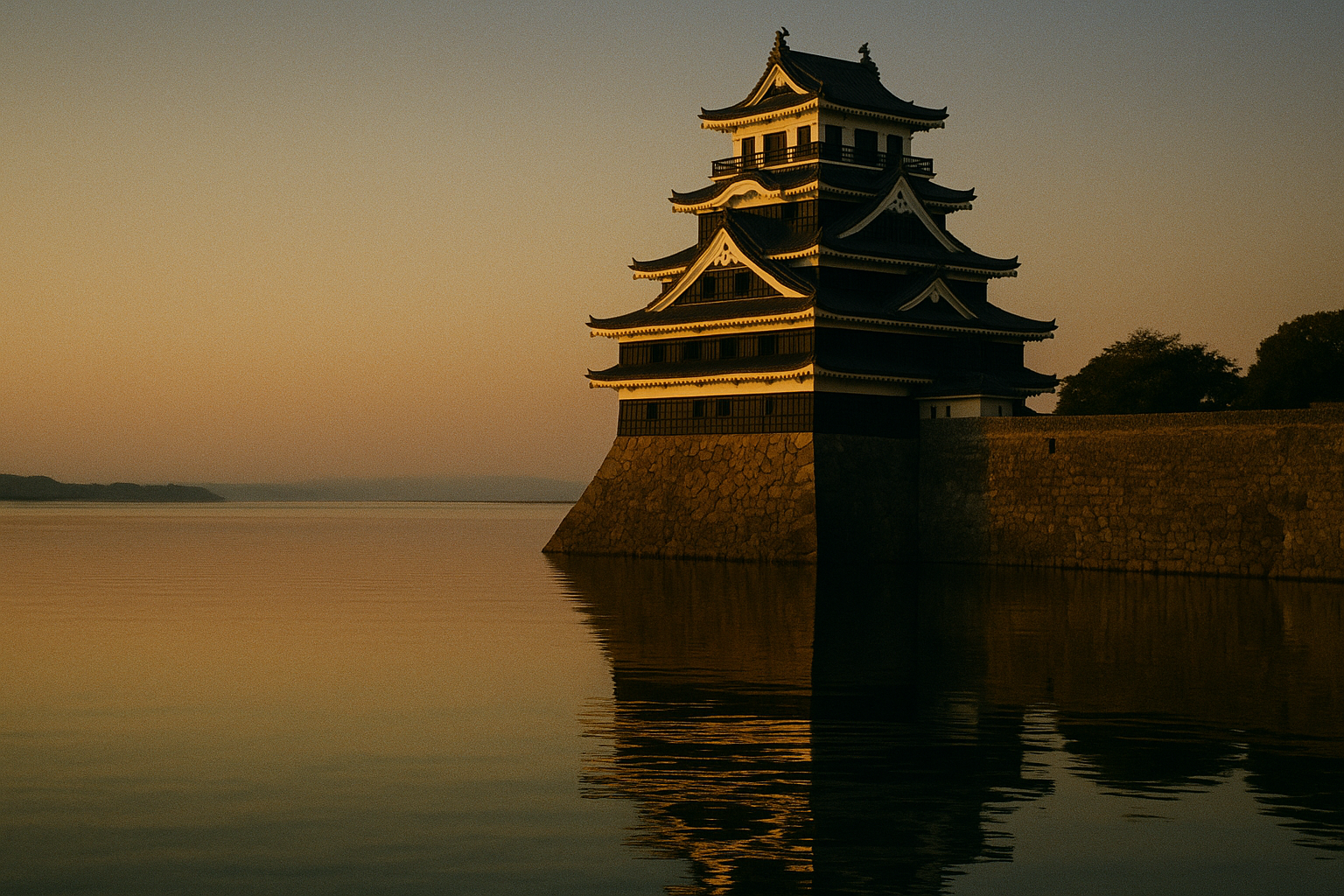
Nakatsu Castle has one of the most layered backstories of any castle in Kyushu. It was designed by Kuroda Yoshitaka — known as Kanbei — the military genius who planned Toyotomi Hideyoshi's campaigns and is considered one of the greatest strategists of the Sengoku era. He chose this site precisely for its water: the castle is surrounded by the Yamakuni River on one side and the Seto Inland Sea on another, making it one of Japan's three great "water castles." Its walls are famously built in two distinct styles — the lower stones laid by the Kuroda clan and the upper stones by the Hosokawa who followed — the join between them visible to this day. Near the castle, Fukuzawa Yukichi — the intellectual reformer whose face still appears on the ¥10,000 note — was born and educated. His childhood home is open to visitors.

Local insight

Nakatsu is known all over Japan for its karaage (fried chicken) — there are more karaage shops per capita here than anywhere in Japan. Go to the castle, then eat your weight in karaage.

Historical figures

🚉15 min walk from JR Nakatsu Station; or taxi 5 min
🕐9:00–17:00 daily
💴¥500 adults · ¥200 children
Highlight: The visible join between Kuroda-era and Hosokawa-era stone walls — two different masonry styles fused into one castle
Water castle · ¥10,000 note connection
Usuki Castle RuinsEdo period

✦ AI-generated illustration — not a photograph of the actual site

Ruins / Historic siteOita Prefecture

Usuki Castle Ruins

臼杵城跡 · Nyūjima Castle · Island castle of the Christian warlord

Built 1562 (by Ōtomo Sōrin)
Clan Ōtomo clan

Personal castle of Ōtomo Sōrin, the Christian warlord who sent Japan's first mission to the Pope; near Japan's only National Treasure stone Buddhas

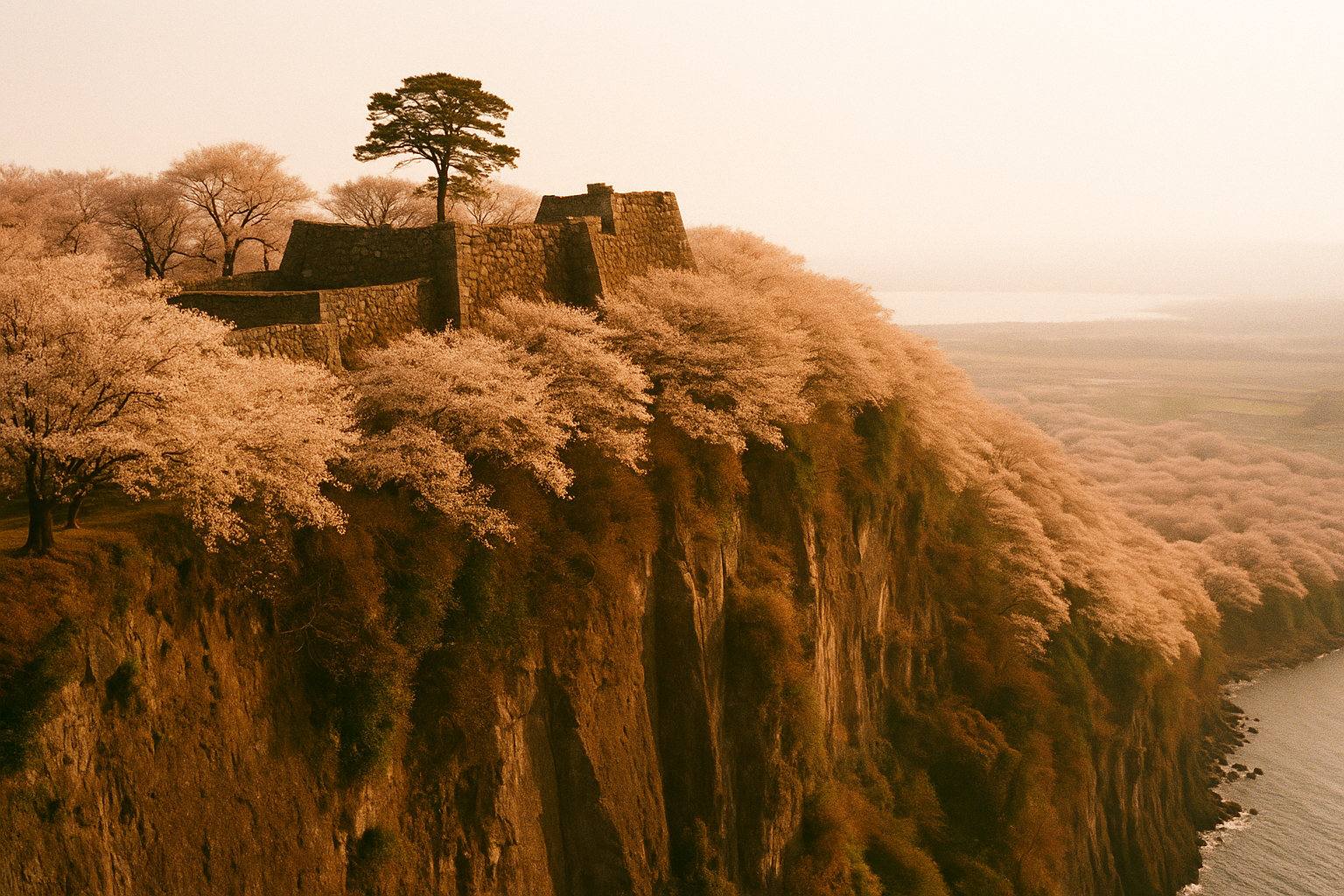
Usuki Castle was Ōtomo Sōrin's personal stronghold — the place he retreated to after leaving his son in charge of the main Funai Castle. Its location is extraordinary: built atop a small island (Nyūjima) connected to the mainland only by a sandbar at low tide, surrounded on all sides by vertical cliffs. When the Shimazu clan attacked in 1586, Sōrin held out here using — for the first time in Japanese castle history — cannon fire in defense. The Shimazu eventually drove him out, but the castle's use of Western firearms was a milestone. Today only stone walls remain, surrounded by nearly 1,000 cherry trees. The nearby Usuki Stone Buddhas — Japan's only stone Buddhas designated National Treasures, carved into cliffs in the Heian period — make Usuki an unmissable detour from Beppu.

Local insight

Usuki is 30 minutes from Beppu by train but most visitors never make it there. The stone Buddhas alone are worth the trip. The castle ruins on top of the cliffs feel like you're at the edge of the world.

Historical figures

🚉From JR Usuki Station (Nippo Main Line from Oita ~30 min), 15 min walk or 5 min taxi. Stone Buddhas: 20 min by car from castle
🕐Ruins open 24hrs
💴Free (ruins)
Highlight: Combine with the nearby Usuki Stone Buddhas — Japan's only National Treasure stone Buddhas, 60 figures carved into cliffs 1,000 years ago
Combine with National Treasure Buddhas

From the local

“Oka Castle is about 1.5 hours from Beppu by car, over the mountains into Taketa. Most tourists skip it completely. Every local I know thinks it’s one of the best places in all of Oita. Go in cherry blossom season if you can — the stone walls turn pink.”

— A local in Oita

← Previous

Castles of Kumamoto

Kumamoto · Hitoyoshi · Reigandō · Yatsushiro

Next →

More coming soon

More Kyushu castles in progress

← Back to series

Castles & Warlords of Kyushu — All 7 Prefectures