Japan Local Travel
KyushuSaga Castles

Castles of Kyushu · Saga Prefecture 佐賀県

Castles & Warlords
of Saga

Saga Prefecture punches far above its weight in Japanese history. A prehistoric queen, a peasant who became Japan’s ruler, a warlord too fat to ride a horse, and the samurai who produced Japan’s first modern government — all passed through here.

4
Key sites
2,400+
Years of history
3
National historic sites
Reading this page: Each castle card shows a "Historical figures" section — click any name to expand their story. The figures are connected: Toyotomi Hideyoshi built Nagoya Castle; his vassal Terasawa Hirotaka recycled its stones to build Karatsu Castle; while the Ryūzōji and Nabeshima clans fought for Saga Castle for decades. One prefecture, one interlocking story.

All sites

4 locations
Saga CastleMeiji era

✦ AI-generated illustration — not a photograph of the actual site

ReconstructedSaga Prefecture

Saga Castle

佐賀城 · Shizumi-jo (Submerged Castle)

Built 1602–1611 (reconstructed 2004)
Clan Ryūzōji clan

Seat of the 36,000-koku Saga Domain; birthplace of Meiji-era statesmen

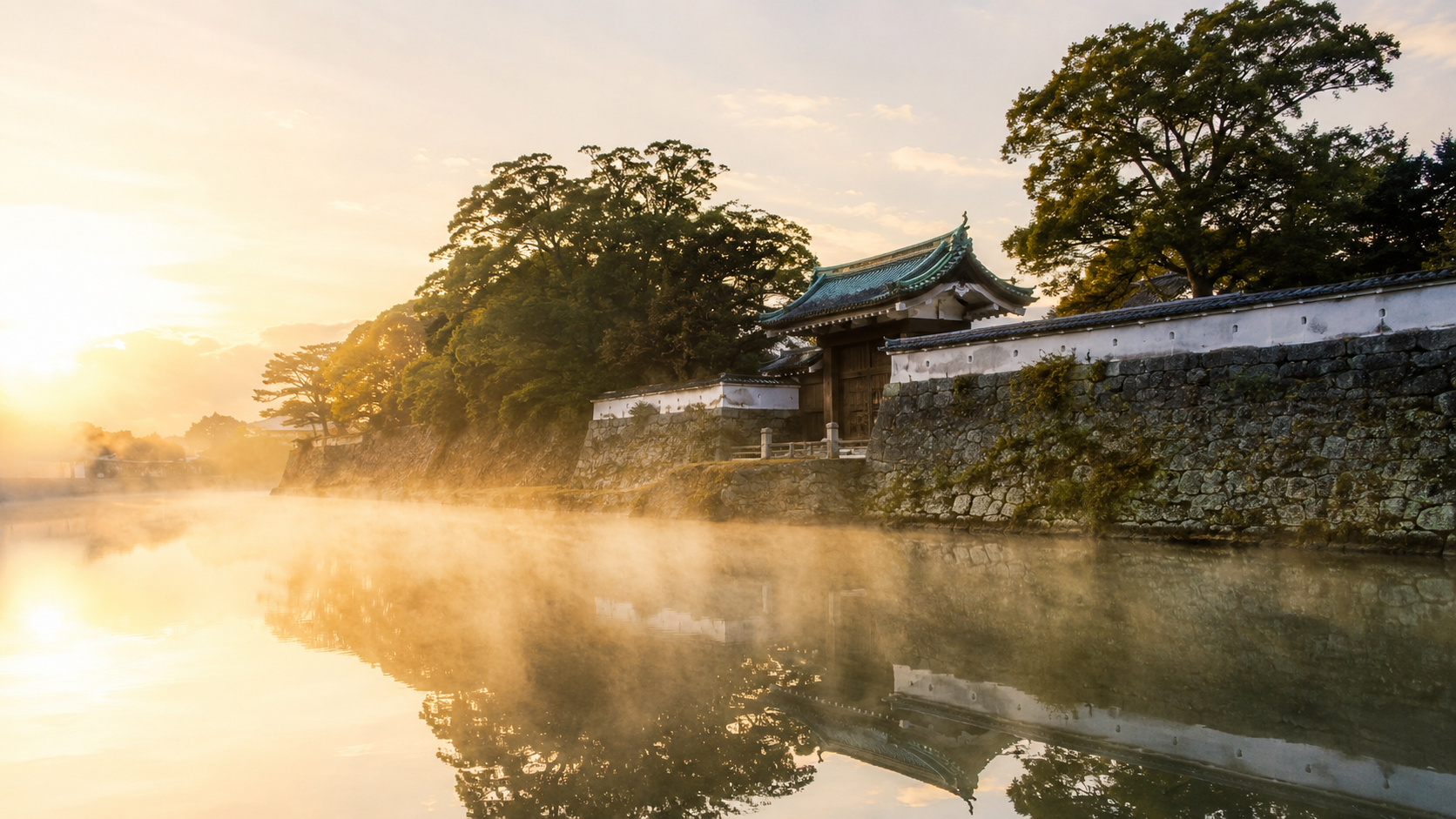
Unlike most Japanese castles built on hills or stone bases, Saga Castle is a flatland castle (hiraijiro) surrounded by earthen ramparts and a massive moat over 80 meters wide in places. When threatened, water from the nearby Tabuseji River could flood the entire outer grounds — earning it the nickname "Submerged Castle." The Nabeshima clan ran one of Japan's most progressive domains here: they funded Western-style education, the study of Dutch, English, and gunnery, and built Japan's first Western-style blast furnace. The result? Saga produced an astonishing number of Meiji-era leaders — Okuma Shigenobu (founder of Waseda University), Eto Shinpei, and Soejima Taneomi all came from here.

Historical figures
🚉15 min walk from JR Saga Station
🕐9:30–18:00 · Closed Mon (or next day if Mon is holiday)
💴Free entry
Highlight: Fully reconstructed main palace (2,500 sq meters) with original Shachi-no-mon gate still standing
Free entry
Karatsu CastleEdo period

✦ AI-generated illustration — not a photograph of the actual site

ReconstructedSaga Prefecture

Karatsu Castle

唐津城 · Maizuru-jo (Dancing Crane Castle)

Built 1602–1608 (keep rebuilt 1966)
Clan Terasawa clan

Built reusing stone from Nagoya Castle; commands panoramic views over Karatsu Bay

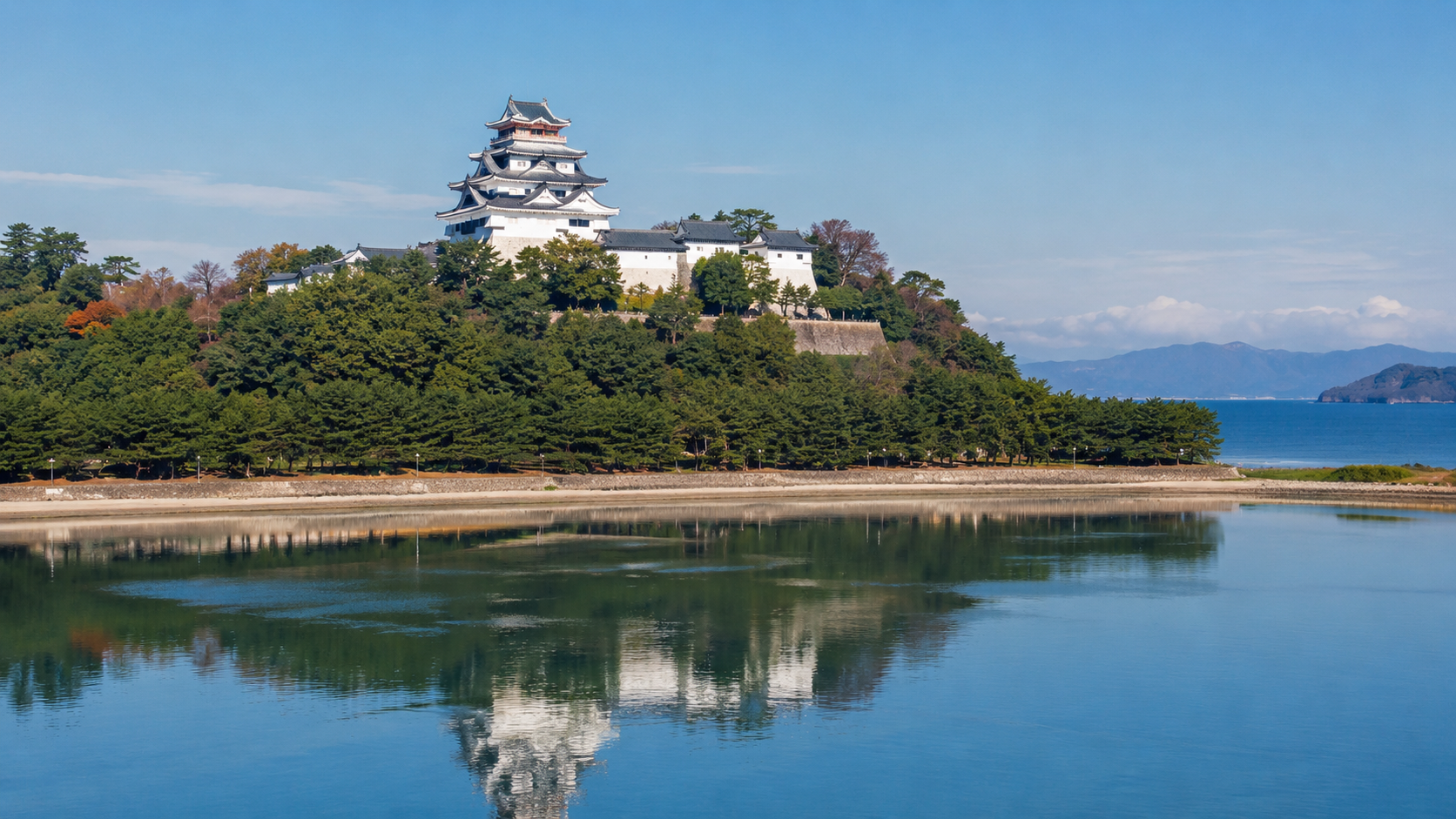
Perched on a low hill overlooking Karatsu Bay, Karatsu Castle is nicknamed "Dancing Crane Castle" because the keep resembles the head of a crane, with the famous Niji-no-Matsubara pine grove (one of Japan's three largest) spreading on both sides like outstretched wings. The castle was built using recycled stone from the nearby Nagoya Castle — the massive base from which Toyotomi Hideyoshi launched his Korean invasions. The current five-story keep, rebuilt in 1966, houses exhibits on local history and the celebrated Karatsu-yaki ceramic tradition.

Historical figures

🚉5 min walk from Karatsu Station (Chikuhi Line)
🕐9:00–17:00 · Closed Dec 29–31
💴¥500 adults, ¥250 children
Highlight: Top-floor observation deck with panoramic views of Karatsu Bay and Niji-no-Matsubara pine forest
Panoramic sea views
Nagoya Castle Ruins (Saga)Sengoku period

✦ AI-generated illustration — not a photograph of the actual site

Ruins / Historic siteSaga Prefecture

Nagoya Castle Ruins (Saga)

名護屋城跡 · Not to be confused with Nagoya Castle in Aichi Prefecture

Built 1591 (demolished ~1598)
Clan Toyotomi clan

Second largest castle in Japan at its peak; launchpad for Hideyoshi's invasion of Korea

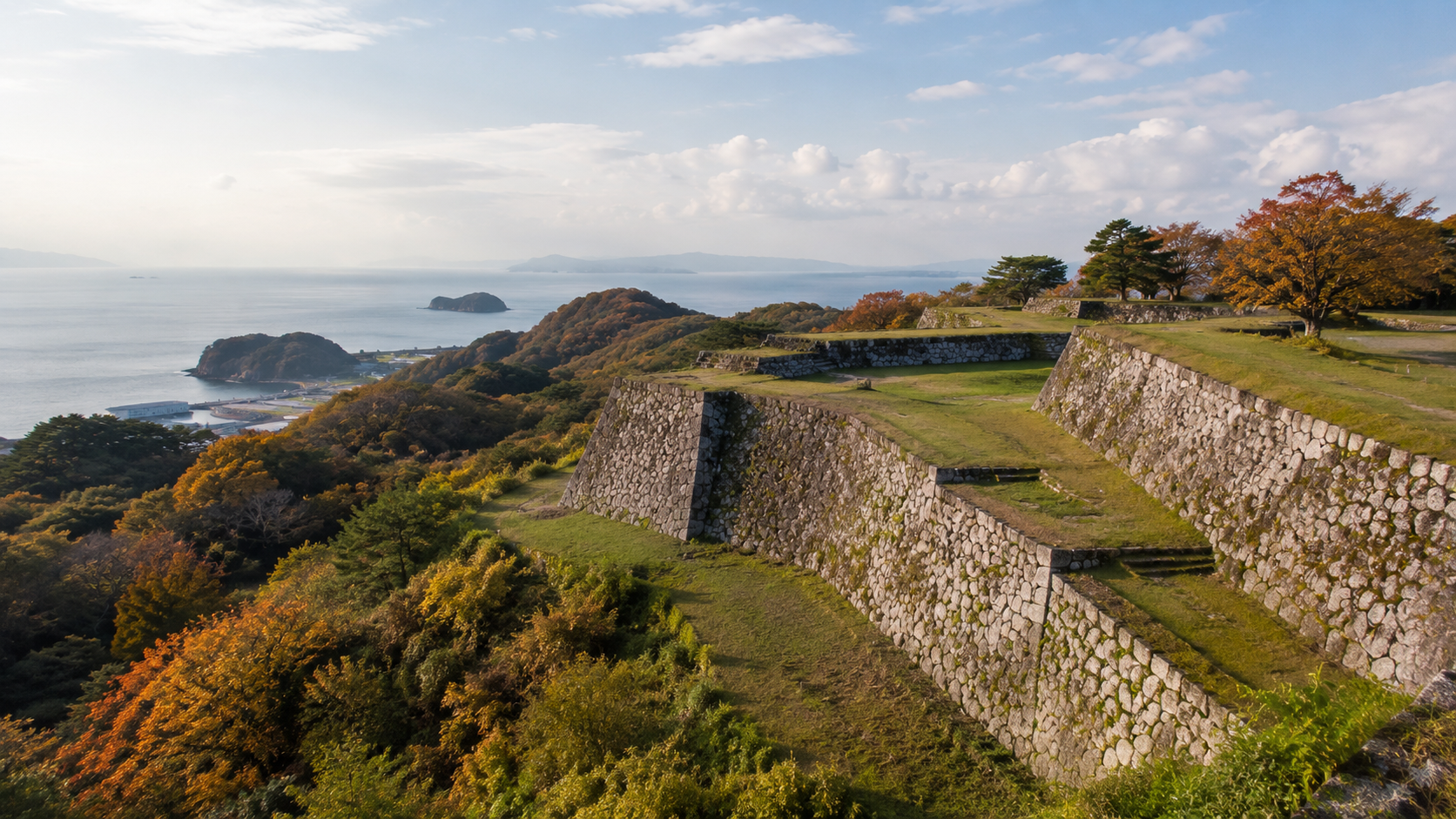
At its peak in 1592, this castle complex housed over 100,000 soldiers and was one of the largest in Japanese history — second only to Osaka Castle. Toyotomi Hideyoshi built it in just five months as the staging ground for his invasions of Korea (Imjin War, 1592–98). Every major warlord in Japan was required to maintain a residence within the castle grounds. After Hideyoshi's death in 1598, the castle was rapidly abandoned and its stones used to build Karatsu Castle. The 3km-radius ruins are now a National Historic Site, with the adjacent museum exploring Japan-Korea cultural history.

Historical figures

🚉From Karatsu Station: bus (Showa Bus, Hadomisaki line) ~40 min to "Nagoya Castle Museum Entrance" stop, or ~30 min by taxi
🕐Ruins open 24hrs · Museum 9:00–17:00 · Closed Mon
💴Ruins free · Museum ¥500
Highlight: Scale of the ruins — the 3km stone walls give a visceral sense of the castle's enormous size
National Historic Site
Yoshinogari Historical ParkAncient / Yayoi

✦ AI-generated illustration — not a photograph of the actual site

MuseumSaga Prefecture

Yoshinogari Historical Park

吉野ヶ里歴史公園 · Japan's largest Yayoi period archaeological site

Built approx. 400 BC – 250 AD (Yayoi period)
Clan Unknown (pre-historic)

Largest Yayoi-period settlement in Japan; predates samurai culture by 1,000+ years

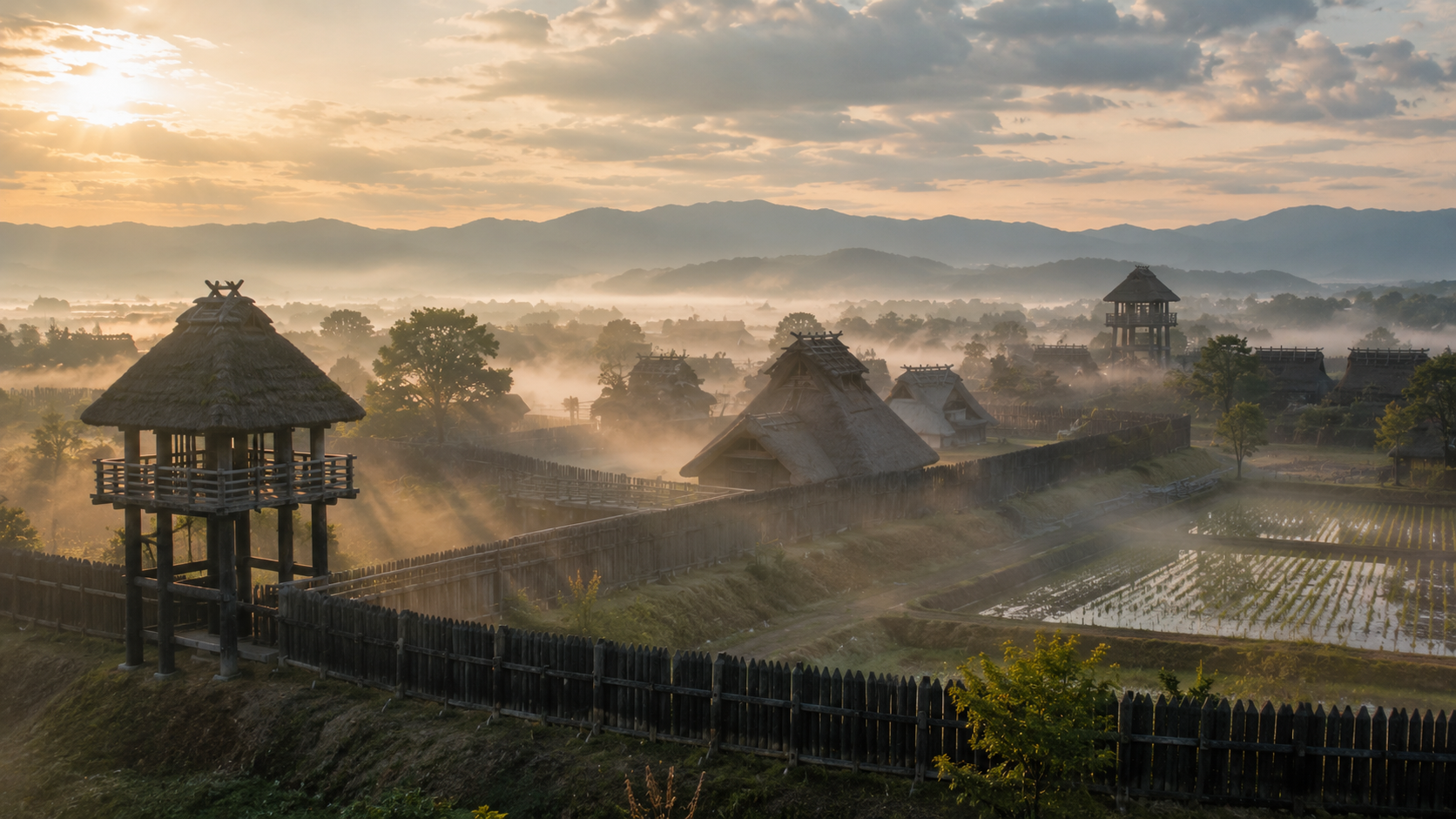
Yoshinogari is not a samurai castle — it is something far older and stranger. Dating back over 2,000 years, this massive moated settlement from the Yayoi period is the most complete prehistoric fortification ever found in Japan. Double moats, watchtowers, burial mounds, and reconstructed wooden buildings cover 117 hectares. Some historians believe this was the capital of Yamatai, the mysterious kingdom mentioned in 3rd-century Chinese chronicles as ruled by a shaman queen. Whether or not that's true, walking through Yoshinogari is the closest you'll get to Japan before samurai, Buddhism, or even writing existed here.

Historical figures

🚉JR Yoshinogari-Koen Station (Nagasaki Line), 3 min walk
🕐9:00–17:00 (June–Aug until 18:00) · Closed Dec 31–Jan 3, third Mon in Jan & Feb
💴¥460 adults, ¥180 ages 15–18, children free
Highlight: Scale of the reconstructed Yayoi village — watchtowers, burial mounds, and the debate over Queen Himiko's lost kingdom
Most ancient site

From the local

“Most people fly into Fukuoka and never make it to Saga. That’s a mistake. Nagoya Castle ruins alone — where Hideyoshi gathered 100,000 soldiers before invading Korea — are worth half a day. And Saga City is only 40 minutes by train from Hakata.”

— A local living in Kyushu

Next in the series

Castles & Warlords of Nagasaki — coming soon

Nagasaki · Shimabara · Hirado →

← Back to series

Castles & Warlords of Kyushu — All 7 Prefectures