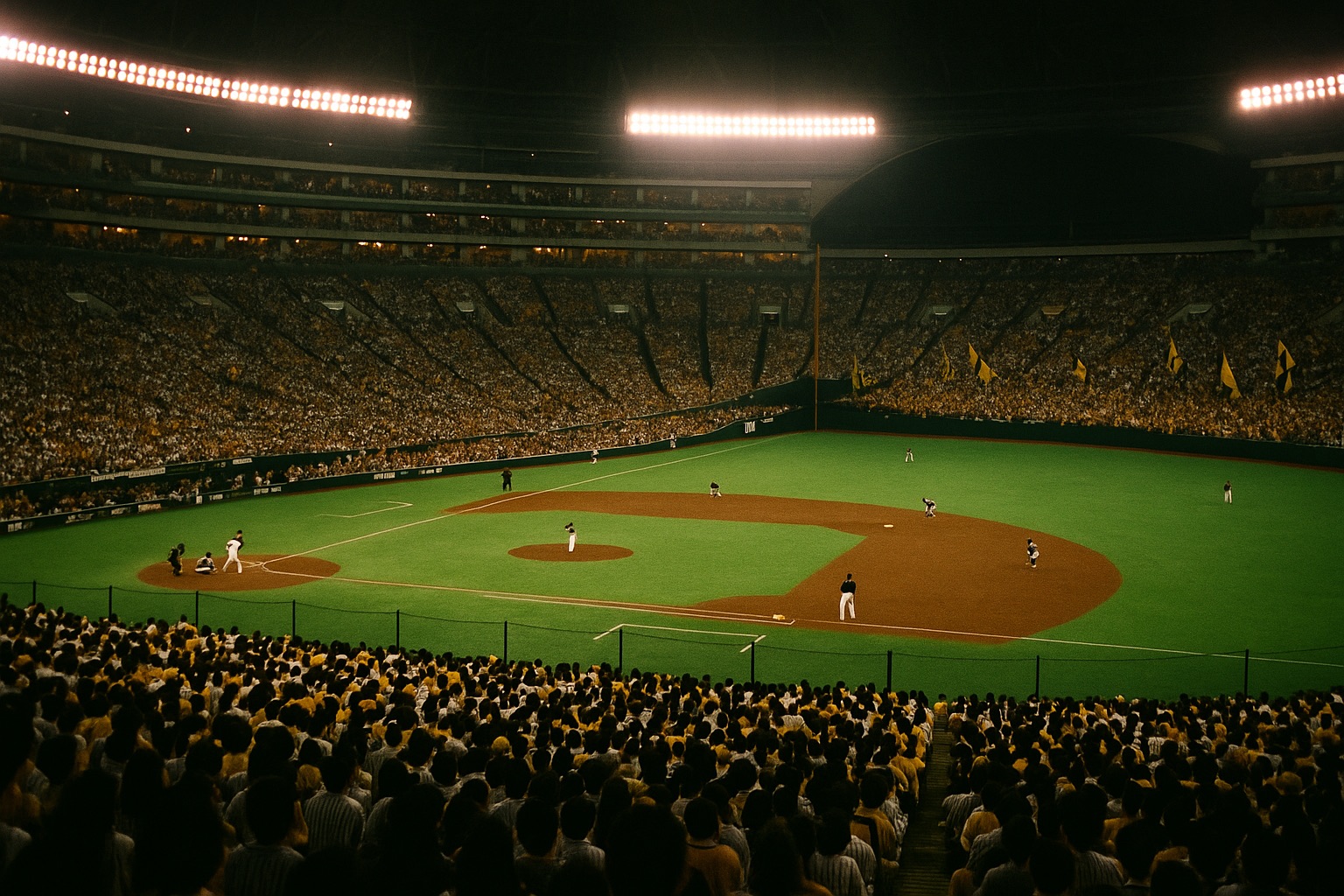
If you only know baseball as an American institution, a Japanese pro game will recalibrate you in about two innings. Imagine a sport where the away fans sing coordinated anthems for every batter, where thousands of balloons rise in the seventh inning, where young vendors sprint the stairs pouring draft beer from kegs on their backs — and where nobody boos, ever.
Travelers increasingly rank a Japanese baseball game among their favorite memories of the whole trip — and with 57% of travelers now wanting to catch local sports abroad, the secret is out. Here's how to do it in Fukuoka, home of one of Japan's most successful teams.
Why Japanese Baseball Is a Travel Experience
NPB (Nippon Professional Baseball) plays the same sport as MLB at a level just below it — but the spectatingculture is a different universe. American ballparks are casual; Japanese ones are participatory. Each team's fan section runs nonstop organized cheering — trumpets, drums, per-player chants every fan knows by heart — for the entire game, in coordinated turn-taking with the opposing fans. Offense cheers, defense rests. It's less like a ballgame crowd and more like two choirs conducting a friendly war.
For a visitor the effect is electric and oddly moving: you're watching Japan's genius for collective joy, with beer. No language needed — clap when your side claps, and by the fifth inning you'll be chanting names of players you'd never heard of at lunch.
The Hawks & Their Dome
The Fukuoka SoftBank Hawks are one of NPB's powerhouse franchises — a dynasty with a trophy case full of Japan Series titles and a fanbase that fills their home dome night after night. The team is woven into city identity the way the Yamakasa festival is: in season, half of Fukuoka seems to be checking the score.
Their home, the Mizuho PayPay Dome Fukuoka, is Japan's first retractable-roof stadium — a 40,000-capacity spaceship on the Momochi waterfront, about 20 minutes from Tenjin by subway and bus or a pleasant seaside walk from Tojinmachi Station. The adjacent entertainment complex (teamLab digital art, shops, restaurants) makes it easy to fill a pre-game afternoon.
Quick Facts
Tickets — Easier Than Sumo, Cheaper Than MLB
- ✓Where: the Hawks' official ticket site (English available), ticket agencies (Pia/Lawson), or the stadium box office. Weekday games rarely sell out except marquee matchups; weekend games against popular teams go early.
- ✓Prices: outfield cheering sections from around ¥2,000; good infield seats ¥4,000–7,000; premium field-side under ¥15,000. A fraction of comparable MLB pricing.
- ✓Seat strategy: first-timers should sit infield, first-base side (home fans, full view of both cheering sections). Want full immersion? The right-field Hawks cheering section — standing, chanting, the works. Want calm? Upper infield.
- ✗Note: you can't bring cans or bottles inside (staff decant into cups at the gate). Outside food in reasonable amounts is generally fine — but the stadium food is half the fun anyway.
The Culture — Cheering, Balloons & Beer Girls
✦ AI-generated illustration — not a photograph of the actual site
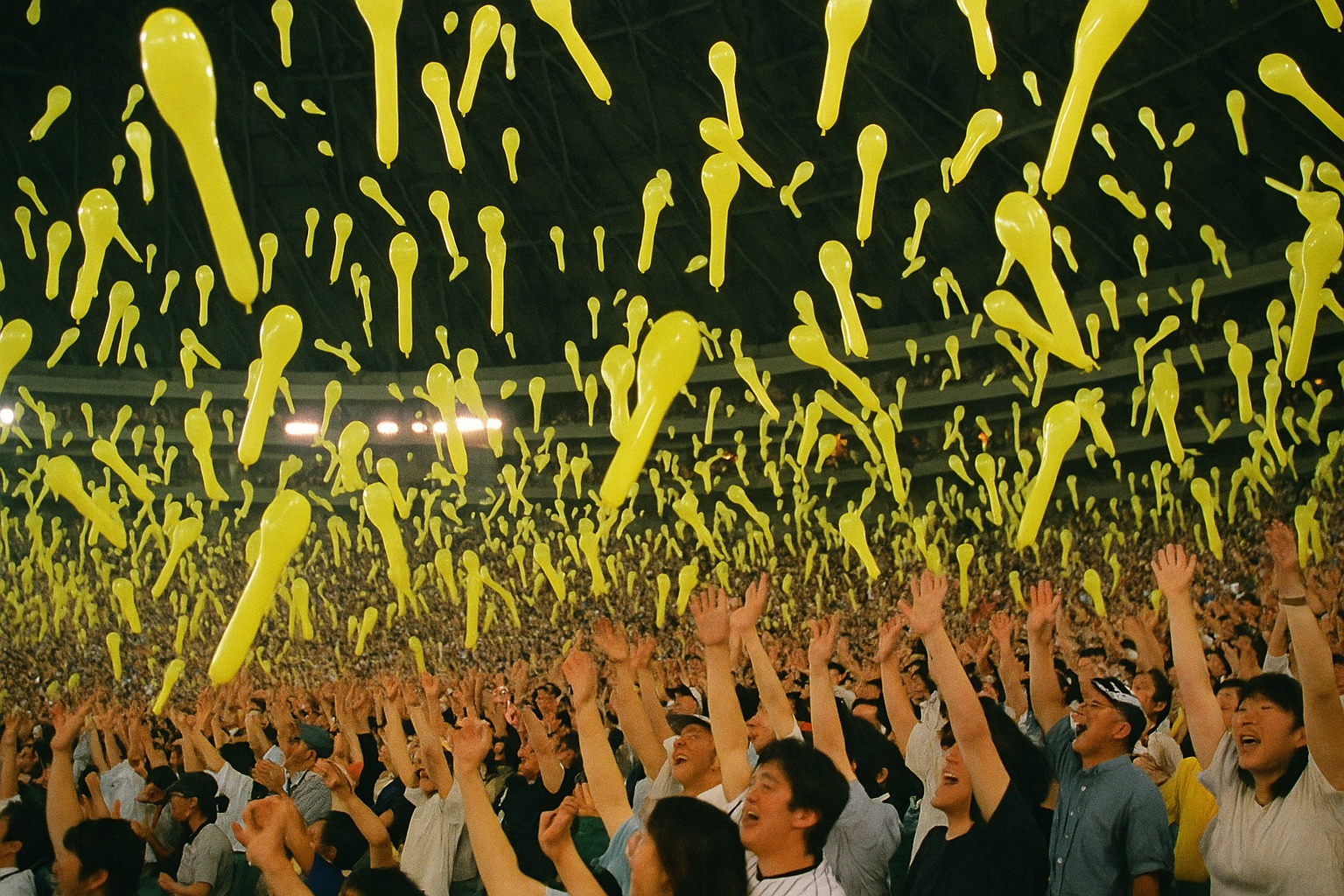
The seventh-inning balloon release — buy yours at the team store, inflate in the sixth
📣 The oendan (cheering squads)
Each team's organized fan section leads chants with trumpets and drums. Every player has a personal song. Fans cheer only when their team bats — a courtesy system that somehow makes the noise more thrilling.
🎈 The balloon release
Before the home half of the seventh, the whole stadium inflates long 'jet balloons' and releases them together — tens of thousands of squealing rockets. Buy a pack of team-colored balloons at the shop; joining in is the whole point.
🍺 The uriko (beer girls)
Vendors with mini-kegs on their backs sprint the aisles all game, pouring fresh draft at your seat with a smile and a bow. Raise a hand, pay ~¥800, receive perfection. An institution beloved enough to have its own fan followings.
🍱 Stadium food, Fukuoka edition
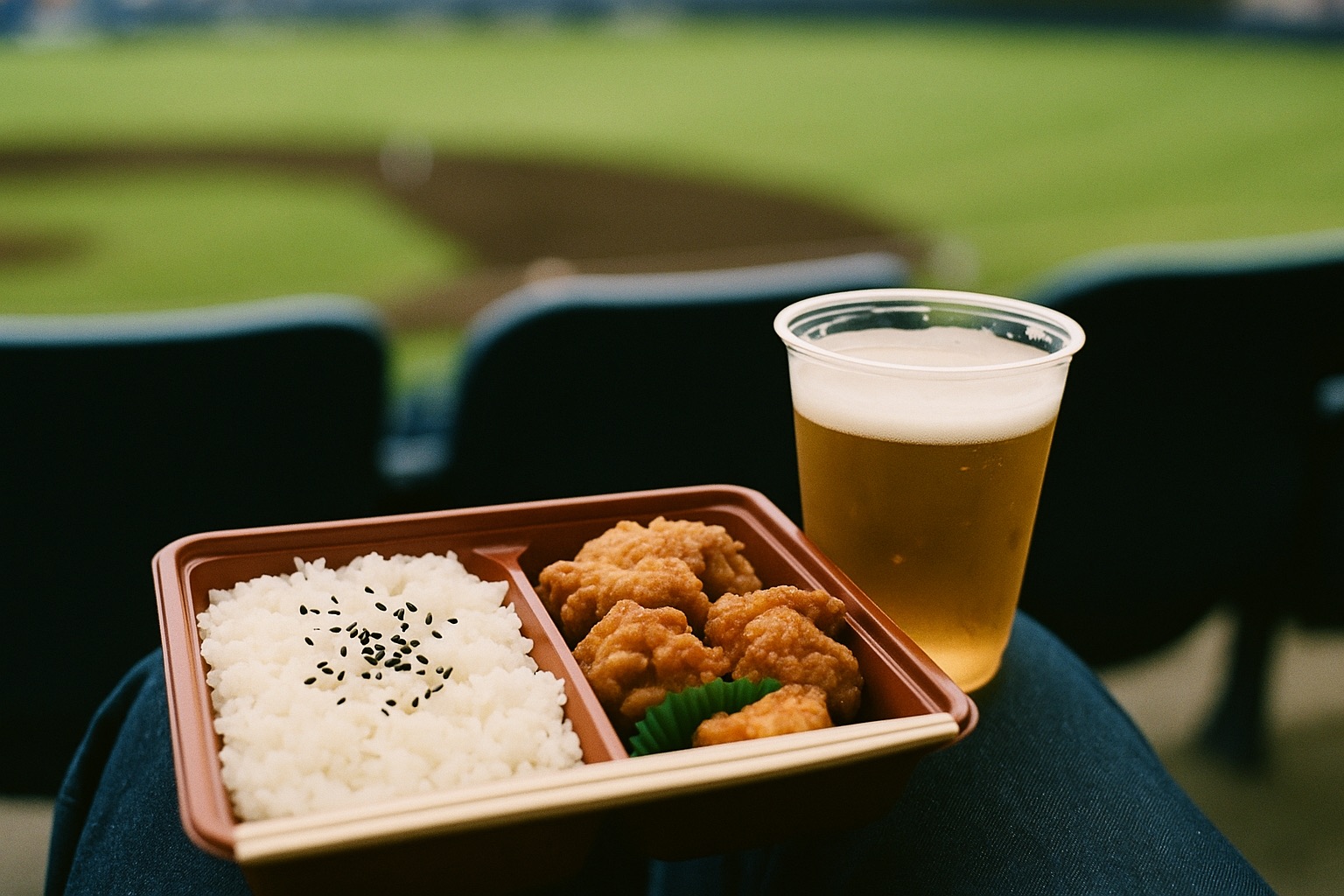
Beyond hot dogs: mentaiko dishes, Hakata-style bento, ramen stands, and karaage. Eat like the locals — dinner at the dome is standard practice for a 6 p.m. start.
🧹 The cleanup
Fans bag their own trash and leave sections spotless — the same culture that went viral at World Cups. Bring your bag to the bins on the way out and you've passed the etiquette test.
Game Day Plan (18:00 First Pitch)
✦ AI-generated illustration — not a photograph of the actual site
Momochi waterfront
Fukuoka Tower, the beach, teamLab if it's hot — the dome's neighborhood is an attraction
Team store & gates
Buy a cheering towel and jet balloons; watch batting practice
First bento, first beer
Settle in before the anthem of chants begins
First pitch
Clap when your side claps. You'll have the hang of it by the third
Seventh-inning balloons
Inflate in the sixth. Release together. Grin involuntarily
Post-game yatai or ramen
Subway back toward Tenjin/Nakasu — the night is young in Fukuoka
The Ohtani Effect — A Note for MLB Fans
If Shohei Ohtani, Yoshinobu Yamamoto, and the wave of Japanese MLB superstars sparked your curiosity about where that talent comes from — this is the answer. NPB is the league that produced them, and watching a game here shows you the machine: the fundamentals-obsessed play style, the packed stadiums for regular-season games, the high-school-tournament culture feeding it all.
Hawks games regularly feature tomorrow's MLB names — telling people "I saw him in Fukuoka before the posting" is the baseball-fan equivalent of seeing the band in a small club. Combine a game with the November sumo tournamentand you've built the best live-sports double feature in Japan, in one city.
⚾
You came to Japan for temples and ramen. The night you'll describe loudest at home might be the one with the balloons.
¥3,000, a chant sheet you can't read, and 40,000 friends. Play ball.
More Fukuoka Experiences