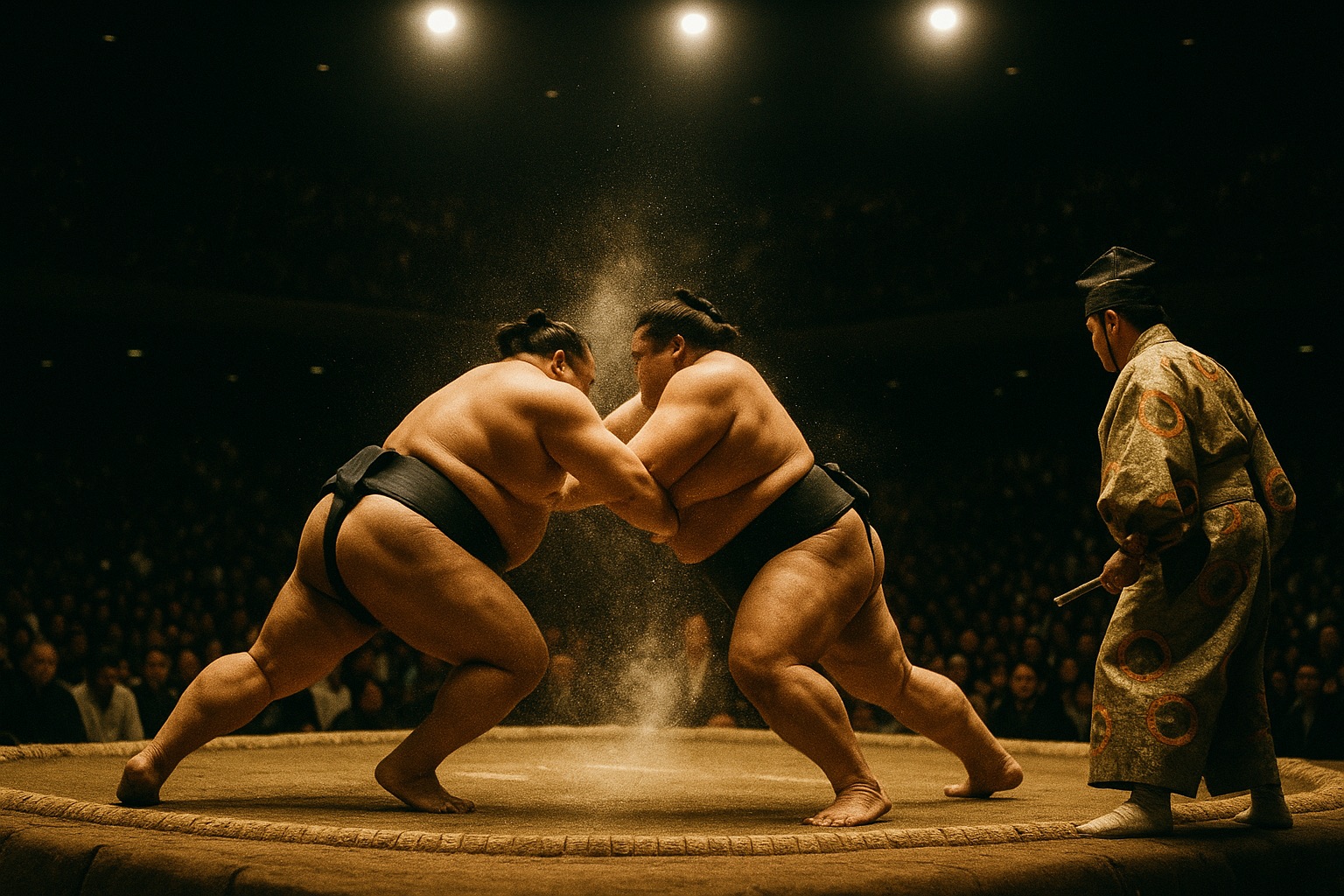
Sumo is having a global moment — travel publications named it one of the defining travel trends of 2026, and tournament tickets in Tokyo now vanish within hours. What almost none of those articles mention: one of sumo's six annual Grand Tournaments happens in Fukuoka every November— and it's the most accessible, most atmospheric, and most affordable one for a foreign visitor to attend.
The Kyushu Basho runs November 8–22, 2026at the Fukuoka Kokusai Center. Here's everything you need: how tickets work, which seats are honestly worth it, and how to build the perfect tournament day in Japan's best food city.
Why the Kyushu Basho Is the One to Attend
- 1.Tickets are merely hard, not impossible. Tokyo's tournaments sell out instantly to a city of 14 million. Fukuoka's arena sells out too in the current boom — but the pressure is an order of magnitude lower, and weekday tickets are genuinely gettable if you follow the on-sale calendar below.
- 2.The arena is intimate. The Fukuoka Kokusai Center is the smallest of the major venues — even cheap upper seats put you closer to the dohyo than mid-tier seats in Tokyo's Kokugikan.
- 3.The wrestlers live in town all month. Stables relocate to Fukuoka temples and community halls for November. You will, with complete normality, see a 160kg man in a yukata buying snacks at a convenience store. No Tokyo tournament offers this density of casual encounters.
- 4.It's the season finale. November is the last tournament of the year — championship races, promotions, and retirements all come to a head here.
- 5.Your evenings are in Fukuoka. Bouts end around 6 p.m. and the yatai stalls open at 7. There is no better post-sumo city on the calendar.
Sumo in 10 Minutes — What You're Actually Watching
A Grand Tournament (honbasho) runs 15 days. Every wrestler fights once per day; most wins at the end takes the Emperor's Cup. The day builds in rank order: low-division bouts from morning, the salt-throwing, leg-stomping theater of the top makuuchi division from about 3:40 p.m., ending around 6 p.m. with the highest-ranked matchups.
The bout itself may last three seconds; the ritual around it lasts minutes — and the ritual is the point. The salt purifies the ring (a Shinto ceremony, not showmanship). The staring contests are legal psychological warfare. The colored tassels above the ring represent the four seasons. You are watching something closer to a religious ceremony with a fight inside it than a sport with rituals attached.
You don't need to know a single wrestler's name to enjoy it — the crowd will teach you whom to cheer within an hour. (The roar when a local Kyushu-born wrestler steps up tells you everything.)
Tickets — Dates, Prices & How to Buy
Kyushu Basho 2026 — Key Facts
- ✓Buy through official channels: Ticket Oosumo (the Sumo Association's Pia-run site, with an English interface), or convenience store terminals in Japan. Fan-club and Pia pre-lotteries run in August–September — worth entering if your dates are fixed.
- ✓Move fast on day one of general sale. Recent tournaments have sold out all 15 days. Weekdays in the first week are your best odds; final weekend goes first.
- ✓Budget: upper chair seats from around ¥4,000–6,000; box (masu) seats ¥10,000–15,000 per person; ringside tamari over ¥20,000. A chair seat is a perfectly great first sumo experience.
- ✗Avoid resale markups. Tour packages with built-in tickets are legitimate but cost 2–4×. Use them only if you miss the general sale entirely.
Choosing Your Seat — An Honest Comparison
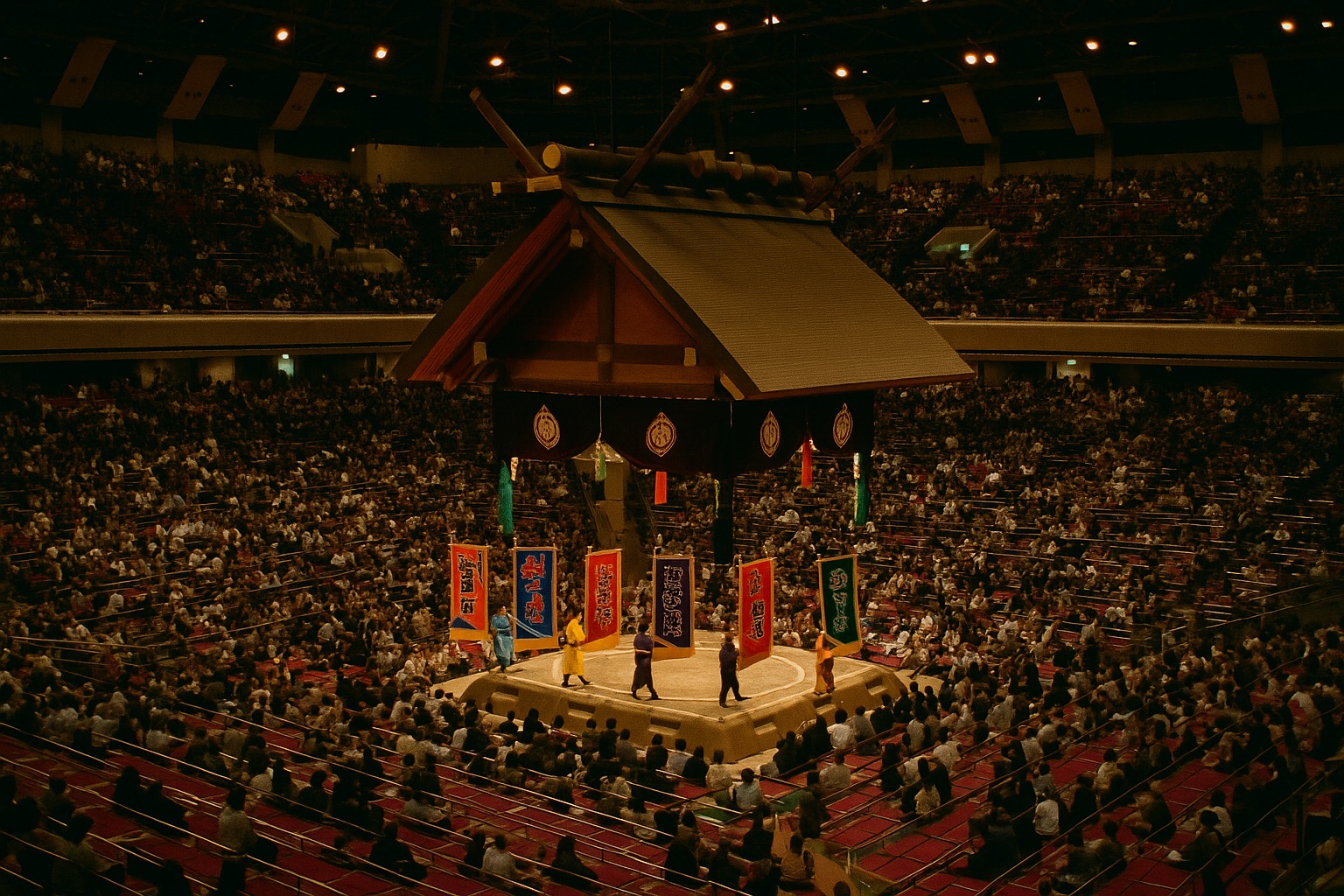
✦ AI-generated illustration — not a photograph of the actual site
Small arena, no bad views — the Kokusai Center's great advantage
| Seat Type | What It Is | Honest Verdict |
|---|---|---|
| Tamari (ringside) | Cushions at the ring's edge. No eating, no drinking, no phones. You may receive a flying wrestler. | Unforgettable and strict. Not for a casual first visit. |
| Masu S/A (box, front) | Traditional 4-person tatami boxes. Shoes off, cushions, picnic allowed. | The classic experience — but tight for 4 adults with Western knees. Book for 2–3 people. |
| Masu B/C (box, rear) | Same boxes, further back. | Best value-to-atmosphere ratio in the building. Our pick. |
| Chair A/B (upper) | Western seats with backs, upper tier. | Comfortable, cheap, and closer than you'd think in this small arena. Ideal for solo visitors. |
How to Spend Tournament Day
Early Hakata udon brunch
Soft noodles, gobou-ten — the pre-sumo meal of champions
Enter the arena early
Watch the lower divisions in a half-empty hall — you can sit close and study the rituals
Juryo division entrance
The ceremonial ring-entering parades begin — cameras out
Makuuchi ring-entering ceremony
The top division in embroidered kesho-mawashi aprons. The hall is full now
Bento and beer at your seat
Stadium eating is part of the culture — except in tamari seats
The final bouts
Yokozuna and ozeki. If a championship is on the line, the building shakes
Walk to Nakasu yatai
End the day at the street stalls — 15 minutes on foot from the arena
The Free Bonus — Wrestlers in the Streets
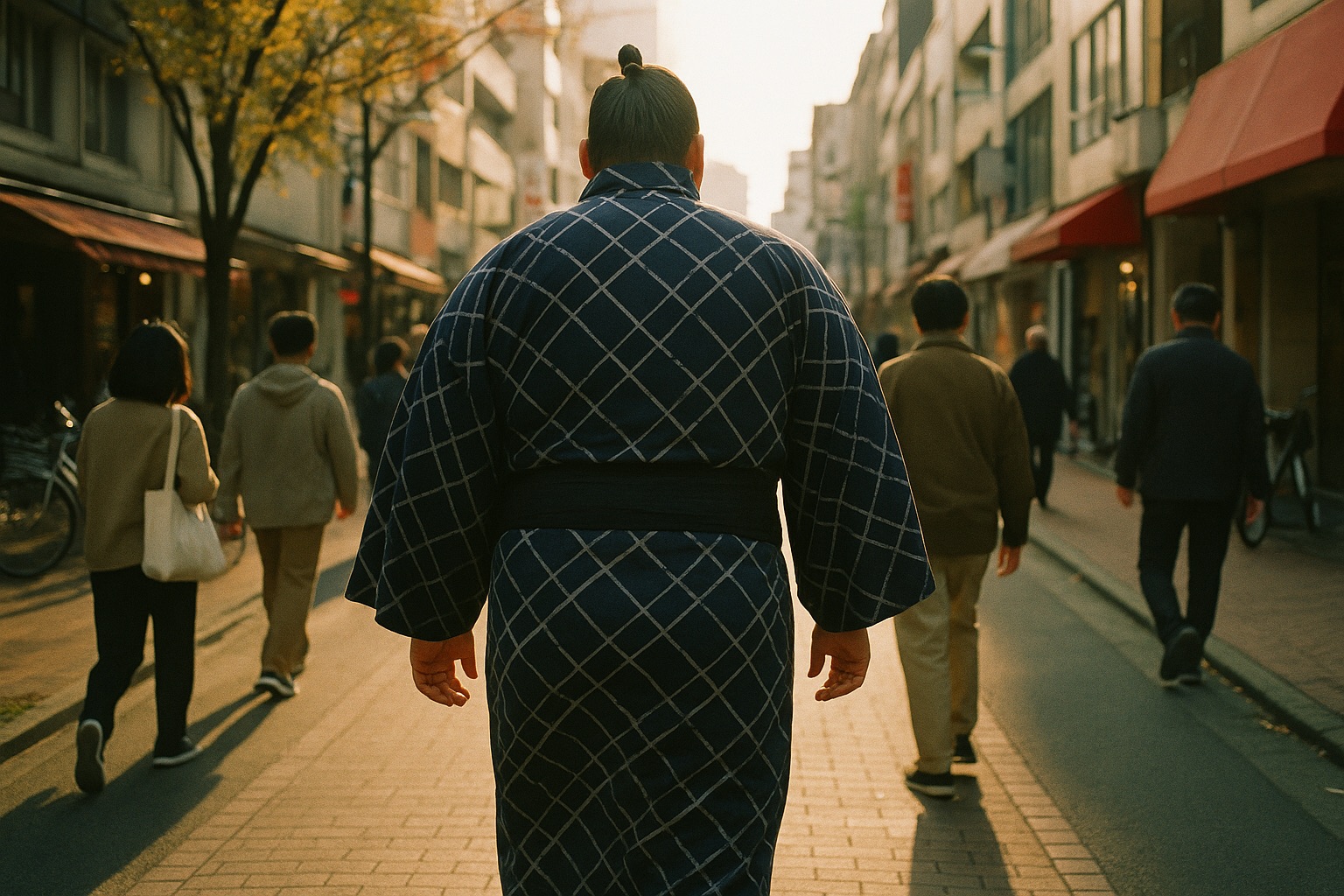
✦ AI-generated illustration — not a photograph of the actual site
November in Fukuoka: the world's largest athletes, buying convenience store snacks
For the tournament month, sumo stables move into Fukuoka temples, shrines, and community centers — and the wrestlers simply live here. They cycle to practice (an unforgettable sight), queue at ramen counters, and stroll the arcades in wooden sandals you hear from a block away.
Many stables also allow quiet spectators at morning practice (asageiko) — held early (roughly 7–10 a.m.), free, and in some ways more intense than the tournament itself: no ceremony, just bodies hitting bodies in a silent room. Policies vary year to year and stable to stable; ask your hotel concierge to check current arrangements, observe in silence, and never use flash.
Couldn't get tournament tickets? This street-level November sumo is a real consolation prize — and it costs nothing.
🎌
Sumo is the rare bucket-list experience that exceeds its hype — ancient, absurd, electric, and deeply human.
See it in Fukuoka, where the arena is small, the wrestlers walk the streets, and the best food city in Japan waits outside the doors. Mark September 19 for tickets.
Plan Your November Trip
🍽️ Fukuoka 3-Day Food Itinerary
Fill the days around the basho
🏮 Yatai Guide
The post-sumo dinner tradition
⚾ Baseball in Fukuoka
Japan's other great live sport
🏮 Hakata Gion Yamakasa
Fukuoka's July festival madness
🤔 Is Kyushu Worth Visiting?
Build the full trip
♨️ Beppu Onsen Guide
2 hours away — perfect add-on