Karato Market: Shimonoseki's Fugu, History, and How to Spend a Perfect Day by the Kanmon Strait
Shimonoseki is the kind of place that rewards the curious traveller who asks "why does this city exist here?" The answer involves a naval battle that ended the Heike clan in 1185, a 19th-century warlord who fired cannons at American and British warships, and a peace treaty signed in 1895 that changed the map of Asia. All of this happened in the waters you can see from Karato Market. Oh, and the pufferfish is excellent.
Written by a local in Oita · May 2026 · 15 min read
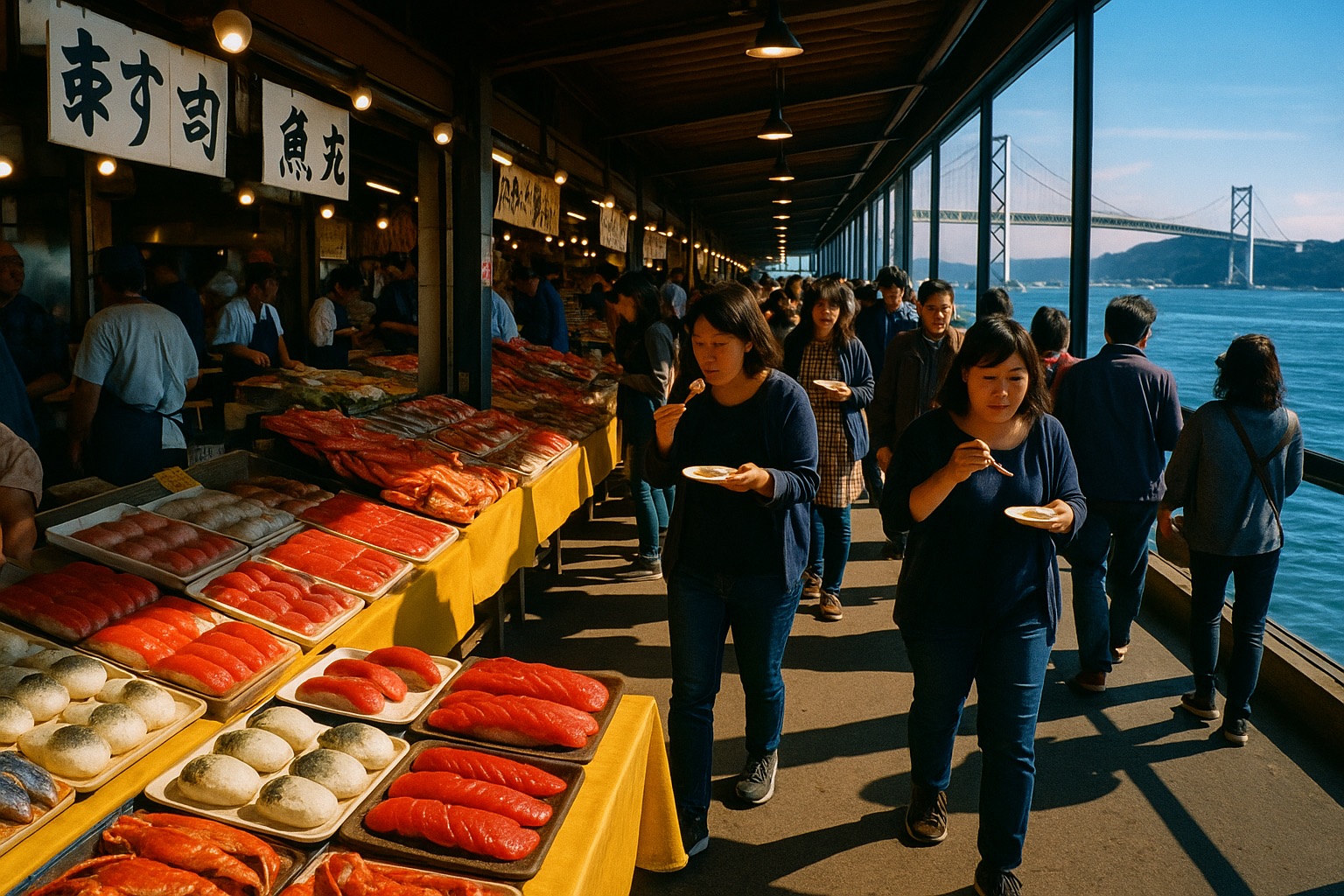
✦ AI-generated illustration — not a photograph of the actual site
Quick Facts: Karato Market & Shimonoseki
- Best day to visit
- Friday–Sunday (Ikiiki Bakangai weekend market)
- From Fukuoka
- 1 hr by JR express (~¥2,200)
- Must-eat
- Fuku (pufferfish) sashimi from ¥400
- Aquarium ticket
- ¥2,500 adult · 1-day re-entry
- Fugu supply
- ~80% of Japan's fugu passes through here
- Hidden activity
- Walk under the strait via undersea tunnel
Why Shimonoseki Matters — The History Behind the Fish Market
The Kanmon Strait is 600 metres wide at its narrowest point. It connects the Sea of Japan to the Seto Inland Sea and separates Honshu from Kyushu. For as long as Japan has existed as a political entity, whoever controlled this strait controlled trade, movement, and power across the entire archipelago. Shimonoseki sits at that chokepoint on the Honshu side. The city across the water — Moji, now part of Kitakyushu — sits on the Kyushu side. Together they are known as Kanmon.
1185 — The Battle of Dan-no-ura
In the spring of 1185, the final naval battle of the Genpei War was fought in these waters. The Taira (Heike) clan, which had controlled Japan for a generation, was annihilated by the Minamoto (Genji) fleet. The child emperor Antoku — eight years old — drowned here along with his grandmother and hundreds of Heike warriors. The battle ended aristocratic court rule in Japan and began eight centuries of samurai governance. The ghost-crabs (heikegani) of the strait are said to carry the faces of the drowned Heike warriors on their shells. This is the most historically resonant stretch of water in Japan.
1863–64 — The Shimonoseki Bombardment
The Choshu Domain, which controlled the Shimonoseki side of the strait, began firing on foreign vessels in 1863 to enforce the Emperor's order to expel all foreigners from Japan. American, French, Dutch, and British warships absorbed these attacks and eventually returned — combined — in 1864 with a fleet of 17 ships, destroying the Choshu batteries and forcing the domain to capitulate. The lesson the Choshu learned was that Japan needed to modernize militarily or be colonised. Their leaders — including men named Ito Hirobumi and Yamagata Aritomo — went on to build modern Japan.
1895 — The Treaty of Shimonoseki
After Japan's victory in the First Sino-Japanese War, the peace negotiations were held in Shimonoseki at a restaurant called Shunpanro. The resulting treaty forced China to cede Taiwan, the Pescadores Islands, and the Liaodong Peninsula to Japan, and to pay an enormous indemnity. The map of East Asia changed permanently. The same Ito Hirobumi who had fought at the Choshu batteries 30 years earlier signed this treaty as Japan's Prime Minister. The building where it was signed still stands and still serves fugu.
When you stand at Karato Market eating a plate of fugu sashimi, you are standing on ground that witnessed the end of the samurai era, the beginning of modern Japan, and the redrawing of Asia's colonial map. Most fish markets do not come with that context.
Fugu — The City's Deadly Obsession
Why “Fuku” Not “Fugu”
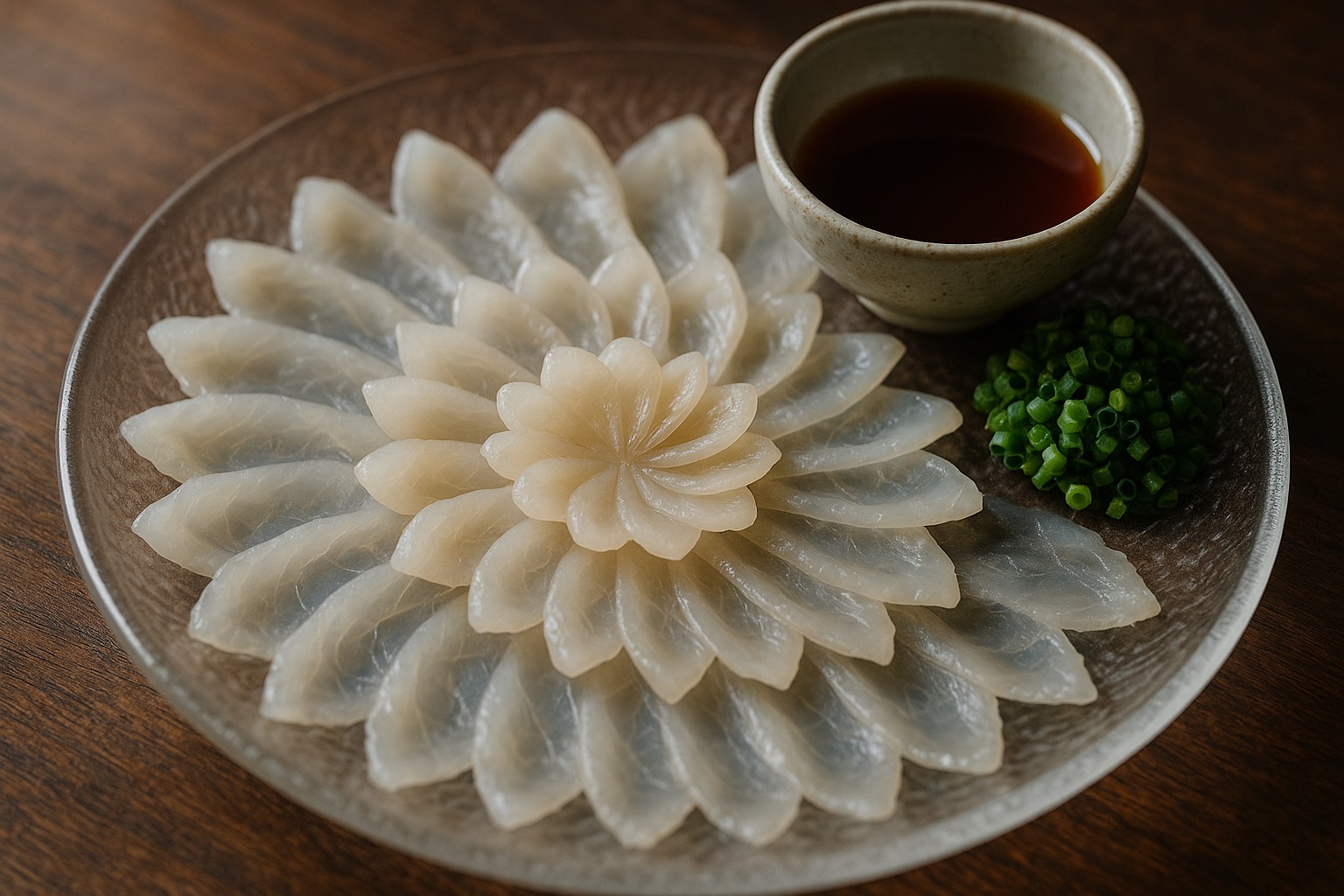
In Shimonoseki and the broader Yamaguchi Prefecture, pufferfish is not called fugu (河豚). It is called fuku (ふく). The reason is linguistic and intentional: fu-gucan be heard as “misfortune” (fukou, 不幸) by some interpretations, while fuku (福) means fortune, happiness, and luck. In a city where the entire economy and culture revolves around this fish, the deliberate choice to rename it something auspicious is a meaningful statement. When in Shimonoseki, say fuku.
Shimonoseki processes approximately 80% of Japan's entire fugu supply. This is not an accident of geography — it is the result of centuries of accumulated expertise, infrastructure, and cultural identity. The Kanmon Strait's fierce currents and cold, nutrient-rich waters produce pufferfish with exceptionally firm, sweet flesh. The city has built an entire professional ecosystem around catching, processing, distributing, and cooking them.
The History of the Ban
Pufferfish contains tetrodotoxin — a paralytic poison with no antidote, concentrated primarily in the liver and ovaries. In the 16th century, Toyotomi Hideyoshi famously prohibited his samurai from eating fugu after losing too many fighters to poisoning during military campaigns in Kyushu. The ban was broadly enforced through the Edo period. Shimonoseki, as a trading port, ignored it more than most.
The formal lifting of the ban is attributed — perhaps apochryphally, but the story is beloved here — to Ito Hirobumi himself. Staying at Shunpanro inn in Shimonoseki during a storm that prevented his ship from sailing, Ito asked for something to eat. The inn's owner, a woman named Tamae, served him fugu despite the prohibition, and he reportedly declared it the finest thing he had ever eaten. Shortly after, Yamaguchi Prefecture was granted an exemption — the first in Japan — in 1888. The national ban followed later.
Fugu Dishes to Know
Is fugu dangerous? In a licensed restaurant: no. Fugu chefs in Japan must hold a prefectural licence that requires years of training and a demanding practical exam with a very high failure rate. The poisonous organs are removed under strictly regulated conditions. Fugu-related deaths in Japan are almost exclusively from people preparing it at home illegally — not from restaurants.
✦ AI-generated illustration — not a photograph of the actual site
Karato Market — What It Is and How It Works
Karato Market began in 1909 as an open-air fish market on the waterfront. The current building dates from the Showa era — a functional, no-frills space that operates 365 days a year. Understanding what you're walking into depends entirely on which day of the week you arrive.
Weekdays (Mon–Thu)
Opens 5:00 · Sundays/holidays from 8:00 · Closes 15:00
- • A working professional fish market
- • Suppliers, chefs, and local buyers
- • Very fresh fish at prices close to wholesale
- • Quiet — few tourists, no food stalls
- • Good if you want the real local atmosphere
- • 2nd floor restaurant serves fugu set meals
Fri / Sat / Sun / Holidays
Ikiiki Bakangai · Opens 9:30 · ⚠️ Go early
- • Ground floor becomes an open food market
- • Stalls serve fugu sushi, tuna bowls, uni, crab
- • Prices: ¥300–500 per plate or piece
- • Crowds — arrive by 9:30 or wait in line
- • Eat on the 2F terrace overlooking the strait
- • Stalls often sell out before 13:00
💡 Local Hack — The 14:00 Price Drop
On weekdays, stalls and the 2F market area sometimes discount sushi and prepared seafood by 30–50% around 14:00 as they prepare to close. If you can time your visit for mid-afternoon on a weekday, you may find excellent fugu sashimi or nigiri at a fraction of the listed price. This is not guaranteed, but regulars know to look.
What to Eat and What to Expect to Pay
| Item | Price range | Notes |
|---|---|---|
| Fuku (fugu) nigiri | ¥400–800 / plate | Weekend Ikiiki stalls |
| Tuna bowl (maguro-don) | ¥800–1,200 | Full bowl with toppings |
| Sea urchin (uni) nigiri | ¥300–500 / piece | Quality varies — pick a busy stall |
| Fuku karaage (fried fugu) | ¥200–400 | Best snack for walking |
| Fugu set meal (2F restaurant) | ¥2,000–4,000 | Weekday; full fugu course |
Market Basics
Hours: Weekdays 5:00–15:00 · Sundays / holidays 8:00–15:00 · Open 365 days
Ikiiki Bakangai: Fridays, Saturdays, Sundays, and public holidays · 9:30–13:00 (or until sold out)
Access: From JR Shimonoseki Station, bus ~15 min to Karato stop (¥200). Taxi ~¥1,200.
Payment: Most weekend stalls are cash only — bring ¥3,000–5,000
2F terrace: Free seating · views directly over the Kanmon Strait and Kanmon Bridge
Kaikyokan Aquarium — Japan's Most Unusual Aquarium
Most aquariums display fish. Kaikyokan displays over 100 species of fugu — the largest pufferfish collection in the world — and builds its entire identity around the Kanmon Strait's specific ecology. That's a genuinely unusual approach, and it results in an aquarium that feels specific to its place rather than generic.
🐡 Fugu Gallery — 100+ Species
The world's largest pufferfish exhibition, including species most Japanese people have never seen. Educational panels explain the toxin, the licence system, and the cultural history.
🌊 Kanmon Strait Tank
A large main tank that recreates the actual tidal current conditions of the Kanmon Strait — a strong flow that confuses and delights the fish inside. Watch for the morning feeding, when the current is strongest.
🐧 Penguin Village — 5 Species, ~140 Birds
One of Japan's largest penguin collections, featuring five species from both Antarctic and temperate climates. Visit around 13:00 when natural light enters the main tank at an angle that creates the “angel beam” effect — light shafts through the blue water that regulars specifically time their visits for.
🐬 Dolphin & Sea Lion Show
An unusual combined show — dolphins and sea lions performing together is rare at Japanese aquariums. Check the daily schedule at the entrance.
🦈 Blue Whale Skeleton
A complete blue whale skeleton — one of only a handful of full specimens on public display anywhere in the world. The scale is genuinely difficult to comprehend standing beneath it.
🔨 2025 Renovation Note
The aquarium completed a major renovation in August 2025, including the new “Fin Foot Beach” sea lion exhibit. If you've visited before, expect some areas to look significantly different.
Kaikyokan Essentials
Address: 6-1 Arukaporuto, Shimonoseki City, Yamaguchi Prefecture
Hours: 9:30–17:30 (last entry 17:00)
Tickets: Adult ¥2,500 · Junior high / elementary ¥1,200 · Ages 3+ ¥500
Re-entry: Ticket is valid all day — leave for lunch, come back
English: Brochures in English, Korean, Chinese, and Taiwanese
Strollers: Free rental available at the entrance
Access: 5-min walk from Karato Market · Bus from JR Shimonoseki Station (~5 min) to Kaikyokan-mae stop
Parking: Mirai Park 395 spaces · 2nd Mirai Park 232 spaces (both nearby)
✦ AI-generated illustration — not a photograph of the actual site
Haikarat Yokocho — The Amusement Park with the Best View in Kyushu
はい!からっと横丁 · Opened September 2013 · Free entry · Rides paid separately
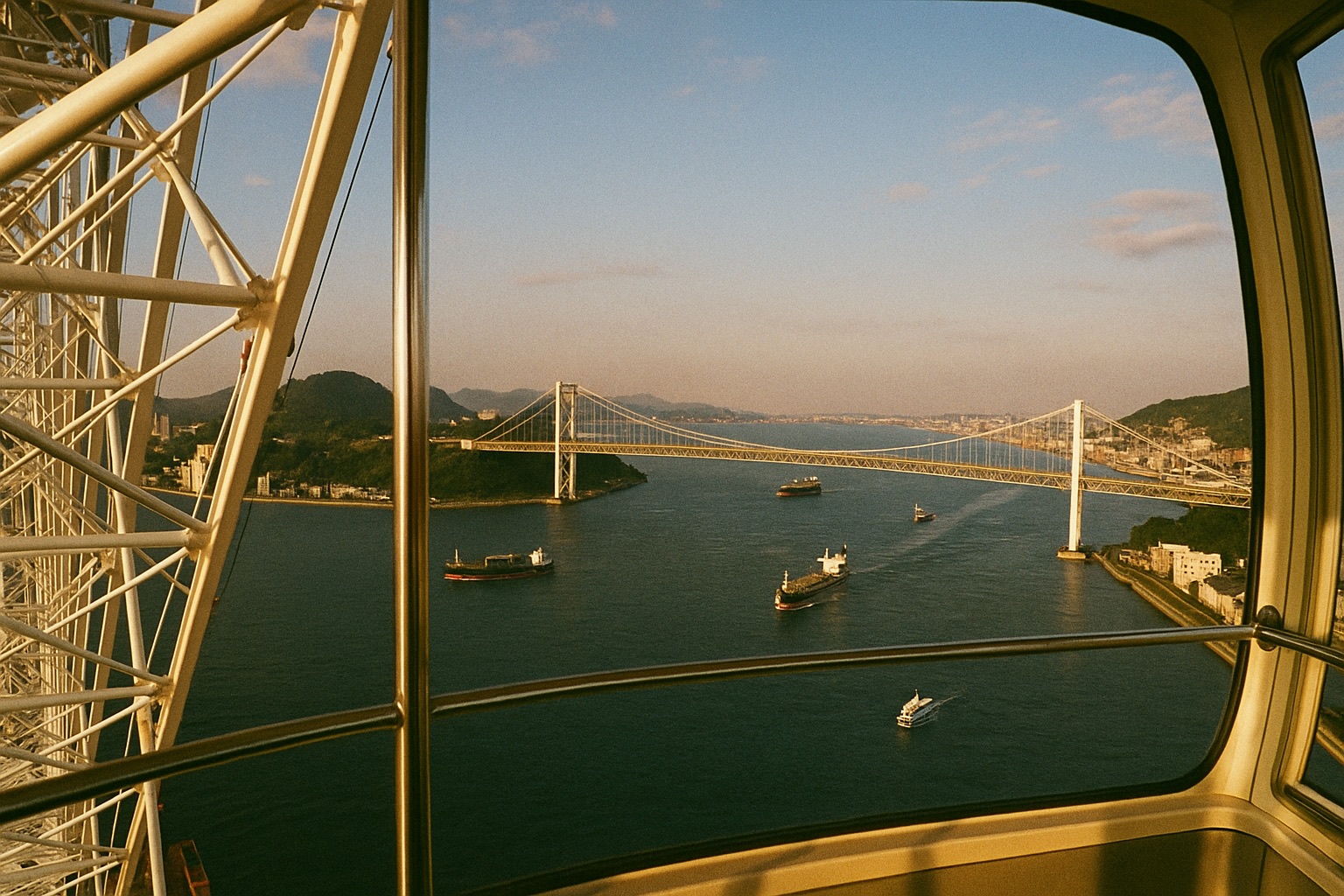
A note on expectations: Haikarat Yokocho is a modest waterfront amusement park, not a major theme park. There are about 12 rides, it's designed for families with young children and couples, and it will not take more than 2–3 hours. None of that matters, because the 60-metre ferris wheel that dominates the park is one of the best viewpoints in the entire Kyushu region.
From the gondola at the top, you look directly down on the Kanmon Strait — the water that ended the Heike, that 19th-century British and French warships bombarded, that cargo ships navigate 24 hours a day. The Kanmon Bridge, connecting Honshu to Kyushu, stretches across your view. On clear days you can see Kitakyushu (Moji) distinctly on the other side. The ¥500 cost of the ride is a remarkable value for that view.
The park also runs evening illuminations from 17:00 to 22:00 — the entire structure lit in full-colour LED. For a visit timed to catch sunset over the strait from the ferris wheel, come around 17:30–18:00.
Note the double-decker London bus at the park entrance — a genuine 1960s Routemaster that was shipped from England as part of a “9,500km journey” celebration when the park opened. Also worth a minute: the relief plaques of Takasugi Shinsaku and Sakamoto Ryoma near the entrance, commemorating the Shimonoseki area's role in the Meiji Restoration.
Haikarat Yokocho Basics
Location: Arukaporuto, Shimonoseki · 5-min walk from Karato Market and Kaikyokan
Entry: Free (rides paid individually)
Ferris wheel: ~¥500 · Best views: daytime for clarity, 17:30–18:00 for sunset
Evening lights: 17:00–22:00 daily
Best for: Families with children · Couples · Anyone who wants a view of the strait without hiking
The Perfect One-Day Plan From Fukuoka
Depart Hakata (Fukuoka)
JR express (Super Hakuto or similar) from Hakata Station to Shimonoseki Station. ~1 hr 10 min, ~¥2,200. Bus from Shimonoseki Station to Karato, ~15 min.
Ikiiki Bakangai — Karato Market
Arrive at 9:30 opening. Grab a plate of fuku (fugu) nigiri, a tuna bowl, and some fried fugu karaage. Total food budget: ¥2,000–3,500. Take your tray to the 2F terrace and eat facing the Kanmon Strait. This is the experience.
Kaikyokan Aquarium
5-min walk from the market. Enter with your ¥2,500 ticket (keep it — 1-day re-entry). Kanmon Strait tank → fugu gallery → penguin village. Aim for the penguin tank around 13:00 for the angel beam light effect. Check dolphin show schedule at entrance.
Haikarat Yokocho
5-min walk from the aquarium. Buy a ferris wheel ticket (¥500) immediately — ride it once for the view. If you have children, add 1–2 more rides. Light lunch or snack from the park stalls if hungry.
Kamonwharf + Waterfront Walk
Browse souvenir shops at Kamonwharf next to the market. Fugu-related souvenirs: fugu crackers (fuku senbei), fugu-shaped mochi, processed fugu paste. Walk the waterfront promenade.
Return to Fukuoka
Bus back to JR Shimonoseki Station → express to Hakata. Back in Fukuoka by 17:30.
⛴️ Optional Add-On: Moji Port Ferry (30 min extra)
From Karato Pier, the Kamon Ferry crosses to Moji Port in Kitakyushu in 5 minutes (¥400 each way, every 20 minutes). Moji Port has a well-preserved Meiji-era retro district — brick warehouses, the former Moji Customs House, and the Kanmon Bridge viewed from sea level. Add this after the ferris wheel for a memorable close to the day.
Plan B — Weekday (Quieter Local Experience)
Arrive at the market at 5:00 (or 8:00 on Sundays) to see the professional market before the tourist hours. The atmosphere is completely different — fish being weighed and boxed, local chefs buying ingredients, almost no English spoken. Have a full fugu set meal at the 2F restaurant (¥2,000–4,000). Then follow the same aquarium → ferris wheel sequence. Weekday visits are genuinely less crowded at all three venues.
Getting There — From Fukuoka and Beyond
Access Summary
| From | Method | Time | Cost |
|---|---|---|---|
| Hakata (Fukuoka) | JR Express | ~1:10 | ~¥2,200 |
| Hakata (Fukuoka) | Shinkansen + Local | ~50 min | ¥3,500+ (JR Pass: free) |
| Hakata (Fukuoka) | Highway bus | ~1:30–2:00 | ¥1,500–2,000 |
| Moji Port (Kitakyushu) | Kamon Ferry | 5 min | ¥400 |
| Kokura (Kitakyushu) | JR Local | ~10 min | ~¥250 |
Other Things to Do in Shimonoseki
Akama Shrine (赤間神宮)
A coastal shrine dedicated to the child Emperor Antoku, who drowned in the Battle of Dan-no-ura in 1185. The dragon-gate entrance rises directly from the waterfront. The shrine is also famous as the setting of the ghost story “Hoichi the Earless” from Lafcadio Hearn's Kwaidan. 10-min walk east from Karato Market.
Mimosusogawa Park (みもすそ川公園)
The site of the Battle of Dan-no-ura, where statues of Minamoto no Yoshitsune and Taira no Tomomori face each other across the strait — the two commanders of the battle that ended the Heike. Reproduction cannons commemorate the 1864 bombardment. 15-min walk east from Karato.
Kanmon Undersea Tunnel (関門人道トンネル)
A 780-metre pedestrian tunnel under the Kanmon Strait. You can walk from Honshu to Kyushu — crossing the border between prefectures (and technically islands) at sea level under the world's most historically significant body of water. Free for pedestrians. 20 min walk. Best combined with the Moji Port ferry as a circuit.
Shunpanro (春帆楼)
The inn where the 1895 Treaty of Shimonoseki was signed — and where Ito Hirobumi reportedly ate his famous fugu. Still operating as a luxury inn and fugu restaurant. A multi-course fuku dinner here costs ¥20,000–40,000 per person. More interesting as a historical footnote than as a practical dining recommendation, but worth knowing about. 10-min walk from Karato.
Practical Tips
Weekend vs Weekday
If you have any flexibility, visit on a Friday, Saturday, Sunday, or public holiday. The Ikiiki Bakangai weekend market is the reason most visitors come. A weekday visit is atmospheric but significantly less eventful.
Cash
Most market stalls are cash-only. Bring at least ¥5,000 in cash for comfortable eating. 7-Eleven and convenience stores near Shimonoseki Station have ATMs that accept international cards.
Rain Plan
The market is covered, and the aquarium is fully indoors. If it rains, these two venues alone fill 3–4 hours comfortably. Skip the ferris wheel in heavy rain (views are obscured anyway).
With Children
Kaikyokan (◎) and Haikarat Yokocho (○) are excellent for children. The market (△) is crowded on weekends — manageable but takes awareness. Stroller rental is free at the aquarium.
English
The aquarium has English materials. Market stalls have limited English but plenty of pointing and numbers. Basic Japanese phrases (kore kudasai = “this please”) go a long way.
Fugu Allergy
Tetrodotoxin allergy is extremely rare and distinct from common fish allergies. If you have a known severe shellfish or fish allergy, mention it to the restaurant. In licensed restaurants, the toxic parts are removed entirely and the risk of contamination is minimal.
A Strait Worth Knowing
There are few places in Japan where history, food, and landscape converge as directly as they do at Karato. Eating fugu sashimi on the second-floor terrace while the Kanmon Strait moves below you — the same water where an eight-year-old emperor drowned, where 19th-century cannon smoke filled the air, where a peace treaty was signed that shaped East Asia — is one of those experiences that stays with you because you understand what you're looking at.
From Fukuoka it is a 90-minute round trip. It is absolutely worth it.
All Venues at a Glance
| Venue | Hours | Cost | English | Best for |
|---|---|---|---|---|
| Karato Market (weekday) | 5:00–15:00 | Free entry | △ | Early morning local market atmosphere |
| Ikiiki Bakangai (weekend) | 9:30–13:00 | Food ¥300+ | △ | Fugu sushi outdoor eating experience |
| Kaikyokan Aquarium | 9:30–17:30 | ¥2,500 adult | ○ | Fugu 100 species · penguins · dolphins |
| Haikarat Yokocho | 11:00+ / eve 17–22 | Free + rides | △ | Ferris wheel views over the strait |
| Kamon Ferry (to Moji) | Every 20 min | ¥400 | ○ | Cross the strait to Moji Retro District |
Written by
A Local in Oita, Japan
A Japanese local born and raised in Oita, Kyushu. Sharing the Japan that guidebooks miss — from someone who actually lives here.
About this site →More from Japan Local Travel
JR Kyushu Rail Pass: Is It Worth It? A Local's Honest Guide
A local breaks down the JR Kyushu Rail Pass — the 3, 5, and 7-day options, what's covered, real price math for popular routes, how to buy and use it, and the honest answer to whether it's worth it for your trip.
Best Time to Visit Kyushu: A Month-by-Month Season Guide
When should you visit Kyushu? A local walks you through the seasons month by month — cherry blossoms, the rainy season, summer heat, golden autumn, and mild onsen winters — so you pick the right time for your trip.
Driving in Kyushu: Renting a Car & the Best Road Trips
Should you rent a car in Kyushu? A local explains the license you need, what driving here is really like, costs and tolls, where a car beats the train — and the island's most beautiful road trips.