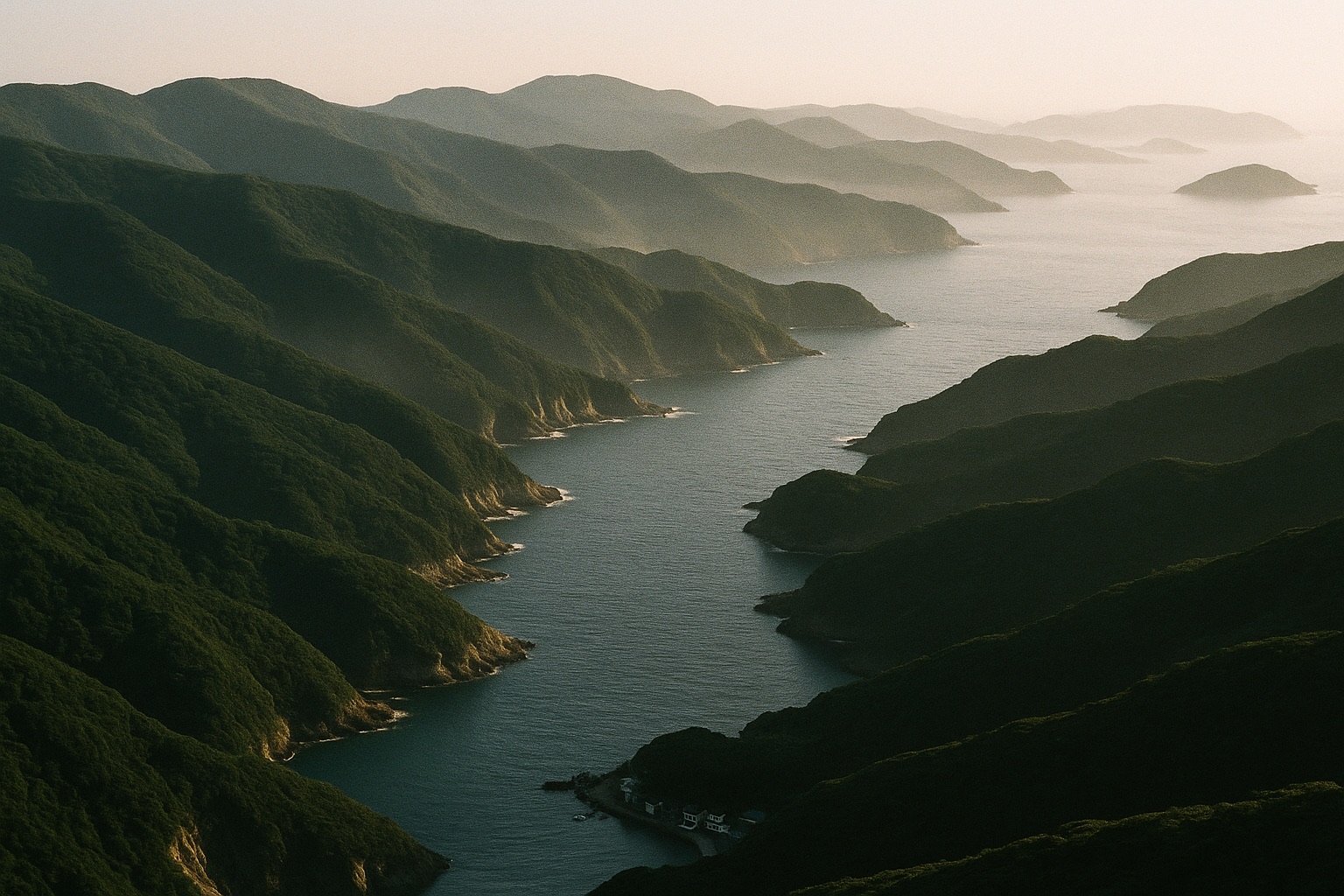
If Ghost of Tsushimaput this island on your map, you're in good company — since the game's release, a steady stream of players has made the pilgrimage to the real island between Kyushu and Korea. Some come home disappointed. Others call it the best thing they did in Japan.
The difference is entirely about expectations. So here's the honest local guide: what's real, what's invented, how to actually get there from Fukuoka — and why the real Tsushima, properly understood, is more interesting than the one in the game.
The Real History — 1274 Actually Happened
The game's premise is real history. In November 1274, the Mongol invasion fleet of Kublai Khan — thousands of ships carrying Mongol, Chinese, and Korean troops — struck Tsushima first, exactly as the game depicts. The island's tiny samurai garrison, led by Sō Sukekuni, rode to Komoda beach to meet them and was annihilated. The invaders ravaged the island before moving on toward Kyushu proper.
There was no Jin Sakai — he and essentially every character, castle, and shrine in the game are inventions. But the desperation of a border island facing an empire alone? Real. Komoda beach exists, and a small shrine there honors Sukekuni and his men. Stone anchors and artifacts from the invasion fleet sit in the island's museum.
And the deeper history is even better than the game: for centuries Tsushima was Japan's licensed gateway to Korea — a smuggler-diplomat island that survived by facing both ways. The Mongol invasion is one chapter of a 1,500-year border story.
Game vs Reality — Setting Honest Expectations
| In the Game | In Reality |
|---|---|
| Golden ginkgo forests, pampas fields, maple valleys | 89% forested mountains — dense, wild, deep green. The game compressed all of Japan's landscapes onto one island |
| Castles and grand shrines everywhere | Mountain fortress ruins (real and atmospheric), small rural shrines, one shrine with torii gates walking into the sea |
| Open fields to gallop across | Winding coastal roads through fishing villages — this is rental car country |
| Mongol camps | Komoda beach memorial, invasion-era artifacts, and Kaneda fortress — built in 667 AD against an earlier invasion threat |
| A lone samurai | About 28,000 residents, more wild deer than people, and one of Japan's rarest wildcats |
The honest summary: don't come to find the game's scenery — come because the game made you curious about a real place almost no foreign travelers visit. The wildness is the reward.
Getting There from Fukuoka
🚤 Jetfoil from Hakata Port (Recommended)
Kyushu Yusen's jetfoil runs from Hakata Ferry Terminal to Tsushima in about 2 hours 15 minutes. Book ahead in summer and holiday seasons. There's also a slower car ferry (~4 hours 45 minutes) — relevant if you want to bring a rental car over, though renting on-island is usually simpler.
✈️ Fly
Short hops from Fukuoka Airport (~35 minutes) and Nagasaki. Often the best move for limited schedules — fly out, jetfoil back, and you've seen the strait both ways.
What to See — The Real-World Highlights
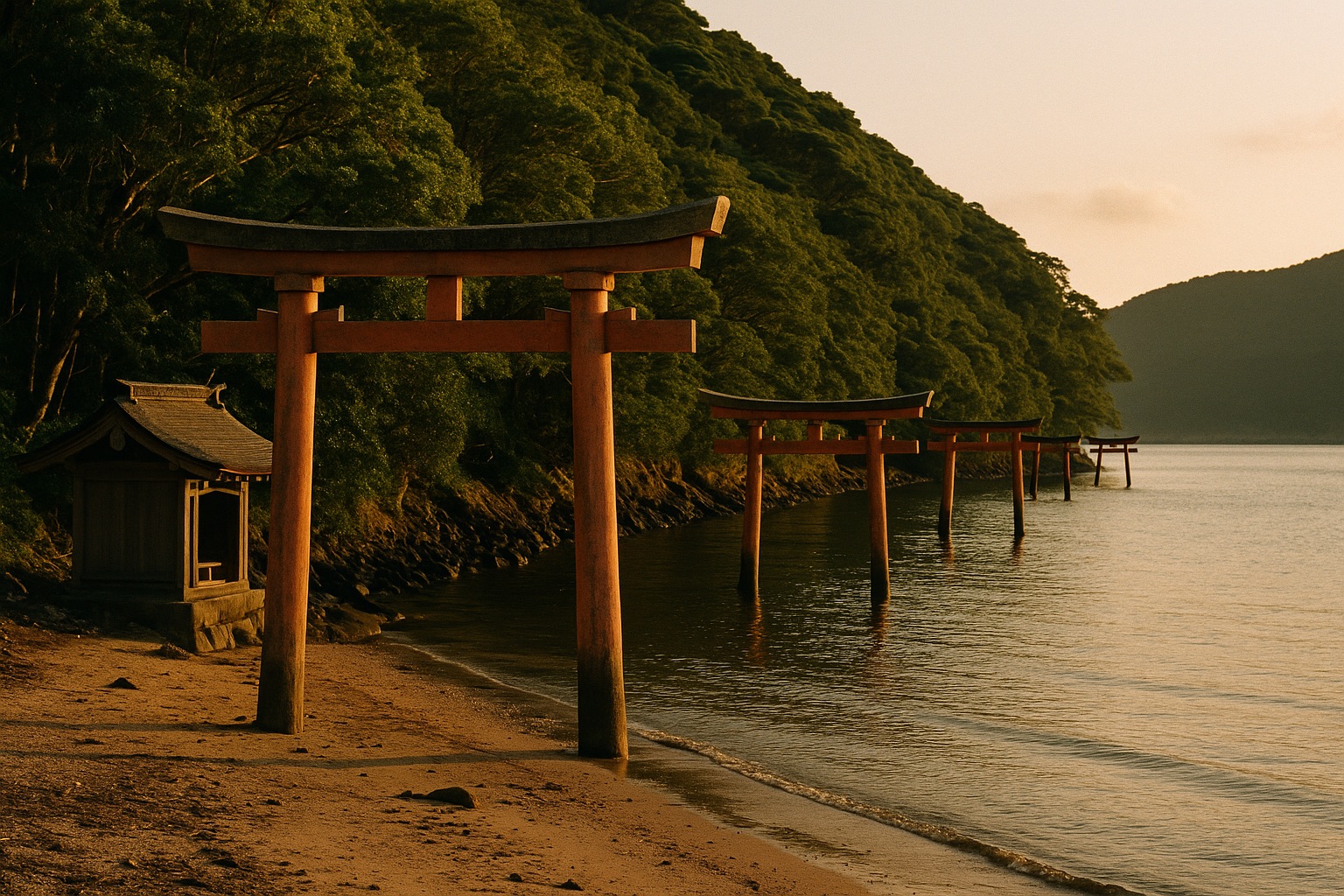
✦ AI-generated illustration — not a photograph of the actual site
Watatsumi Shrine — torii gates walking into the tide
⛩️ Watatsumi Shrine — The Game-Feeling Place
A sea-god shrine where a line of five torii gates marches from the forest straight into the bay — the outermost standing in the water at high tide. This is the single most "I'm inside the game" sight on the island, and players leave offerings here. Quiet, free, unforgettable at golden hour.
🪨 Kaneda Fortress (Kaneda-jō) — The Real Ancient War
Moss-covered Korean-style mountain fortress walls from 667 AD— built when Japan feared an invasion from Tang China and Silla, six centuries before the Mongols. The hike up Mt. Jōyama rewards you with stone ramparts winding through forest and a colossal view over Aso Bay's island maze. The closest real thing to the game's mountain strongholds.
🏖️ Komoda Beach — Where 1274 Began
The landing site of the Mongol fleet, now a quiet beach with the small Komodahama Shrine honoring Sō Sukekuni's doomed garrison. Standing on the sand with the strait in front of you, the game's opening battle acquires real weight.
🌊 Eboshidake Observatory & Aso Bay
A 360° platform over the ria coastline — hundreds of forested islets scattered across silver water. The view that explains why sailors, smugglers, and invaders all coveted this island.
🐱 Tsushima Leopard Cat & the Wildlife Center
The island has its own endangered wildcat — roughly a hundred remain in the wild. The conservation center in the north lets you meet a resident cat and learn why the road signs all warn you to slow down. Genuinely moving, and very Tsushima: a border island even its cats refused to leave.
Practical Planning — Car, Time, Season
- 🚗Rent a car. Non-negotiable. Public buses exist but are sparse; the island's magic lives along roads no bus serves. Book the rental before you book the boat — the island's fleet is small and sells out in holiday seasons.
- 📅Stay at least one night, ideally two. Day trips see only Izuhara town. North and south each deserve a day. Accommodation is simple — minshuku, business hotels, a few guesthouses — and that's part of the island's character.
- 🍱Eat: Tsushima's anago (sea eel) is nationally famous, the tonchan pork barbecue is the local soul food, and kasumaki — sweet bean rolls — are the souvenir. Restaurants close early; plan dinner by 19:00.
- 🍂Season: May–June and October–November are ideal (mild, clear). Summer is beautiful but humid with sea-traffic peaks. The game's autumn palette? November is your closest match.
Is It Worth the Trip?
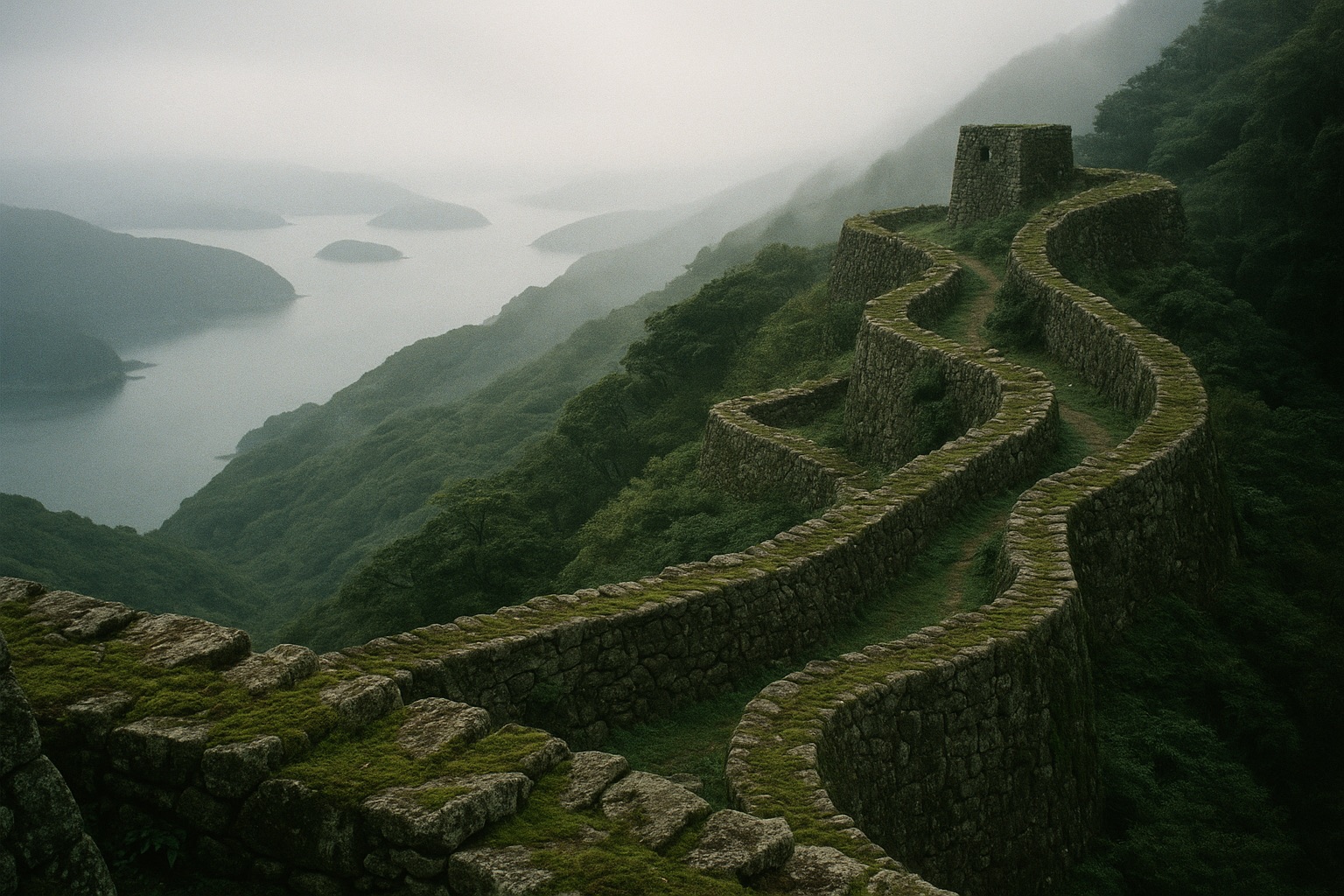
✦ AI-generated illustration — not a photograph of the actual site
Kaneda fortress walls — six centuries older than the Mongol invasion
Worth it if:the game made you curious about the real history; you like wild, end-of-the-map places; you're comfortable driving; and two extra days fit your Kyushu route. You will likely be the only foreign visitor at most sights — in 2026, that's rare anywhere in Japan.
Skip it if: you want the game's visuals recreated, you can't drive, or your Japan time is short — in which case our 7-day Kyushu itinerary spends those days better. Tsushima is for the second layer of Japan travel: when the famous things are done and you want the strange, true edges.
⚔️
The game gave Tsushima a ghost. The island itself gives you something better: 1,500 years of standing alone between empires, still wild, still proud, still there.
Two hours and fifteen minutes from Hakata port. Bring a driver's license and low expectations of golden forests — and high ones of everything else.
More History & Islands
⛪ Nagasaki's Dramatic History
Christians, rebels & the outside world
⛩️ Anime Holy Lands of Kyushu
More pop-culture pilgrimage
⚔️ Fukuoka's Castles & Duels
Musashi's last duel & the Star Wars castle
🤔 Is Kyushu Worth Visiting?
Where Tsushima fits in a route
🍽️ Fukuoka Food Itinerary
Before and after the boat
🐡 Karato Market, Shimonoseki
Another strait, another story