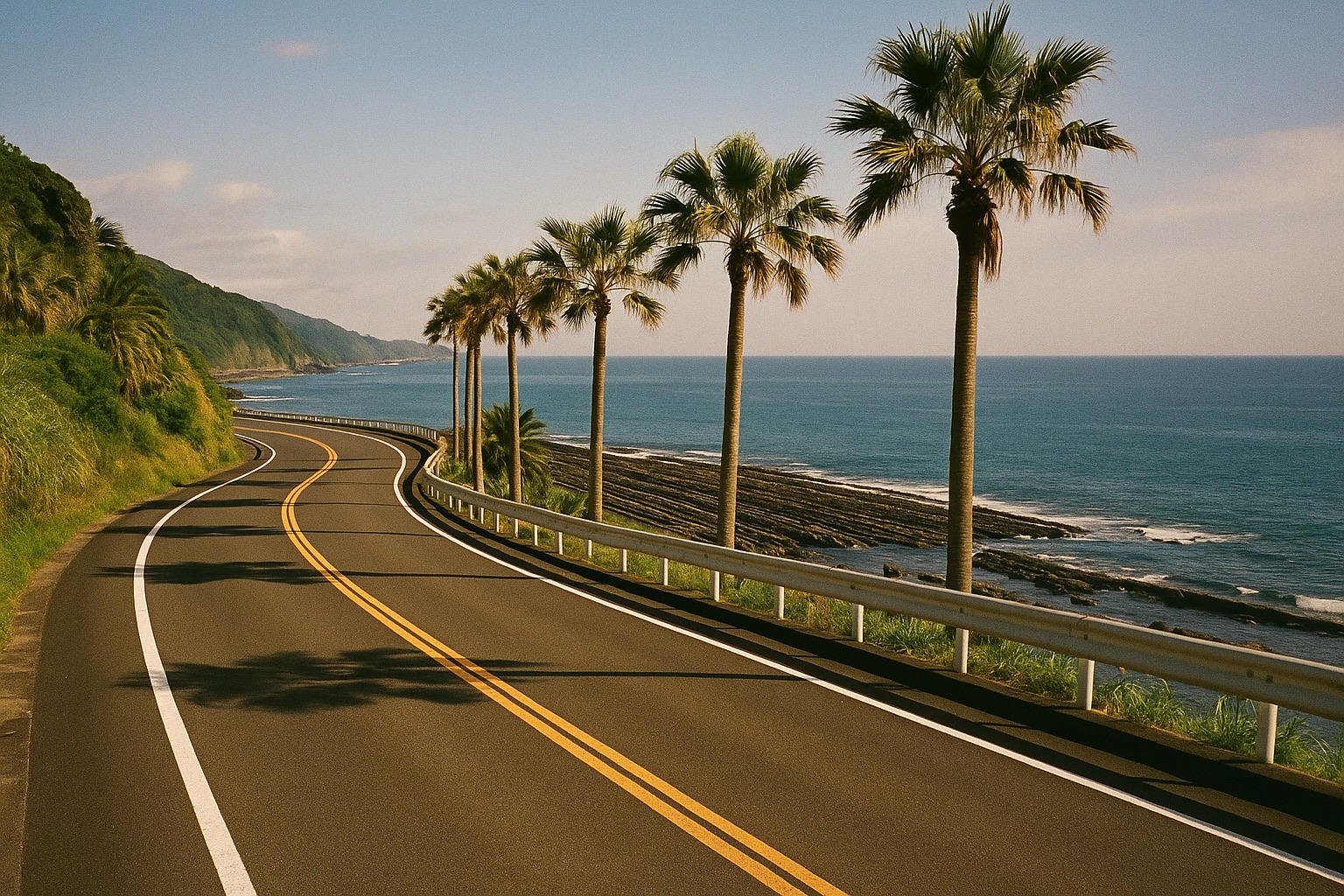
Somewhere on the Nichinan coast, between your fourth and fifth painted manhole cover, it will hit you: this is the best road trip you've ever taken under false pretenses.You came for Pokémon. You're getting empty palm-lined highways, washboard rock coastlines, shrine-islands, the best fried chicken dish in Japan — and yes, twenty-six unique pieces of officially licensed street art, one in every single municipality of Miyazaki Prefecture.
This is the deepest Pokémon pilgrimage in Japan, and almost no English-language coverage exists. Here's the local's route plan.
Why Miyazaki Chose Exeggutor (It's Perfect)
In 2020, Miyazaki Prefecture appointed Exeggutor and its Alolan form— the walking palm tree Pokémon — as its official "Miyazaki Daisuki Pokémon" ambassadors. The logic is airtight: Miyazaki has branded itself Japan's palm-tree paradise since the 1960s, when it was the country's favorite honeymoon destination — a domestic Hawaii of phoenix palms, surf, and sunshine. A palm-tree Pokémon wasn't a choice; it was destiny.
The prefecture committed completely: all 26 cities, towns, and villagesnow have their own Exeggutor Pokéfuta, each design unique — Exeggutor surfing, soaking in onsen, posing with local landmarks and partner Pokémon. July 4 (7/4 reads "na-shi" — Nassy, Exeggutor's Japanese name) is celebrated as official Exeggutor Day. There is an entire prefectural campaign called "Nassy Resort in Miyazaki."
For trail logistics, the official Nassy Resort Pokéfuta map lists every lid with exact locations — screenshot it before you lose mountain signal. (New to Pokéfuta entirely? Start with our Pokémon in Kyushu overview.)
How the Trail Works
- •The full 26 takes 2–3 days by car. Miyazaki is long — beach towns in the south, deep mountain villages on the western and northern borders. A rental car is non-negotiable; the trail is, functionally, a beautifully disguised tour of the entire prefecture.
- •Most travelers shouldn't do all 26 — and that's fine. The one-day coastal route below collects 6–8 lids through the prefecture's best scenery. Completing the set is for collectors, long-trippers, and the gloriously obsessed (we salute you).
- •Lids sit at stations, parks, viewpoints, and town halls — deliberately placed where visiting them shows you each town's pride. The project is a treasure hunt designed by tourism officers, and it works.
Day 1 — The Coastal Classic (The Best Day)
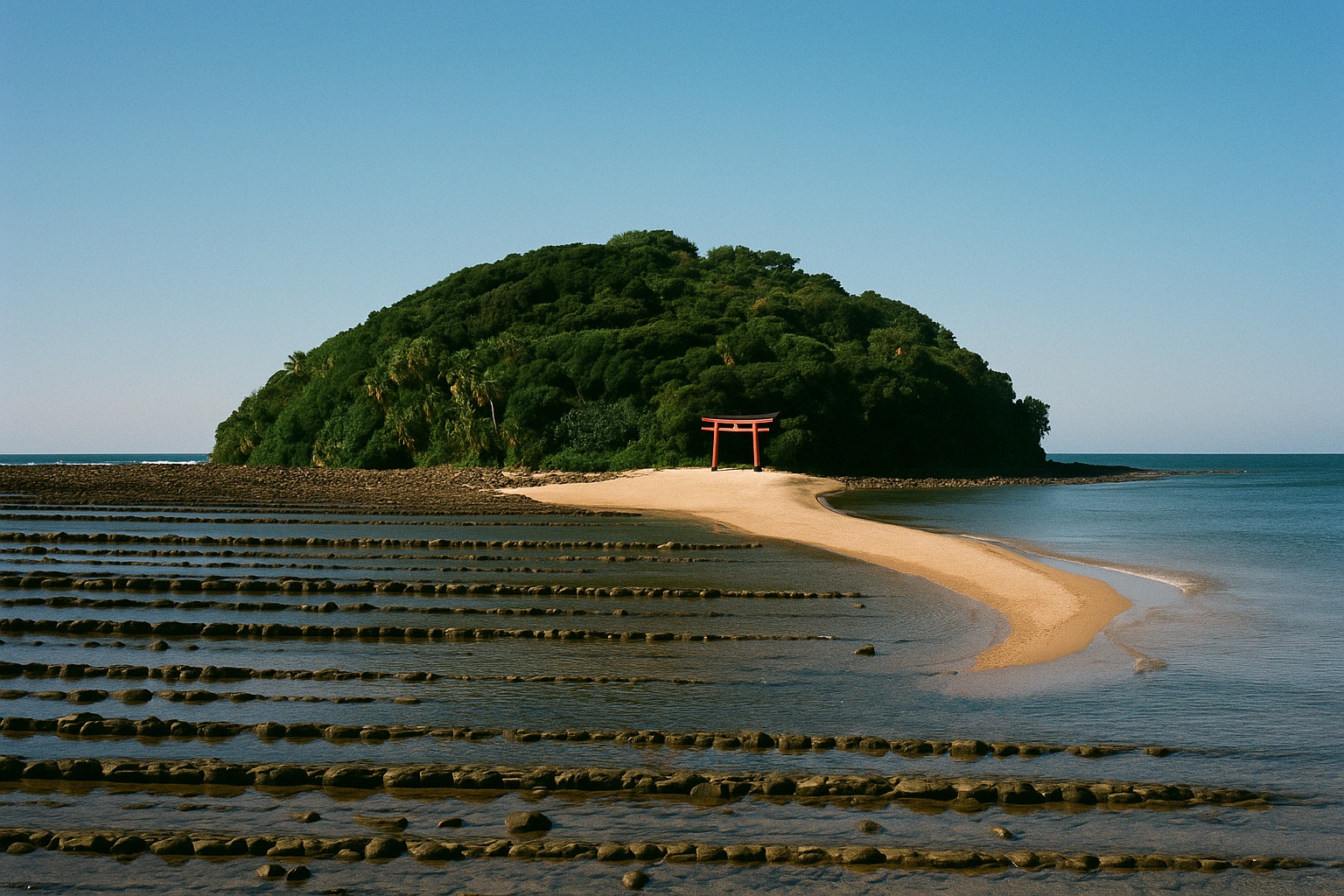
✦ AI-generated illustration — not a photograph of the actual site
Aoshima — jungle island, shrine, washboard rocks, and a Pokéfuta nearby
If you do one day of the trail, do this: Miyazaki City → Aoshima → Nichinan coast → Toi Cape, southbound along Route 220 — about 90km of Japan's best coastal driving.
Miyazaki City
Collect the city's lids (station area & park spots per the official map), grab road snacks
Aoshima
The jungle shrine-island ringed by washboard rocks — lid nearby, then walk the causeway
Chicken nanban lunch
Miyazaki's fried-chicken-with-tartar masterpiece, born here — non-negotiable
Horikiri Pass & Phoenix viewpoint
THE postcard view: palms, cliffs, blue Pacific to the horizon
Udo Shrine
A vermilion shrine inside a sea cave — throw the clay balls, make the wish, find the lid in Nichinan
Obi castle town
The 'Little Kyoto of Kyushu' — samurai lanes, carp streams, and Nichinan's history
Toi Cape (optional extension)
Wild horses grazing above the sea cliffs at the prefecture's southern tip
This single day nets you the prefecture's scenic highlights and a fistful of lids — for many travelers, the perfect taste. (Obi and the Ito clan's 48 castles get their full story in our Miyazaki history guide.)
Days 2–3 — Completing All 26
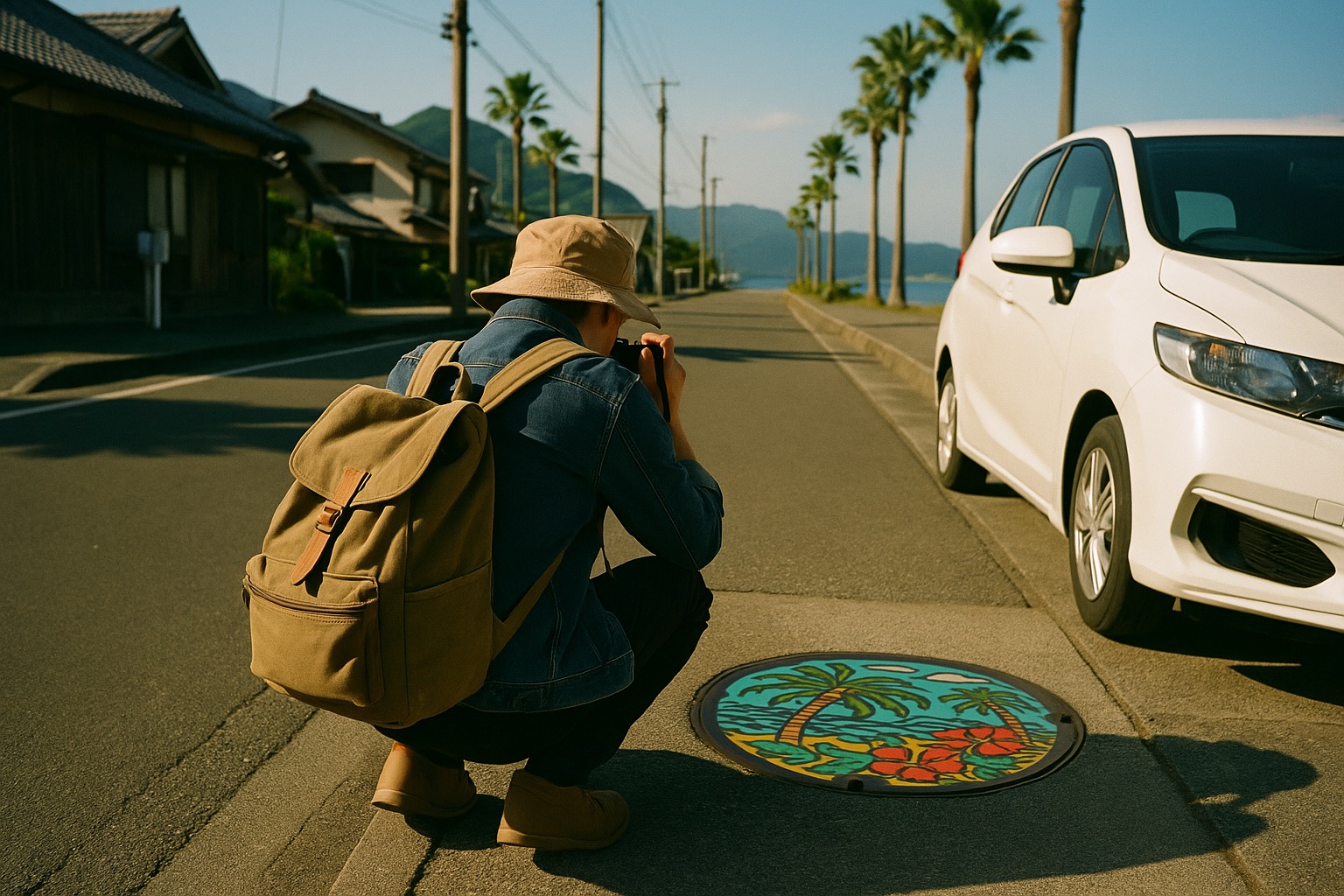
✦ AI-generated illustration — not a photograph of the actual site
🏔️ Day 2 — The Northern Arc (Hyuga → Nobeoka → Takachiho)
Up the coast through surf-town Hyuga and industrial-cool Nobeoka, then inland into the mythological mountains. The trail's genius move: it forces you through Takachiho — gorge, sun-goddess cave, night kagura — which deserves your overnight anyway. Our full Takachiho guide covers that evening; collect the surrounding mountain-village lids (Hinokage, Gokase, Morotsuka...) on the winding roads either side.
🌾 Day 3 — The Western Interior (Kobayashi → Ebino → Kirishima foothills)
The least-touristed leg: highland basins, shochu country, and big-sky farm towns under the Kirishima volcanoes. Finish in the southwest and you're positioned perfectly to continue to Kagoshima — where the Ibusuki Eevee trail awaits as your victory lap, or Sakurajima as your finale.
What to Eat & See Between Manholes
- 🍗Chicken nanban — fried chicken in sweet vinegar with tartar sauce, invented in Nobeoka/Miyazaki and perfected everywhere in between. Order it daily; compare regional tartars like a scholar.
- 🥭Miyazaki mango (in season, early summer) — the famous ¥5,000 gift-grade ones exist, but roadside-stand "imperfect" mangoes at ¥500–1,000 taste like sunshine and cost like fruit.
- 🔥Jitokko charcoal-grilled chicken — smoky-black free-range chicken with a beer, the izakaya reward after a driving day.
- 🏄Surf culture — Kisakihama and Hyuga's beaches are Japan's surf heartland; even non-surfers should take the coffee-and-watch break.
Trail Tips & Rules
📱 Screenshot the official map
The Nassy Resort site lists all 26 with pins. Mountain villages = patchy signal. Old-school printouts feel right for a treasure hunt anyway.
📷 Shoot from directly above
Midday or bright shade for even color; after rain the enamel glows. Some lids sit in live roadways — park properly, check traffic, never block lanes for a photo.
🎮 Pokémon GO synergy
Most lids are PokéStops with unique photo discs — spin as you go. Rural Miyazaki gyms are gloriously uncontested.
🗓️ July 4 is Exeggutor Day
Expect small local events and merch in early July — and the trail at its most festive (and humid).
🛏️ Where to sleep
Night 1: Nichinan or back in Miyazaki City. Night 2: Takachiho (for the kagura). Both covered in our guides.
✅ Verify before final planning
Lids occasionally relocate during roadworks; the official map is always current. Count as of writing: 26.
🌴
Twenty-six manholes is a silly reason to drive an entire Japanese prefecture. It is also, somehow, the best one.
The lids lead you down coast roads you'd never have taken, into villages no guidebook mentions, past every palm tree in Japan's sunniest prefecture. Gotta drive 'em all.
Continue the Hunt